
Ideas for thoughtful teaching & learning.
Practical approaches, considered tools and useful resources for the learning you design.
Looking for history resources? Visit HistoraEDU →
NOAA Climate Normals: Pick the Baseline Before Calling a Month Unusual
Choose the right station, grid and reference period before interpreting a climate departure. Use a baseline label and an overlap timeline—not an unnamed normal.
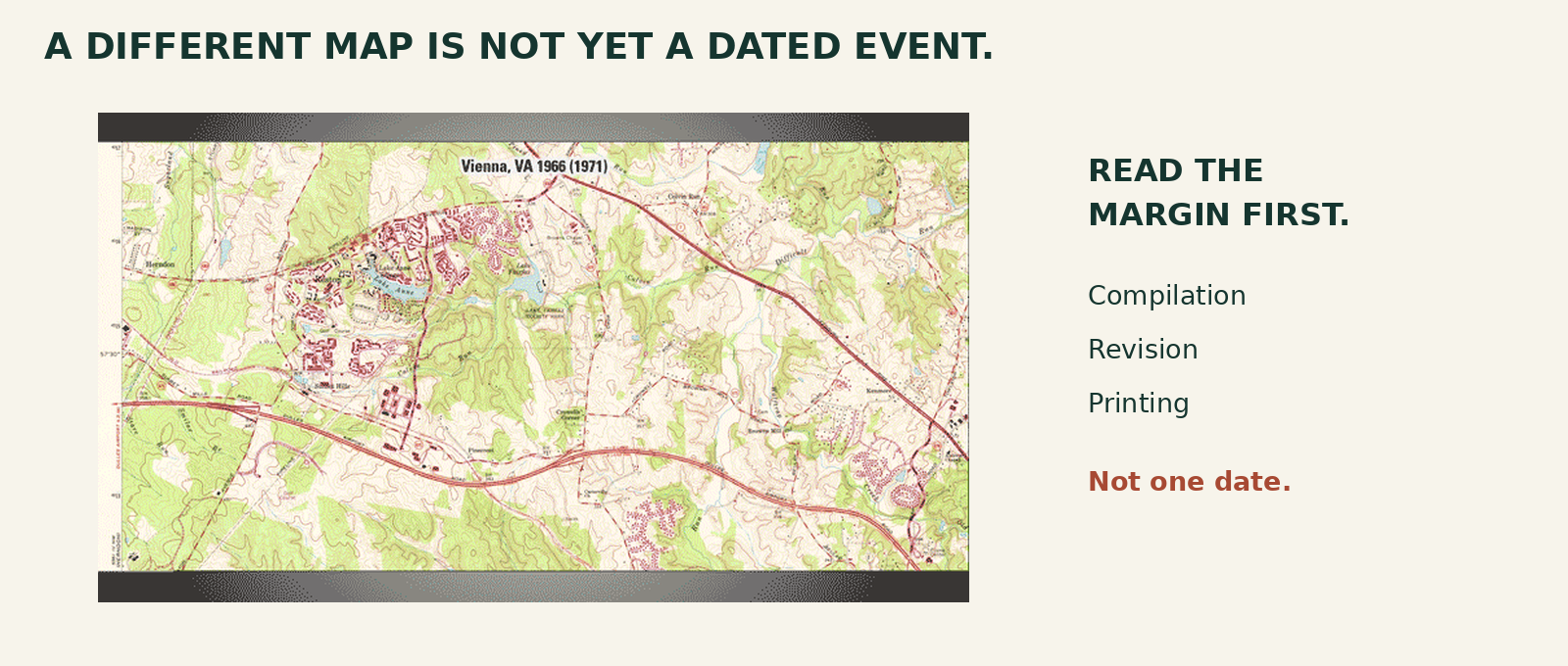
USGS topoView: Check the Map Edition Before Asking What Changed
Use topoView map dates, scale and legends to separate a changed map symbol from a dated event. Start with genuine Vienna frames and a two-map metadata strip.
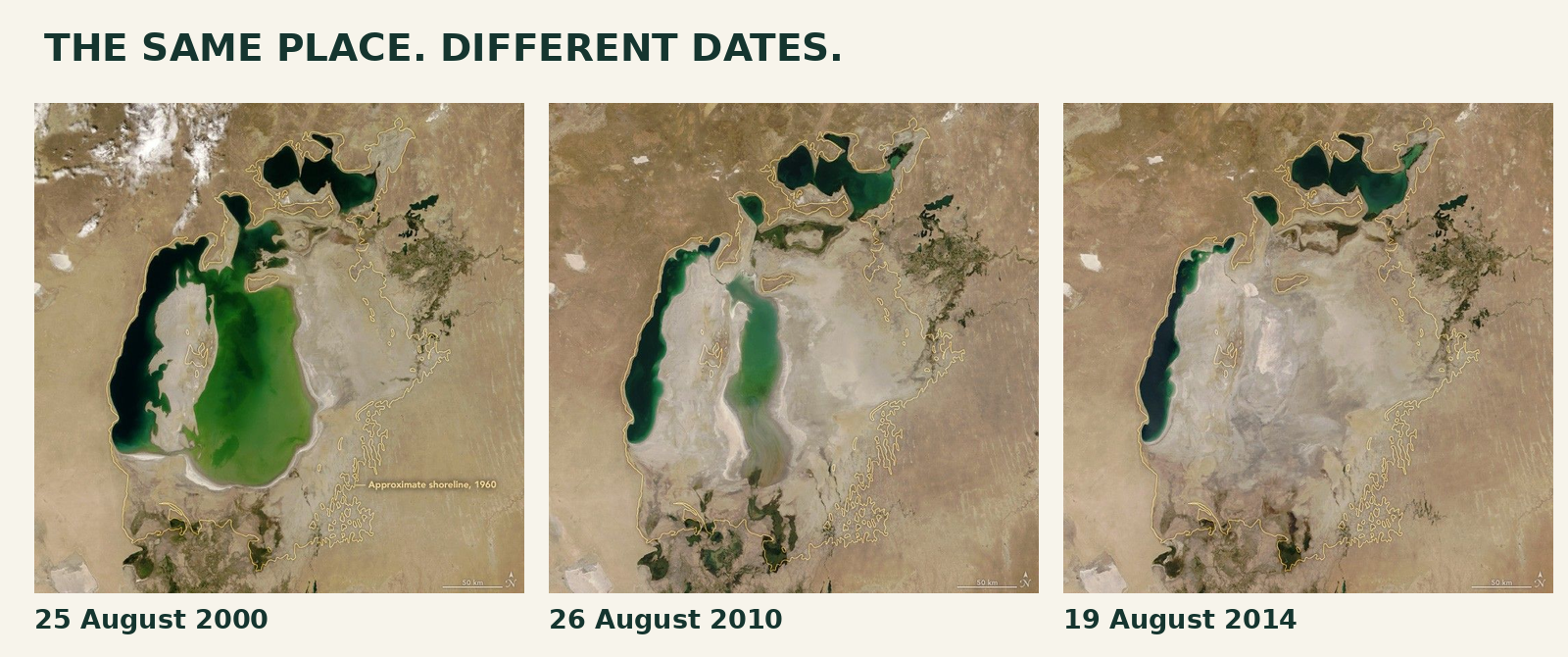
NASA’s Aral Sea Sequence: A Before-and-After Image Is Not a Causal Explanation
Compare NASA’s Aral Sea endpoints and an intervening rebound. Keep visible change, acquisition dates and causal explanation in separate evidence fields.
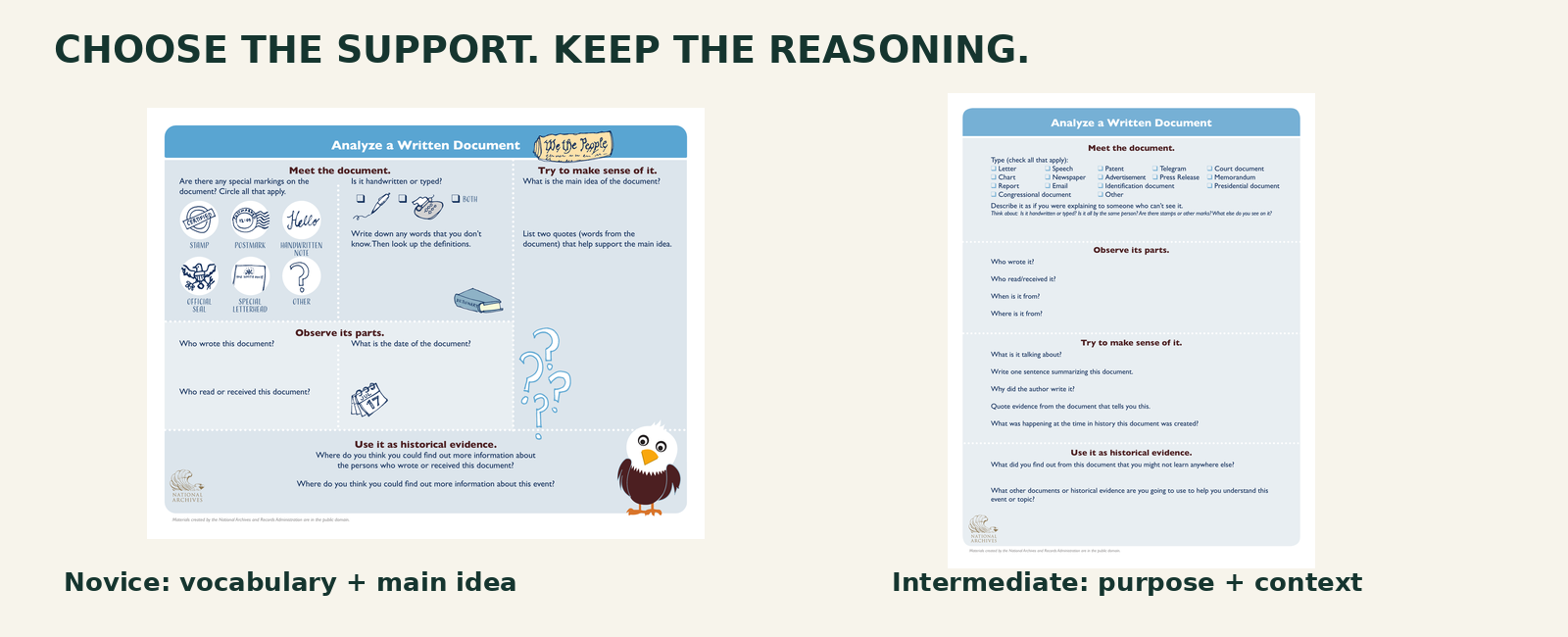
National Archives Analysis Sheets: When to Use the Form—and When to Put It Away
Compare NARA’s novice and intermediate document forms, then plan when learners will reason without the worksheet while keeping necessary access supports.
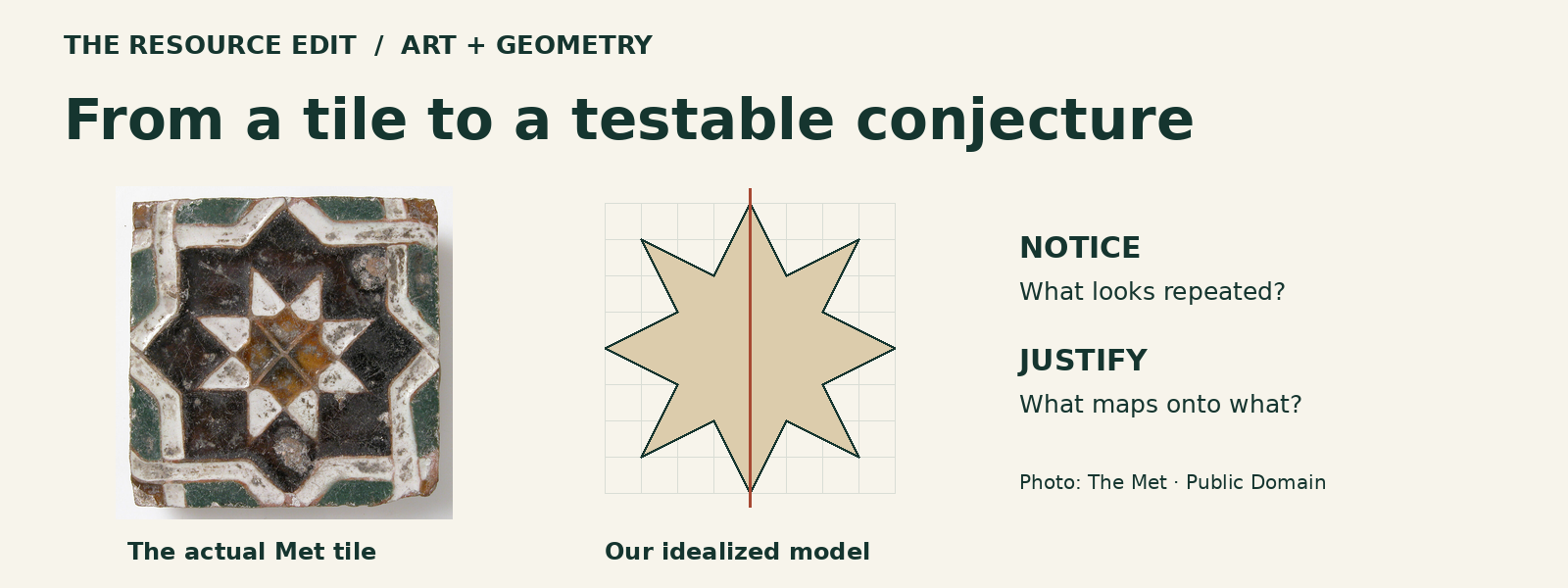
A Museum Tile Is Not a Geometry Proof: Use the Met Image as a Starting Point
Use a genuine Met tile image to prompt a conjecture, then justify reflection symmetry in an explicit coordinate model—not from the photograph.
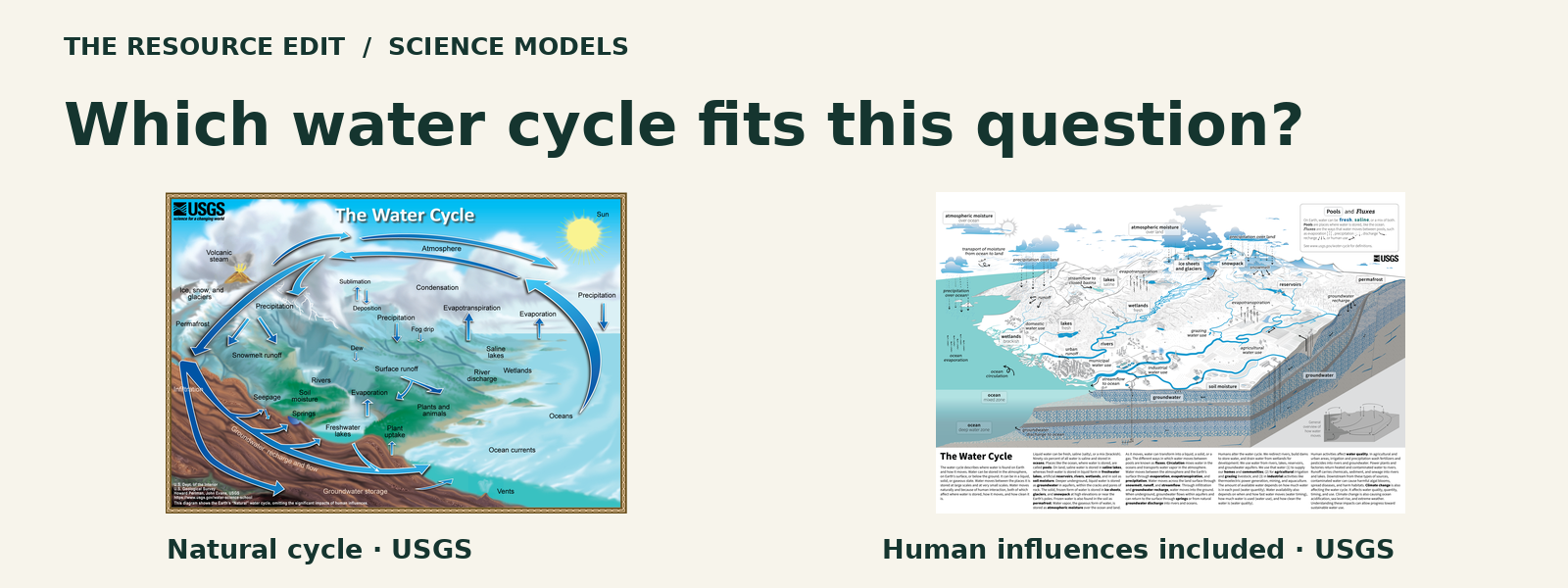
USGS Water Cycle Diagrams: Choose the Model That Includes the Question
Compare two genuine USGS water-cycle diagrams, then use a selection rubric and pathway sheet to explain storage, movement and human water use.
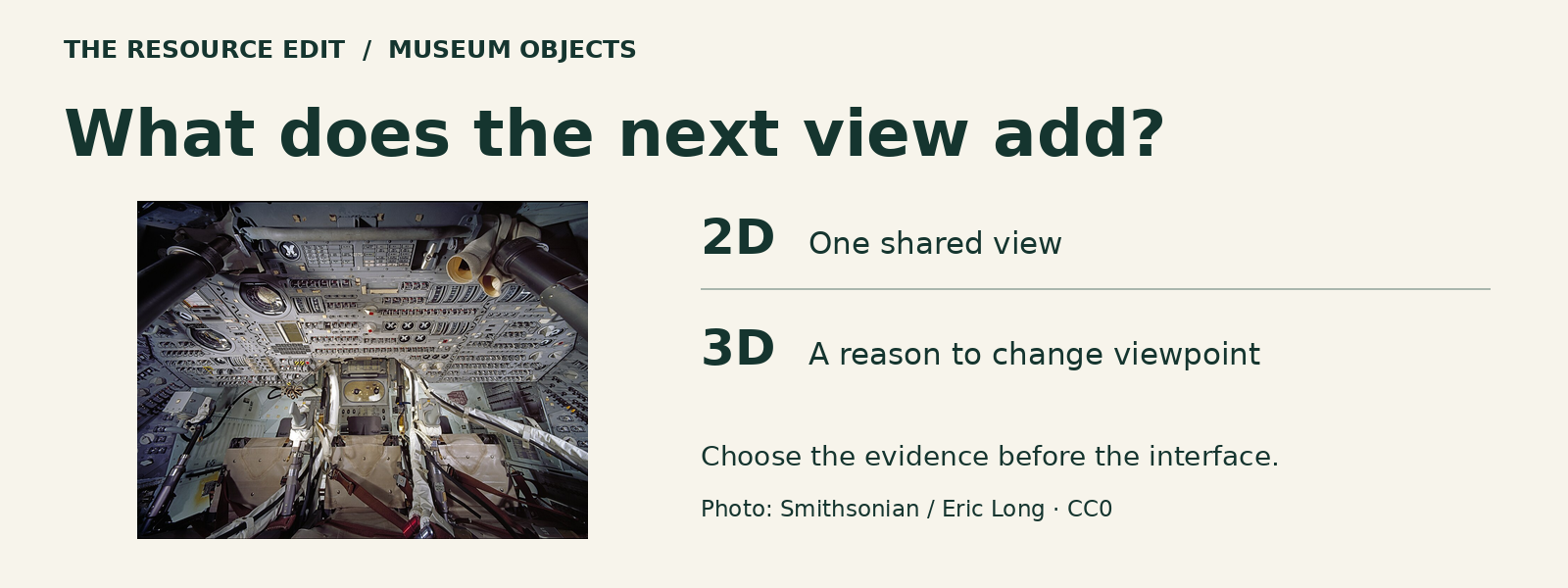
Smithsonian Open Access: Does a 3D Object Answer More Than a Photograph?
Use Apollo 11’s cabin photograph and a 2D-versus-3D selection card to decide when a new viewpoint adds evidence and when another source is needed.
Library of Congress Photos: Separate What Students See from What the Caption Says
Use a specific Migrant Mother print and a three-column source card to separate visible evidence, catalog context and questions that need another source.

AI Books for Educators: Which Teach Judgment, Not Just Prompts?
A useful AI book helps educators decide what to delegate, what to verify and what learning must remain visible—not merely collect more prompts.

Books for Judging Learning Claims Before Buying Another Resource
Choose a research-literacy book by the judgment you need to make: screening a specific claim or understanding the learning concepts behind it.
Learning-Transfer Books That Give Managers Something Useful to Do
Buy a transfer book only after identifying the action, practice opportunity and support a manager can realistically provide.
Books for Turning “We Need Training” into a Better Design Brief
A useful design book helps you question the request, identify the action and decide whether training belongs in the solution.
Classroom-Routine Books for When Instructions Keep Breaking Down
A routine book is useful when it helps you teach a specific process. It cannot replace accessible materials, relationships or individual support.
Choosing a UDL Book: From Accessibility Principles to Lesson Decisions
A UDL book should help you make a better design decision. Start with a real barrier and the current free CAST Guidelines.
Differentiation Books That Keep the Learning Goal Intact
Choose a differentiation reference that helps vary support while preserving the thinking the lesson is meant to develop.
Feedback Books for Teachers Who Cannot Mark Everything
Choose a feedback reference by the problem you need to solve: clearer comments, better evidence, or time for learners to respond.

Reading Pens vs Built-In Text-to-Speech: When Dedicated Hardware Makes Sense
Dedicated reading hardware makes sense only when it solves a print-access problem the learner cannot address more easily with existing tools.
Shared Classroom Headphones: Buy for Access, Repairability and Daily Use
A classroom headphone purchase includes the connection, the fit and the maintenance routine. A large pack alone solves none of those.
Scanners for Turning Paper Resources into Searchable Teaching Materials
The scanner is only the capture step. Choose a workflow that produces accurate, findable and usable teaching materials.
A Microphone for Reusable Lessons: What Matters More Than Studio Sound
A useful lesson microphone supports a repeatable recording process. Start with clear speech, a short explanation and a usable text alternative.