
Featured image: Original layout by The Instruction Edit using full NARA worksheets, public domain. No endorsement implied.
A completed analysis sheet is not yet a historical argument. A learner may identify an author and copy two quotations without explaining what the source can support. The useful decision is not simply which form looks easier. It is which part of the reasoning needs to become visible—and when the form will stop being necessary.
The National Archives offers novice and intermediate versions of its Written Document worksheet. Its own overview recommends modelling with the forms, moving to spoken analysis without them, and eventually independent use of the process. That makes these resources unusually suitable for planning their own removal. This is an editorial evaluation of the published materials, not a report of classroom testing.
Choose support for the task, not a permanent label
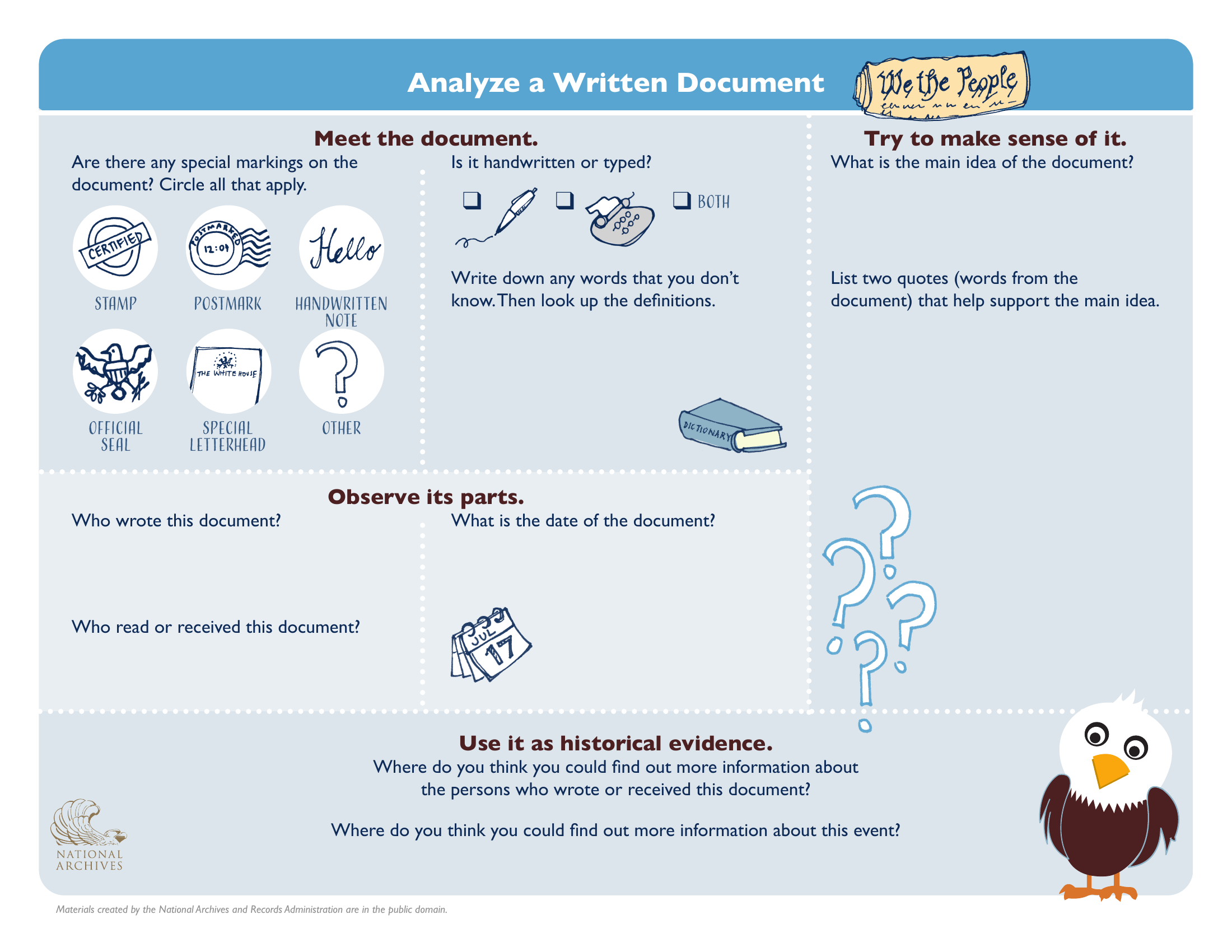
Figure 1. Genuine novice Written Document worksheet, National Archives and Records Administration. Full-page PDF rendering, unchanged. Download the original for classroom use.
The novice sheet makes several entry tasks explicit: notice markings, identify writer and recipient, find the date, resolve unfamiliar words, and connect a main idea to two quotations. Its illustrations help locate the questions, but they do not replace reading or background knowledge. NARA groups it with resources for novice or younger students and English learners; that is a starting point for selection, not a fixed ability category.
Use it when vocabulary or locating evidence is obstructing the task. Keep the historical question in view: “What does this writer want the recipient to do?” A student can answer that orally while using a transcription. Removing handwriting barriers is different from removing the need to justify a claim.
Use the intermediate prompts when context matters
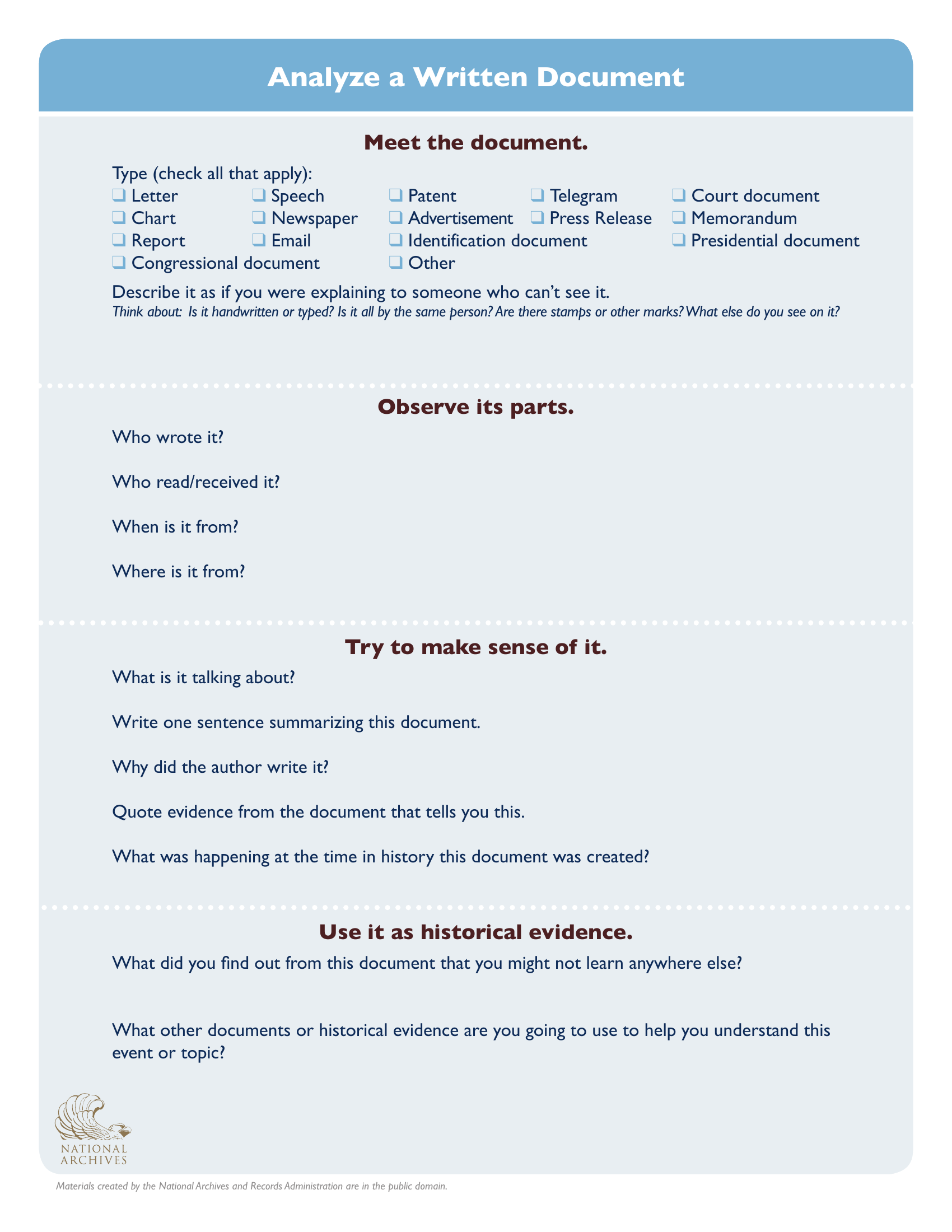
Figure 2. Genuine intermediate Written Document worksheet, NARA. Full-page PDF rendering, unchanged. Its purpose, context and corroboration prompts deserve more attention than its checkboxes.
The intermediate version asks learners to describe the document, explain the author’s purpose with evidence, connect it to its historical moment and identify other evidence needed. Choose it when those decisions are the learning target—not merely because students are older. A longer form is not automatically a more demanding investigation.
Both sheets need a usable source and a question worth answering. Neither supplies the missing historical context, verifies a writer’s claim or determines which corroborating record exists. An honest “not established here” is stronger than an invented answer entered to complete a box.
A worked decision: what would you fade?
Use this deliberately fictional practice excerpt to rehearse the distinction before applying it to a genuine, credited historical source. It is not a National Archives record and makes no claim about an actual school or event.
Practice source: a typed letter dated 12 March 1912, from the fictional headteacher of Mill Lane School to its board. “On wet days the children wait outside until the caretaker opens the room. I ask the board to provide a covered waiting place before next winter.” The date, sender and situation are invented for this article.
First, model a narrow reading. The author requests a covered waiting place; the words “I ask the board” support that purpose. The letter reports that children wait outside on wet days. It does not, by itself, establish how often this happened, whether every child waited, whether the board agreed or whether a shelter was built. A request is not evidence of its implementation.
For a group still struggling with “caretaker” or “board,” the novice sheet provides a useful place to resolve vocabulary and collect the supporting words. For a group that can locate those details but jumps from request to outcome, selected intermediate prompts about purpose and other evidence are more useful. The teacher could supply board minutes or a later site record for a subsequent comparison; do not pretend those records exist for this fictional case.
Next, put the sheet away and ask partners to state what the letter supports and what remains unknown. Listen for a precise change: can they distinguish the writer’s request from the board’s action without a box telling them to do so? If not, restore one purpose-or-evidence prompt rather than automatically reissuing the whole page.
For transfer, use a different authentic document with its own catalog context and reuse check. Ask for a short evidence statement that identifies the source, uses a relevant quotation, explains the inference and names a limit or further source. This is an original classroom planning suggestion, not a validated assessment or a promised effect of the worksheet.
Write the removal point into the plan
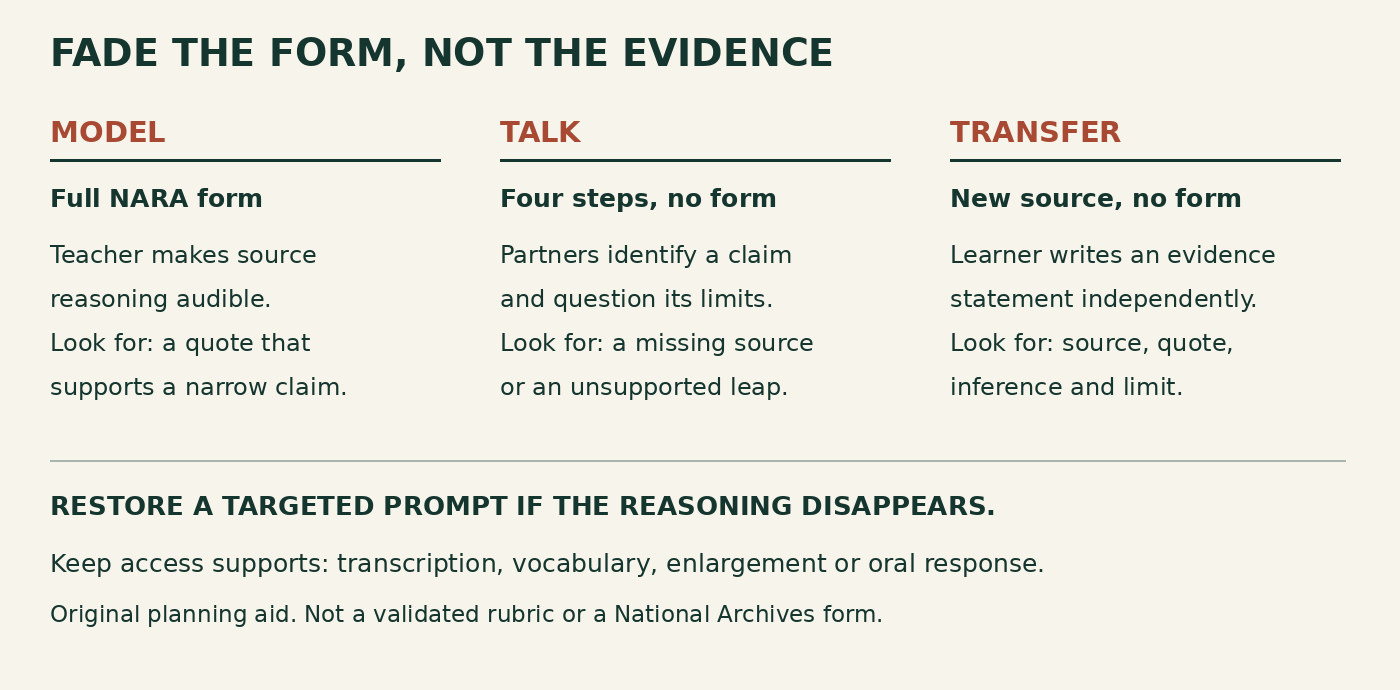
Figure 3. Original fading-plan aid, The Instruction Edit. The staged suggestion follows NARA’s progression; the readiness checks and access-support distinctions are our design recommendations.
Copy this planning line: “I will remove [write here] after learners can [write here] without it; I will keep [write here] as an access support; I will inspect [write here] in their next evidence statement.” For the fictional letter: remove the full form after learners can support the request claim and reject the outcome leap; keep the vocabulary note; inspect whether the new statement separates source content from inference.
Do not confuse independence with withholding access. A transcription, magnification, language support or an oral response may remain necessary after the analysis routine is familiar. Conversely, a polished filled-in form can conceal dependence on the teacher’s interpretation. Decide from the reasoning you can inspect, not the number of completed fields.
The two actual worksheets are free, reusable NARA-created public-domain materials. Preserve their source identity and distinguish any adaptations from the originals; their logos are not our branding or an endorsement. This permission does not clear every historical item held by the Archives. For accessible text, use the linked HTML versions; a reduced worksheet image is a preview, not a substitute for the original or an accessibility audit.
Sources and next step
National Archives: Document Analysis progression; novice Written Document sheet; intermediate Written Document sheet. Source pages and exact PDFs checked October 30, 2026. Non-affiliate evaluation.
Before your next source task, name the point at which learners will use the reasoning without the worksheet—and the support they will still be entitled to use.
