
By HistoraEDU
A student can draw a neat arrow from Congress to the president and still think that every bill becomes a law. The missing understanding is not another step to memorize. It is what can change at each decision. Give students one short proposal, keep every version, and ask them to explain why the wording or outcome changes. That makes the diagram a record of decisions instead of a path with a guaranteed finish.
Begin with a proposal that needs work
Use a fictional classroom proposal: “Our class will have a quiet reading period each Friday.” Explain that the class is modeling selected features of federal lawmaking, not claiming Congress controls its reading schedule. Ask students what the sentence leaves undecided: length, materials, exceptions, or who makes the arrangements. Give each group the same initial text so that later comparisons have a clear starting point.
Keep the roles modest. Two groups represent the chambers; a smaller group examines practical questions as a committee. Students need not imitate real legislators or debate personal identities. The target is a reasoned change to a proposal, not a theatrical performance.
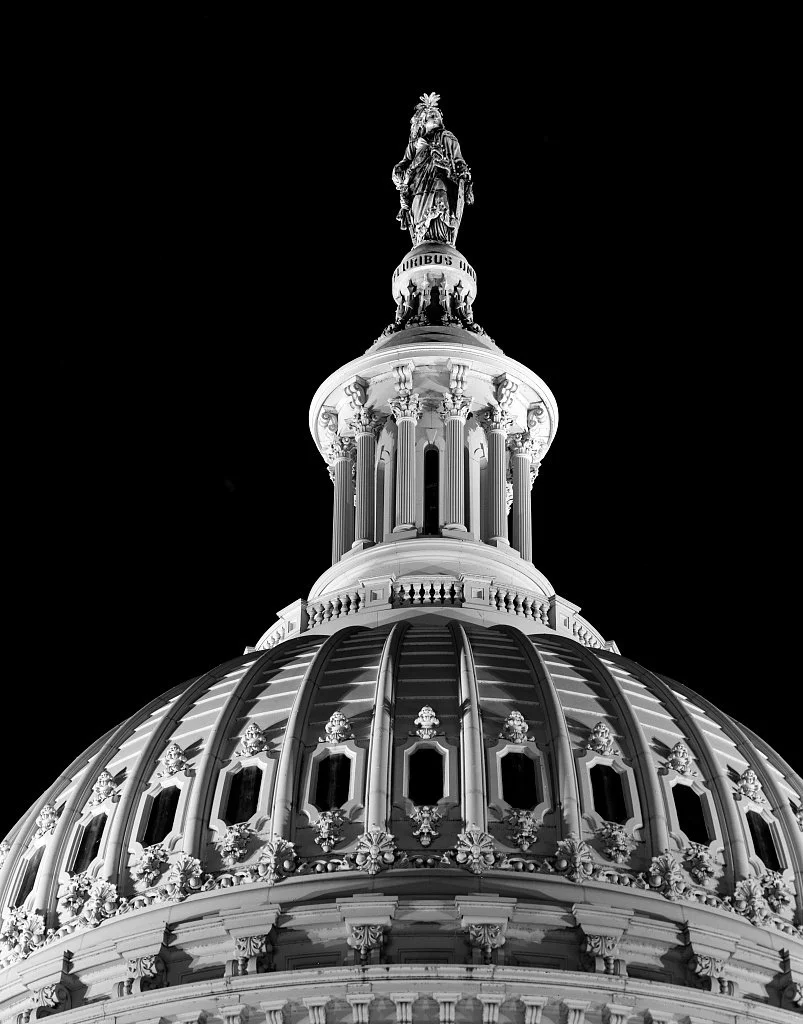
The U.S. Capitol in Washington, D.C., photographed between 1980 and 2006. Carol M. Highsmith, Library of Congress, LC-DIG-highsm-17865. Public domain. This photograph identifies an institution; it does not show a bill being debated.
Require an explanation beside each revision
Have a committee group change one phrase and write the problem that prompted its change. “Fifteen minutes” might make the proposal more specific; an exception for assemblies might make it easier to implement. A revision without a reason is not yet an explanation. Keep the old wording visible, and have another student describe exactly what changed.
Then introduce a possibility that a tidy flowchart often hides: a proposal may not advance. The committee can recommend further work rather than forwarding it. Explain that this is a simplified classroom choice, not a complete account of congressional rules. The activity should make room for delay and disagreement without turning them into random penalties.
Make matching language the central checkpoint
Give the two chambers different versions. One adopts a ten-minute period; the other adopts fifteen minutes. Ask whether both have passed the same proposal. Students should identify the difference before moving the bill toward the president. The House explains that a bill must pass both chambers in the same form. Disagreement can be resolved in more than one way; a conference committee is not a compulsory step for every bill.
Ask students to keep a short version log: original wording, change, reason, and decision. They can do this on paper without a new worksheet. The log makes it possible to assess the thinking of a quiet student whose contribution might otherwise disappear inside group discussion.
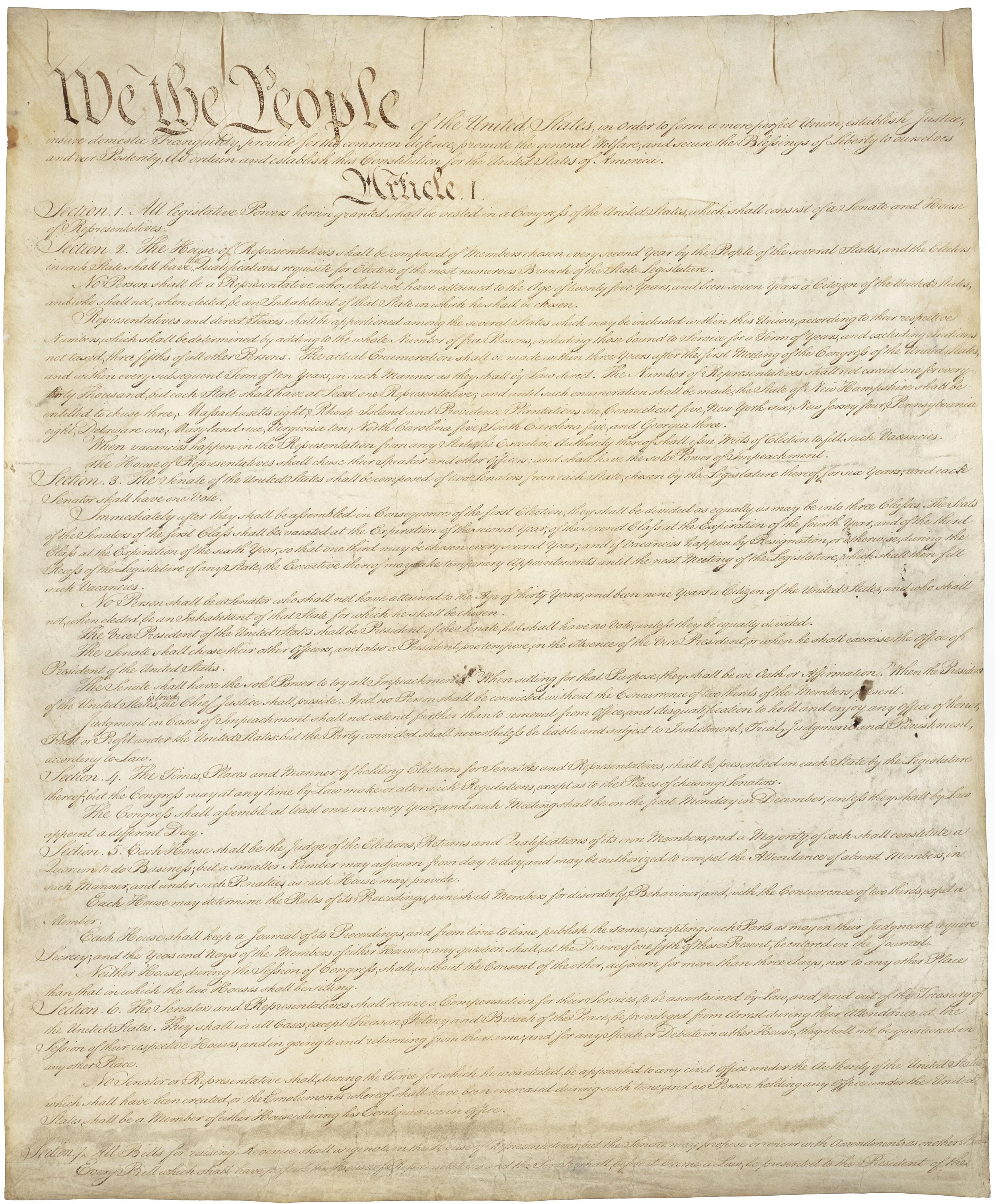
First page of the U.S. Constitution, 1787. National Archives, Record Group 360. Public-domain historical document. Article I provides the constitutional framework; this is not a modern bill.
Treat a veto as a decision rather than a game over card
After the chambers agree, give a fictional president a stated objection. Students must connect the objection to the actual wording, then identify the congressional response being modeled. A regular veto can be overridden by a two-thirds vote in each chamber; it is not automatically final, and one chamber acting alone is not enough.
A signature is one route to enactment, not the only one. Article I also sets out what happens when the president does not return a bill within ten days, Sundays excepted, including the adjournment exception. For an introductory lesson, place that detail in a teacher note rather than teaching an absolute rule that students will need to unlearn.
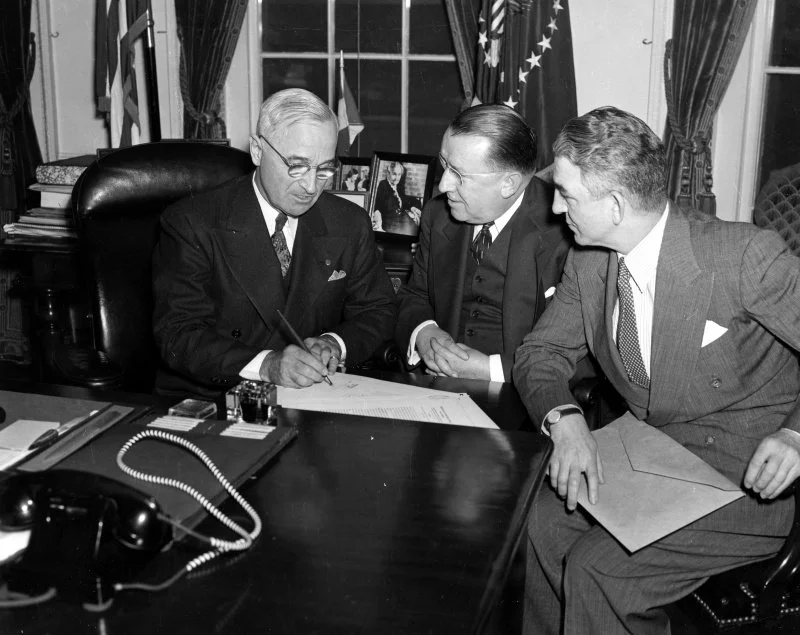
President Harry S. Truman signs S. 591, the Red Cross Reorganization Bill, May 8, 1947. Basil O’Connor and Howard Bonham look on. Abbie Rowe, National Park Service; Harry S. Truman Library & Museum, 73-2382. Public domain.
Check the explanation with one changed fact
End with a new version problem: both chambers passed a bill, but their texts differ. Ask what still needs to happen and why. Then ask what the signing photograph cannot tell us about committee work, revisions, or debate. Students should recognize the difference between evidence of a final moment and evidence of the full process.
If a student lists steps without explaining them, return to one pair of versions. If the student explains the disagreement, extend the task by comparing the simplified model with Congress.gov’s account. The purpose is to notice the model’s limits, not to memorize every procedural exception at once.
Use a reading when background knowledge is the barrier
The routine above can be taught with public sources and a short teacher-written proposal. A structured reading is useful when students need a shared account of committees, voting, and the president before they can explain their choices.
How a Bill Becomes a Law | Lawmaking Process | Government Lesson | Make a Bill
View this HistoraEDU resource on TPT
How a Bill Becomes a Law provides a reading, embedded comprehension questions, and a Create Your Own Law activity. The live listing identifies it as a non-editable PDF. Use the version-log routine as an additional teaching approach, not as a claim that this exact simulation is included.
Sources and image credits
Congress.gov legislative process overview
House explanation of resolving differences
Constitution transcript Article I Section 7
Product thumbnails: HistoraEDU, reproduced from the exact current TPT listings at the owner’s request. Archival sources do not endorse HistoraEDU or its products. No claim to original U.S. Government works.
