
By HistoraEDU
A student can find Clara Barton’s name in seconds but cannot name the people in a hospital-yard photograph. It is tempting to turn that difference into a ranking of importance. Instead, teach students to ask what each surviving record makes visible—and what it leaves unresolved.
The aim is not to replace a famous person with an invented list of forgotten heroes. Students can acknowledge work without supplying identities, motives or achievements that the evidence does not establish. A careful sentence can give credit and keep a question open at the same time.
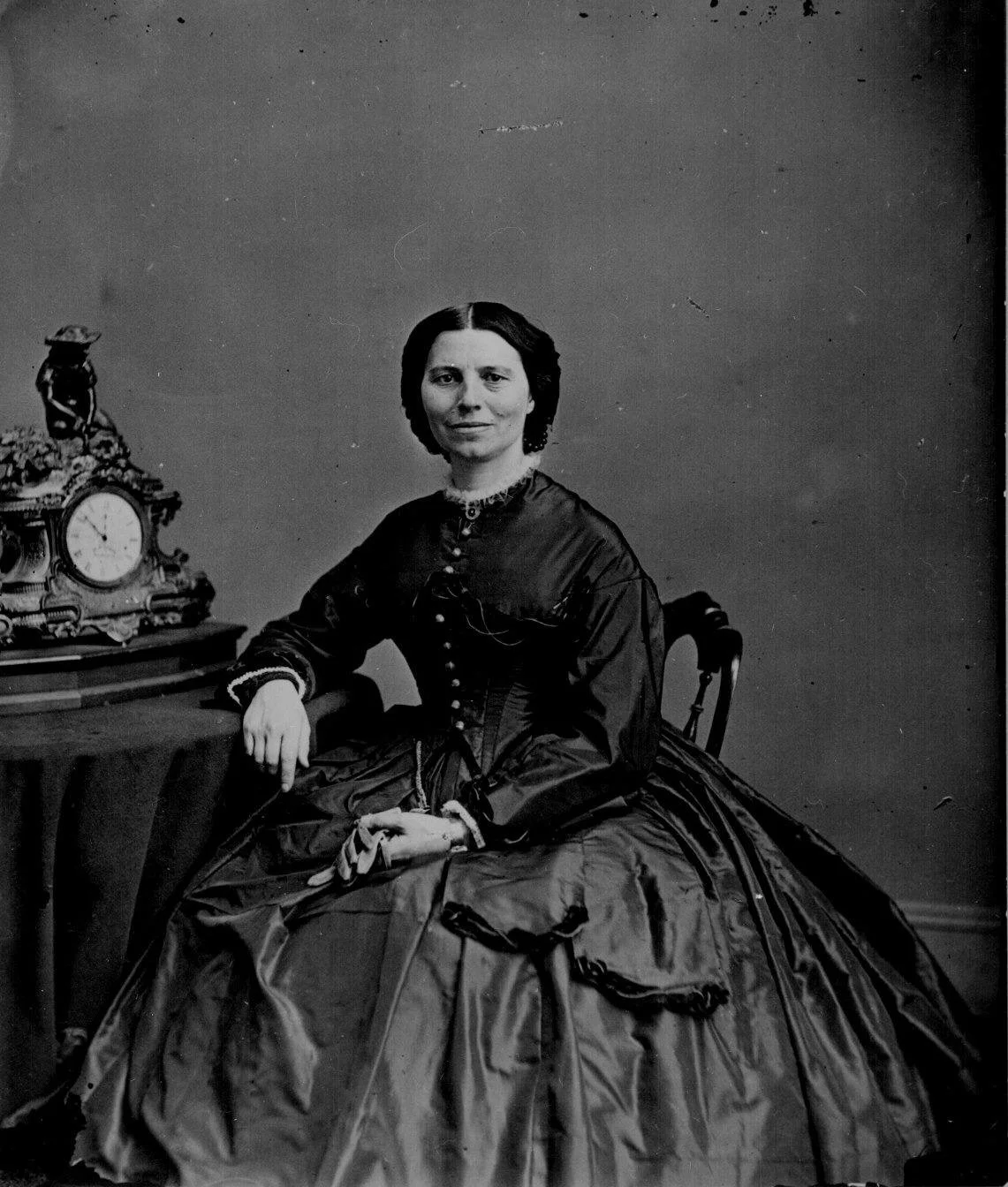
Clara Barton, identified in the National Archives’ portrait list. This posed portrait is not a photograph of her working at Antietam. Credit: National Archives, NAID 526057, 111-B-1857. Public domain. Image source
Separate a named person from a complete account
Begin with the National Archives’ identified portrait of Clara Barton. Ask, “What does the catalog let us name?” Then ask, “What work does this posed portrait actually show?” An identification supports naming the sitter; it does not make the photograph a record of every task she performed.
Pair the portrait with a brief, non-graphic selection from the National Park Service’s transcription of Barton’s account of Antietam. The page identifies its source as an essay in the Clara Barton papers at the Library of Congress. Present it as a transcribed account, not an event-day diary or an unmediated recording. The page’s update date is not the essay’s composition date.
Select the passages about drivers, unloading wagons and provisions. Barton refers to “my men” and to the “good women of the country” who supplied items. Her account therefore acknowledges collective participation, even though those short passages do not name each person. Preview the full page yourself: surrounding passages contain graphic medical descriptions and need not be assigned for this task.
Use two columns headed “identified in this record” and “work acknowledged without individual names.” Do not make the second column a blank to fill with guesses. Nor should students conclude that unnamed people can never be identified in any other source. This is a limit of the selected evidence.
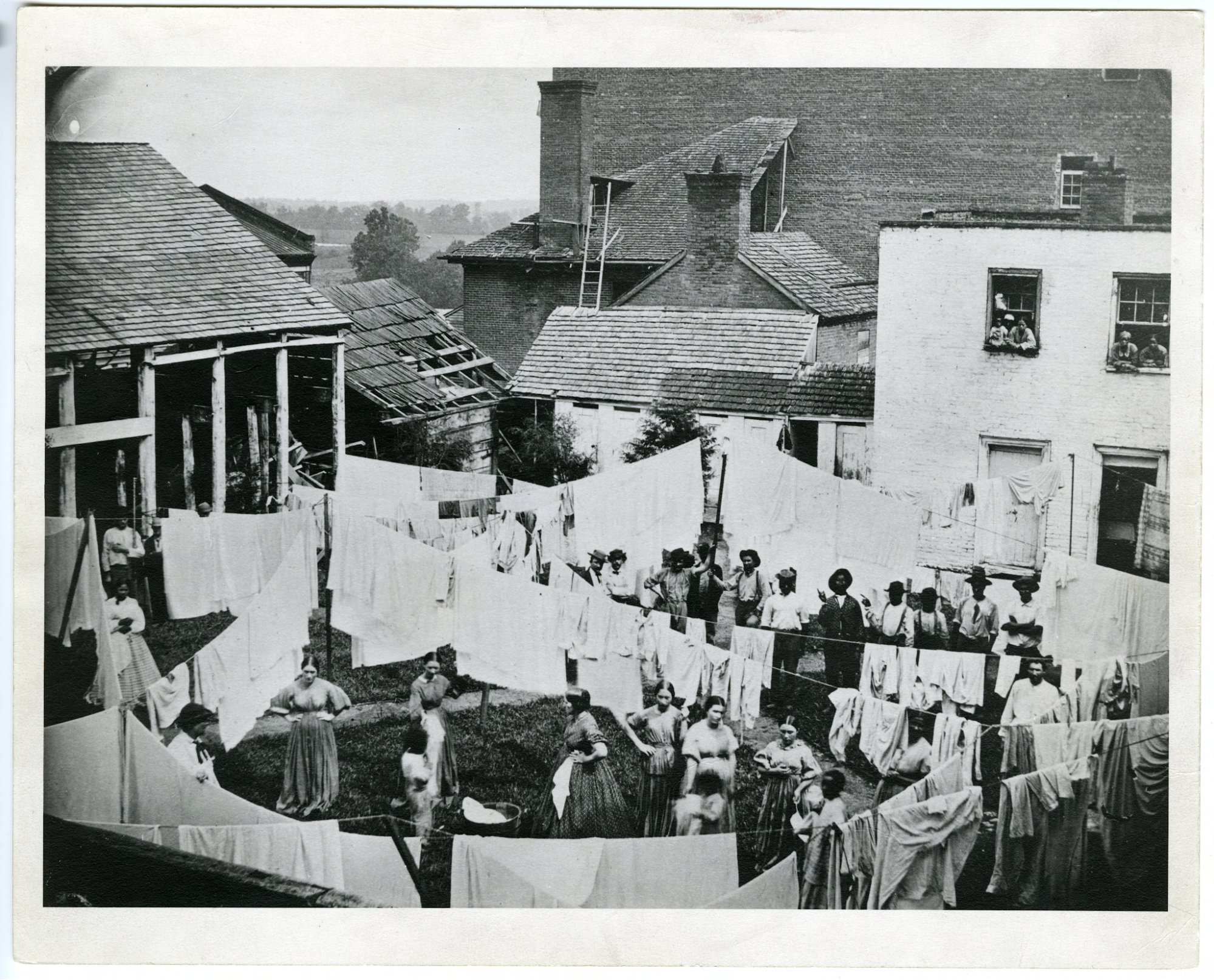
Hospital Yard, Nashville, July 1863. People and hanging laundry appear in a military hospital yard; the record does not name each person. Library Collection, ID 3248, negative 245. Courtesy Tennessee State Library & Archives. No copyright—United States. Image source
Describe collective work without inventing a biography
Now introduce the Tennessee State Library & Archives record titled Hospital Yard, Nashville, dated July 1863. Its description identifies a military hospital yard with men and women among hanging laundry. Its subject terms include laundry and laundresses, but the displayed record does not give individual names.
Have students first point to visible details: lines of fabric, people in the yard and figures at windows. Next, ask which information comes from the catalog rather than the image alone. The place and date belong in that second category. Do not assign a person’s occupation, racial identity, legal status or relationship to someone else solely from appearance.
Try this model label: “This July 1863 photograph records people and hanging laundry in a Nashville military hospital yard. The catalog connects the image with laundry work but does not identify each person. It can help us ask whose labor a named-person biography leaves outside its frame; it cannot tell us every person’s duties or motives.”
Compare that with “These nurses all volunteered because they admired Clara Barton.” The second sentence invents a shared occupation, motive and connection. Students should cross out those additions, not decorate them with a cautious-sounding ‘probably.’ Nothing in these selected records places Barton in this yard.
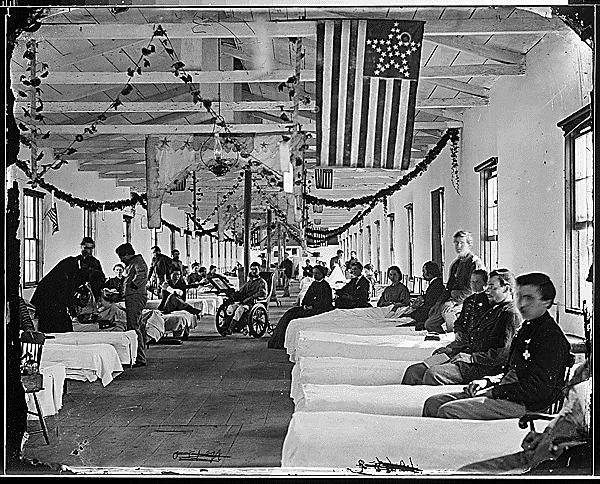
Ward in Carver General Hospital, Washington, D.C.—a separate setting from Nashville and Antietam. Credit: National Archives, NAID 524592, 111-B-173. Public domain. Image source
Make a missing name into a research question
Use the Carver General Hospital ward photograph as a third, separate setting. The National Archives identifies the place as Washington, D.C. It is not the Nashville yard or Barton’s Antietam scene. Ask students which questions about staffing or everyday work a view of beds and occupants leaves unanswered.
A useful next-source request is specific: “Could a staff list, pay record, hospital report or personal account identify workers at this institution around the photograph’s date?” That is a research proposal, not a claim that such a document survives or contains the answer. A record may name someone without fully explaining their work; a task may be documented without an individual name.
Keep the class’s conclusion bounded. These examples show different degrees of identification in the records students examined. They do not prove that every famous person was documented completely, that all other workers were anonymous or that one archive deliberately erased a particular person. Ask what evidence would be needed before making those larger claims.
For a twenty-five-minute lesson, spend five minutes identifying the records, seven sorting named people and acknowledged work, eight revising a caption and five discussing the next-source question. Keep each image beside its own catalog information so details cannot drift from one setting to another.
For support, provide a short glossary of portrait, transcription, catalog and attribution, then offer sentence starters: “The record identifies…” and “This source does not tell us….” For extension, ask students to distinguish an absent name from an absent description of work. Those are related, but not identical, gaps.
End with a two-sentence exit ticket: one supported acknowledgment of work and one precise unanswered question. Assess accurate credit, source boundaries and a useful research direction—not the number of heroic adjectives or invented names. No role-play or imagined first-person testimony is needed.
Choose reading for context, not as a substitute for the records
These HistoraEDU resources are non-editable PDF readings with comprehension and short-answer questions, vocabulary and teacher materials. Use one to establish context before the independently linked evidence task. The attribution columns and caption-revision routine above are suggested extensions, not organizers claimed to be included in the products.
Clara Barton: The Woman Who Changed War Medicine | Reading Worksheet
Use the Barton reading to establish biographical context, then ask which claims are supported by her named account and which other participants it acknowledges without naming.
Civil War Nurses: Heroes Behind the Battle Lines | Reading Worksheet
Use the nursing reading to frame questions about hospital work. Keep the Nashville photograph’s actual catalog description beside it; do not label every person pictured a nurse.
Women of the Civil War: Spies, Soldiers, and Survivors | Reading Worksheet
Use the wider women’s-roles reading to generate a focused research question about one kind of work. Distinguish regional or occupational background from evidence identifying a particular person.
View this HistoraEDU resource on TPT
Sources and credits
NPS transcription and provenance of Barton’s Antietam account
Tennessee State Library & Archives: Hospital Yard, Nashville
TeVA image attribution and copyright information
National Archives Civil War photograph descriptions and public-domain statement
Product covers: HistoraEDU, reproduced from the exact linked TPT listings at the owner’s request. Photographs and archival reproductions are credited beside each image. No claim to original U.S. Government works. Source institutions and depicted people do not endorse HistoraEDU or its products.
