
By HistoraEDU
The biography paragraph begins with a birth date, moves through three jobs and ends with “He was important.” Every sentence may be accurate, yet none explains the action the assignment asked about. Adding more facts rarely solves that problem. Before students draft, ask them to give each note a job: evidence of the relevant action, context needed to understand it, or information to leave out of this paragraph.
Use a small, dated document rather than an entire life as the worked example. The question here is: What did Lincoln propose in his July 1862 emancipation draft, and how can a writer distinguish that proposal from a later issued proclamation? The goal is a source-based paragraph, not a ranking of Civil War leaders.
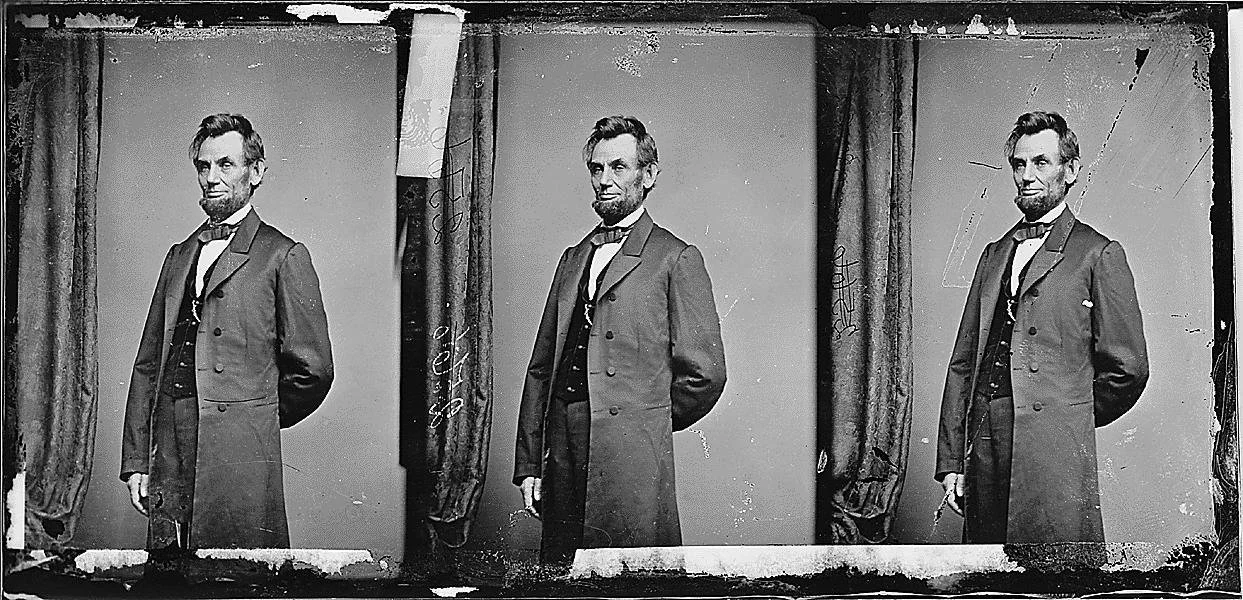
Abraham Lincoln, approximately 1863, in three photographic views. This portrait identifies the subject; it does not depict the drafting of a proclamation. Credit: National Archives, NAID 527823. Public domain. Image source
Sort notes before writing sentences
Open the Library of Congress’s July 22, 1862 manuscript with its transcription. Give students the institutional identification and explain that the transcription’s numbered notes are modern editorial aids, not words Lincoln wrote. Prepare four short notes in ordinary classroom text, with a source beside each one.
Relevant action: the draft proposes using commander-in-chief authority to declare freedom on January 1, 1863, for enslaved people in states where federal constitutional authority would not then be recognized and maintained. Source: the manuscript’s second paragraph.
Necessary context: this is an early draft associated with presentation to the cabinet in July 1862, not the final proclamation issued on January 1, 1863. Sources: the Library of Congress identification and the National Archives’ final document.
Useful detail only if the paragraph addresses revision: the manuscript contains a crossed-out word and a replacement. The transcription’s note identifies Lincoln changing “adoption” to “abolishment.” Source: the manuscript and editorial note 2. Do not turn that visible correction into a claim that you know every reason behind his policy.
Interesting but unused here: Lincoln’s birth year, 1809, appears in the catalog’s creator identification. It does not explain the proposal in this paragraph. “Unused” means irrelevant to this question, not historically worthless.
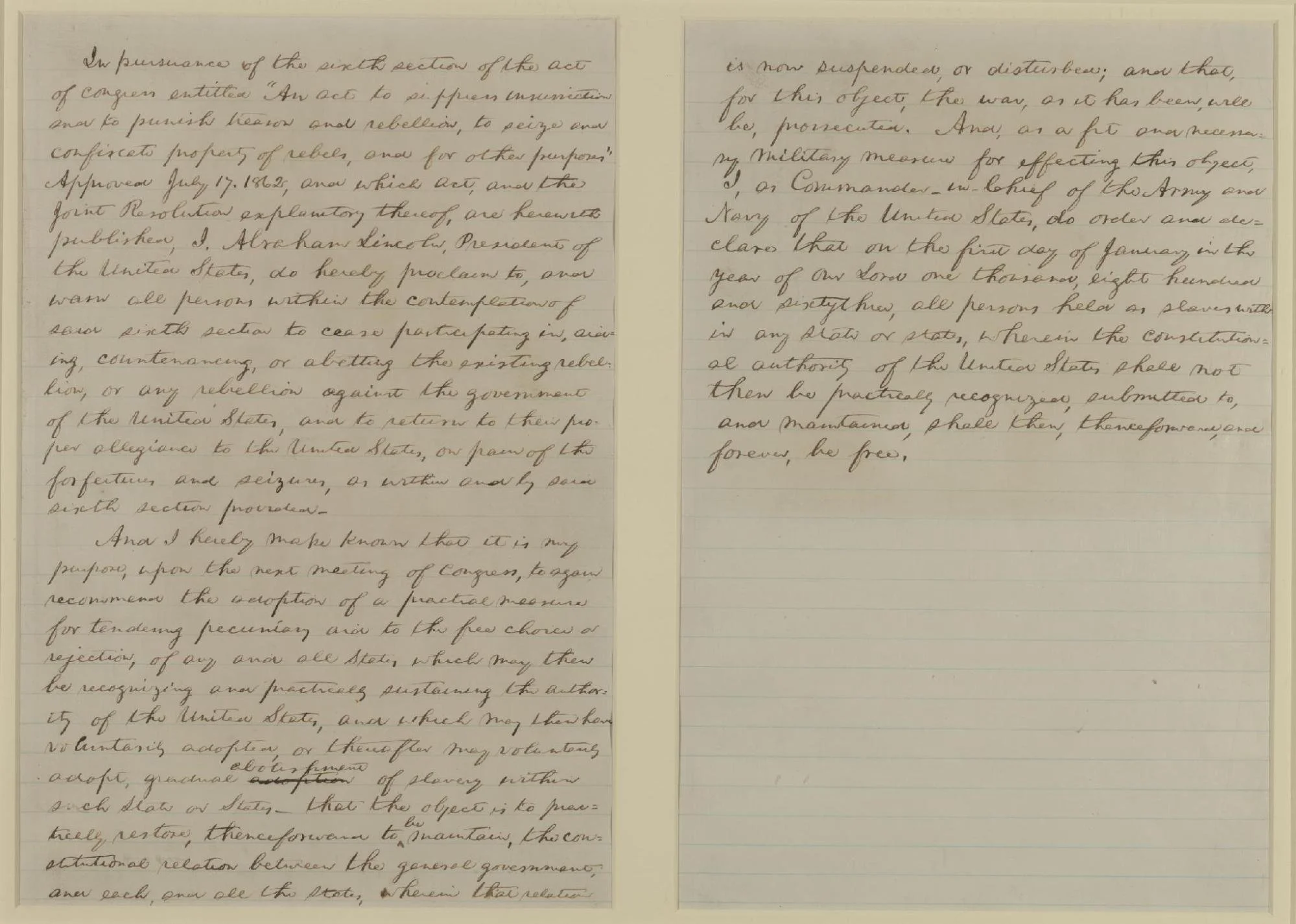
Lincoln’s July 22, 1862 draft, reproduced from the original manuscript, includes visible revisions. It is not a student note sheet. Credit: Library of Congress, Manuscript Division, Abraham Lincoln Papers. Public domain. Image source
Show how paraphrasing changes the structure of the explanation
Have students close the source and say the note’s meaning aloud, then reopen it to check every important qualification. This is not a memory test or an invitation to substitute a thesaurus word in each copied sentence. They must preserve who acted, what was proposed, the date and the limits of the claim. Put quotation marks around any wording deliberately retained verbatim.
Model this short paragraph: “In the July 1862 draft preserved by the Library of Congress, Lincoln proposed emancipation as a wartime use of his authority as commander in chief. The proposed January 1863 action depended on whether states then recognized federal authority. Because the source is a draft, it shows a proposal under development; it should not be labeled the final proclamation.” Attach the manuscript link to the source attribution in a digital assignment, or give a short reference beneath handwritten work.
Ask students to identify what each sentence does. The first answers the question; the second preserves a condition; the third prevents a date-and-document mix-up. Then compare the paragraph with the original. A paraphrase can still be inaccurate if it quietly removes a condition, turns a proposal into a completed action or adds a motive the source never states.
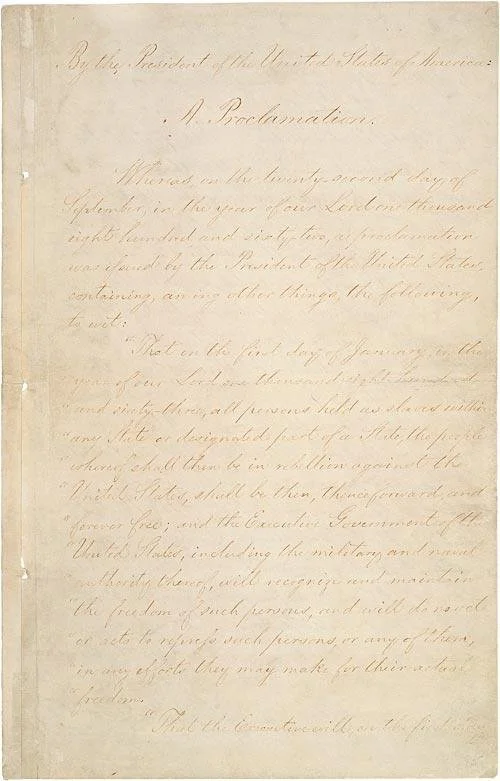
First page of the final Emancipation Proclamation, January 1, 1863. This is not the July draft; consult all pages or the full transcript. Credit: National Archives, Record Group 11. No claim to original U.S. Government works. Image source
The National Archives holds the final January 1, 1863 proclamation. Its full text names designated rebellious areas and exceptions; it did not abolish slavery everywhere. Use the first-page reproduction as a document identifier and the linked full transcript for reading. A single page is not evidence of every provision. This check keeps a neat research paragraph from becoming an oversimplified account of emancipation.
Make the same writing routine work across six figures
Keep the question pattern consistent: What specific action can a dated source establish, and what context prevents a misleading explanation? Change the question’s subject, not the demand for evidence. The six resource cards below suggest starting questions; they do not supply verified answers in advance.
For a twenty-five-minute lesson, allow five minutes to read and mark the source, five to sort four notes, seven to draft, five to compare the draft against the source, and three to explain one deliberate omission. Require a source label on every note, even one left out of the final paragraph. This makes it possible to recover the evidence rather than trying to reconstruct where a copied sentence came from.
For support, provide the source excerpt, a brief glossary and the three sorting headings. Let students rehearse the explanation orally before writing. For extension, add another dated source and require students to state whether it confirms, complicates or merely addresses a different question. Do not require a second source to disagree.
Finish with a practical peer check: underline the sentence that answers the question, circle the attribution and mark any unsupported addition. The writer then submits one revised sentence and a note explaining why an accurate but irrelevant fact stayed out. That visible choice is evidence of research judgment, not just fewer words.
Use a reading as a starting point rather than a finished paragraph
These HistoraEDU resources are non-editable PDF readings with listed comprehension and teacher materials. Use one to orient a student’s research, then require a dated institutional source for the specific action. The note-sort and paragraph routine above is a teaching suggestion, not a claim that the PDFs contain this exact organizer.
Abraham Lincoln as Wartime President | Civil War Reading Worksheet
Lincoln starting question: What does a dated draft or issued proclamation establish, and which label keeps the two from being confused? Use the reading for context, not as a sentence bank.
Frederick Douglass and the Civil War | Reading Comprehension Worksheet
Douglass starting question: What evidence shows a particular recruitment or equal-treatment intervention? The NPS biography is a useful gateway; students should identify the specific source behind their selected action.
Ulysses S. Grant | Civil War Reading Comprehension Worksheet
Grant starting question: What did one dated order or letter direct, and which background fact is necessary to explain it? Leave reputation statements out unless the question actually concerns reputation.
Robert E. Lee | Civil War Reading Comprehension Worksheet
Lee starting question: Which dated source supports one command decision, and what does it leave unanswered? Keep Confederate leadership within the political context of slavery rather than writing an isolated military tribute.
Stonewall Jackson | Civil War Reading Worksheet
Jackson starting question: What can a dated account establish about one action, rather than simply repeating a nickname? Sort evidence of the action separately from later descriptions of his reputation.
Jefferson Davis & the Confederacy | Civil War Reading Worksheet
Davis starting question: What does a dated message show him asking others to do, and what evidence would establish whether they did it? A proposal and its outcome need different notes.
View this HistoraEDU resource on TPT
Sources and credits
Lincoln July 22 1862 draft and annotated transcription
National Archives final Emancipation Proclamation and transcript
National Archives Lincoln portrait record
NPS Frederick Douglass biography
NPS on slavery and the causes of the Civil War
Product covers: HistoraEDU, reproduced from the exact linked TPT listings at the owner’s request. Photographs and archival reproductions are credited beside each image. No claim to original U.S. Government works. Source institutions and depicted people do not endorse HistoraEDU or its products.
