
By HistoraEDU
An archive supplies a useful photograph—and a title you would not use to describe people today. Copying it into a slide makes the archive’s language sound like yours. Silently replacing every term can erase evidence about how the record was described. Teach students a third option: separate the historical title, the classroom description and the evidence for present-day naming.
Choose one record, not an Arctic vocabulary quiz
Use National Archives photograph 531122, dated 1935 and held in the Records of the Office of the Chief Signal Officer. DocsTeach supplies the catalog title: “Summer skin tent with an old Eskimo woman in foreground, Point Barrow, Alaska.” Explain before displaying it that the quoted term belongs to the record’s description, not the class’s preferred name for a community. Students do not need to repeat it aloud.
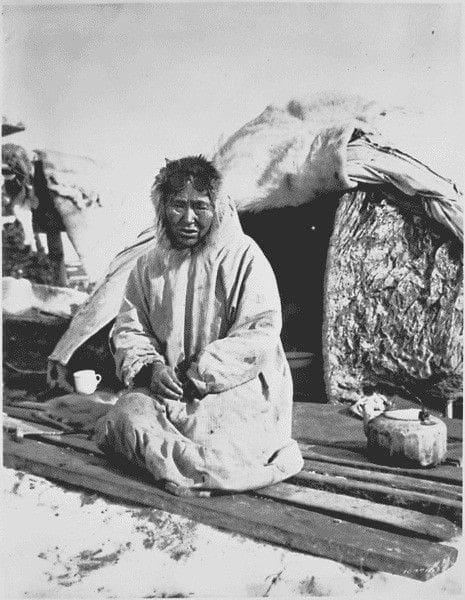
Point Barrow, Alaska, 1935. National Archives, identifier 531122, Records of the Office of the Chief Signal Officer, RG 111; public domain. The individual photographer and the woman’s personal name are not given in the supplied record. The photograph is examined here as an archival source, not as a representative portrait of all Arctic people. Image source
The photograph is useful precisely because its caption does not tell us everything. The record locates the scene and supplies a date, but does not name the woman. Do not invent her name, family, language or personal identification from her clothing. Nor should one tent become a statement about every household in northern Alaska.
Put naming authority beside catalog authority
Read the North Slope Borough’s Utqiagvik community page alongside the record. It describes an Iñupiat community and lists contemporary institutions, including the Native Village of Barrow. Use that community context rather than treating an outsider’s umbrella label as the final authority. Keep the record’s Point Barrow location distinct from a claim that you have identified the exact street or settlement in the picture.
The Alaska Native Language Center explains that many Alaska Natives reject the older colonial term and prefer names from their own languages. It also describes variation in usage, including broader organizational uses of Inuit. The lesson is not “replace one word everywhere.” Inuit, Iñupiat and Yupik are not interchangeable local labels. Follow the particular community and source, including spelling, rather than assigning a name from a map’s broad Arctic region.
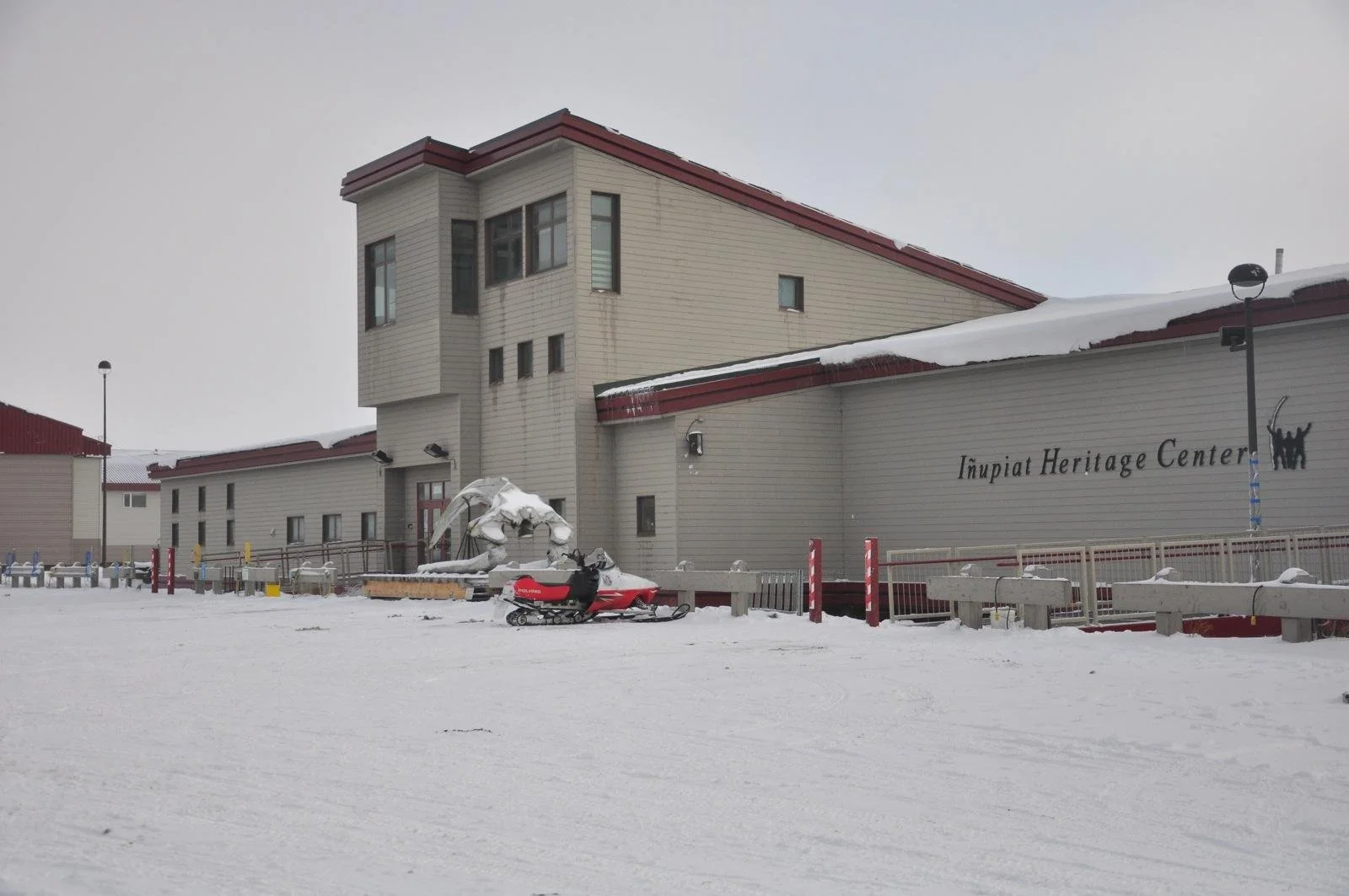
Iñupiat Heritage Center, Utqiagvik, Alaska. NPS Photo, public domain; photograph date not specified on the source page. The contemporary institution’s name is evidence about its own naming, not proof of the identity of a person in the 1935 photograph. Image source
A current institution may retain a place name that differs from the city’s current name. Preserve “Native Village of Barrow” when naming that institution; do not automatically rewrite it as though it were a caption error. Ask: “Are we naming a person, a people, a language, a place or an organization?” Those are different editorial decisions.
Model a three-part source note
Give students three boxes: Record identification; Our description; Naming evidence and limits. In the first, record the archive, identifier, date and a link. Preserve the catalog title as a clearly attributed quotation when the wording itself matters. In the second, write a plain description without adopting the historical label. In the third, explain what the community source establishes—and what it does not.
A worked note could read: “Woman seated outside a skin tent, Point Barrow, Alaska, 1935. National Archives, identifier 531122. The linked catalog title contains an outdated umbrella term. North Slope Borough sources provide Iñupiat community context for the region; this record does not identify the woman by name.” This retains traceability without pretending a modern editor has recovered a missing biography.
Ask partners to underline every naming decision and mark its authority: archive, community source or unknown. If a student writes “a Yupik woman,” ask what source establishes that identification. If the answer is only the appearance of the photograph, revise the sentence—not the person’s identity.
Transfer the decision to a different place
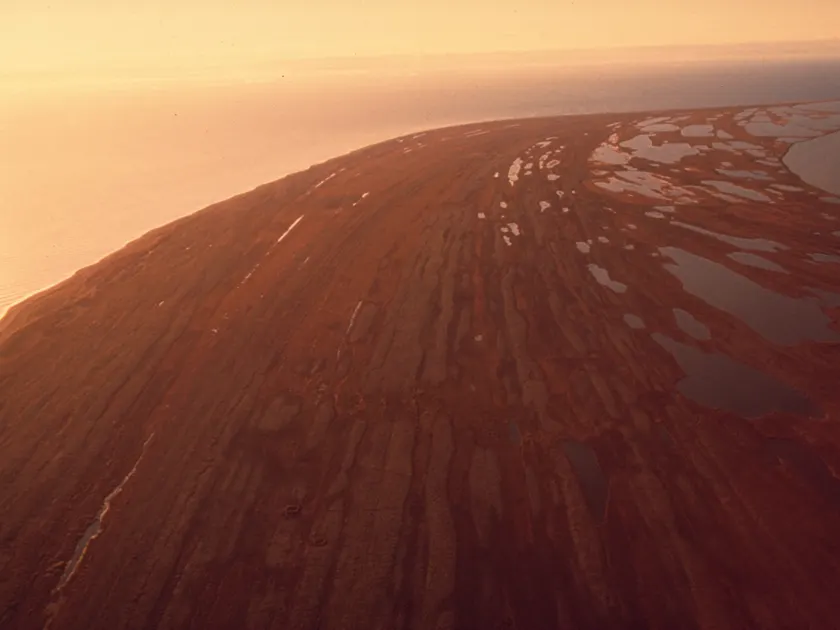
Modern aerial view of coastal ridges at Cape Krusenstern, northwestern Alaska. NPS Photo, public domain; date not specified. This is a different location from the Point Barrow record. Use its documented place name rather than assigning an unseen person’s identity. Image source
Show the Cape Krusenstern coastal photograph as a new case. It is not the Point Barrow scene and contains no identifiable person. A filename such as “Arctic people” would not justify adding a community label to the image. Students should name the documented place and explain what further community-specific source would be needed for a discussion of its human history.
For an exit ticket, students submit a source note and a one-sentence editorial explanation: “I retained ___ for traceability, used ___ in my own description because ___, and left ___ unresolved.” Assess the reason for the choices, not the number of unfamiliar terms memorized. Offer a prefilled identifier and sentence frames for support; ask advanced readers to compare an institution’s own name with an archive’s subject heading. Never ask an Indigenous student to speak for everyone or approve classmates’ terminology.
Use a reading without making it the naming authority
The archive exercise is an added teaching routine, not a feature promised inside either resource. These readings can supply selected background passages and comprehension practice, but use them teacher-led with the qualifications below—not as an unchecked naming guide.
Arctic Native Americans Reading Comprehension Worksheet
The Arctic reading covers environment, technology and historical change, with comprehension questions, vocabulary and an answer key. Its description specifies an editable Google Doc. Use selected background sections; for its Nunavut passage and vocabulary, explain that the territory created in 1999 has a public government for all residents, not an exclusively Inuit government. This distinction does not diminish Inuit political organizing or the land-claims achievement.
Inuit Culture Reading Comprehension | Arctic Native Americans
The Inuit reading is described as an editable Google Doc with a reading, questions, vocabulary and an answer key. Do not adopt its opening three-family account as settled North American language classification, or its labels as interchangeable community names. ANLC distinguishes established language relationships from proposed larger groupings. For this lesson, consult the community and ANLC sources before using a selected passage; the source reading itself has not been revised.
View this HistoraEDU resource on TPT
Sources and credits
National Archives photograph 531122 and original catalog title
North Slope Borough: Utqiagvik and community institutions
Alaska Native Language Center: naming guidance
ANLC: language relationships and proposals
Nunavut Legislative Assembly: creation of Nunavut
Nunavut Legislative Assembly: public government for all residents (text only)
Product covers: HistoraEDU, reproduced from the exact linked TPT listings at the owner’s request. Photographs and archival reproductions are credited beside each image. No claim to original U.S. Government works. Source institutions and depicted people do not endorse HistoraEDU or its products.
