
By HistoraEDU
A culture chart can be accurate and still teach very little. Students write “salmon” in the food column, then move on. The word hides the work: knowing when fish arrive, preparing equipment, processing a catch before it spoils, storing food and arranging its movement between households or trading partners. Replace the food fact with a chain of connected tasks.
Give the class two work strips, not one coastal calendar
Label one strip “Chinook context: lower Columbia River mouth” and the other “Kiks.ádi context: Sitka, Southeast Alaska.” Each has five boxes: seasonal opportunity; harvesting; processing; storage or later use; exchange or distribution. Leave a box open when the source does not answer it. The blank is an evidence boundary, not an invitation to borrow a fact from another nation.
Students will compare how work connects across time. They are not building a single calendar for all Northwest Coast peoples, allocating jobs according to stereotypes or reenacting a community’s ceremony. Keep a source label on every strip so its geographic and historical limits remain visible.
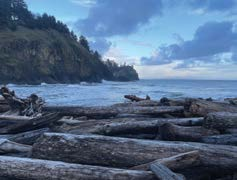
Modern coast at Cape Disappointment, by the Columbia River mouth. NPS Photo, public domain, reproduced in the 2022 High Potential Historic Sites report, p. 89; photograph date not specified. This is place evidence, not a photograph of a historical Chinook harvest. Image source
Build the lower Columbia strip from a community partnership
Use “Chinook Fishing” from Chinook Story, a collaboration between the Chinook Indian Nation and Portland State University historians. Its account of the river-mouth context describes annual fish runs, fresh consumption, smoke-drying for winter and trade. It also distinguishes several fish and fishing methods. Do not turn a statement about fish runs into an exact month-by-month schedule that the passage does not provide.
Model this first chain: “Annual fish runs → harvest → eat some fresh and smoke-dry some → food available later in winter or for trade.” Under the arrows, write questions rather than invented answers: “What equipment must be ready?” “Who does the processing?” “Where is the stored food kept?” “What additional source would establish those details here?” The chain explains why timing and preservation matter without claiming that this short source contains a complete labor history.
Now ask students to improve “The Chinook ate salmon.” A stronger response names the lower Columbia context and explains how preservation connected a seasonal catch to later use. It should not claim that salmon was the only food, every fish was processed identically or all Chinookan communities used the same schedule.
Build the Sitka strip independently
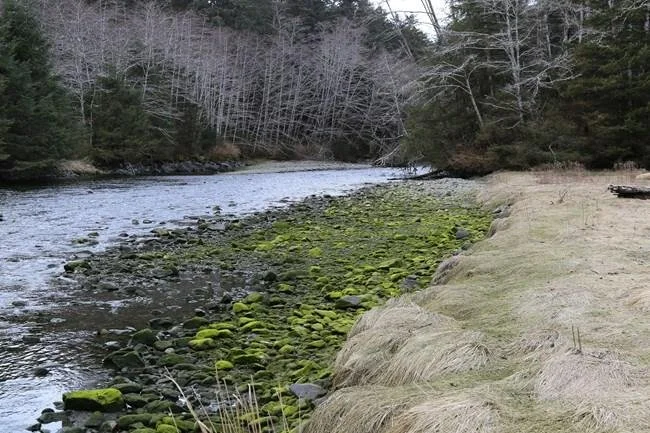
Kaasdahéen, the Indian River at Sitka, a documented Tlingit salmon-harvesting area. NPS Photo, public domain; modern photograph, date not specified. The river view locates the Kiks.ádi case; the accompanying historical account supplies the seasonal work. Image source
For the second case, use the National Park Service account of Kiks.ádi fishing camps at Sitka, which draws on oral history and other evidence. It describes summer movement to salmon camps, catching and curing fish, gathering plants as available, remaining through fall and further harvesting after returning toward winter villages. The account includes Kiks.ádi elder Isabella Brady’s recollection of smokehouses along the Indian River. Attribute her recollection; do not flatten it into an anonymous claim about “Native Americans.”
The worked strip can read: “Summer camp at salmon streams → catch and cure fish → continue work into fall → return toward winter villages with further seasonal harvesting.” Add a linked storage note from Sealaska Heritage Institute’s Salmon I curriculum: its teacher background describes dried fish bundled and stored for later use. Label that note “broader Tlingit curriculum context,” not a detail proved about Brady’s particular household.
Keep the sources’ scales visible. One describes Kiks.ádi places and remembered work; another explains preservation in a Tlingit teaching resource. They can inform each other without becoming identical evidence. Do not fill the Sitka exchange box by copying the lower Columbia trade statement. Find a source for this specific case or leave the question open.
Make students explain the missing labor
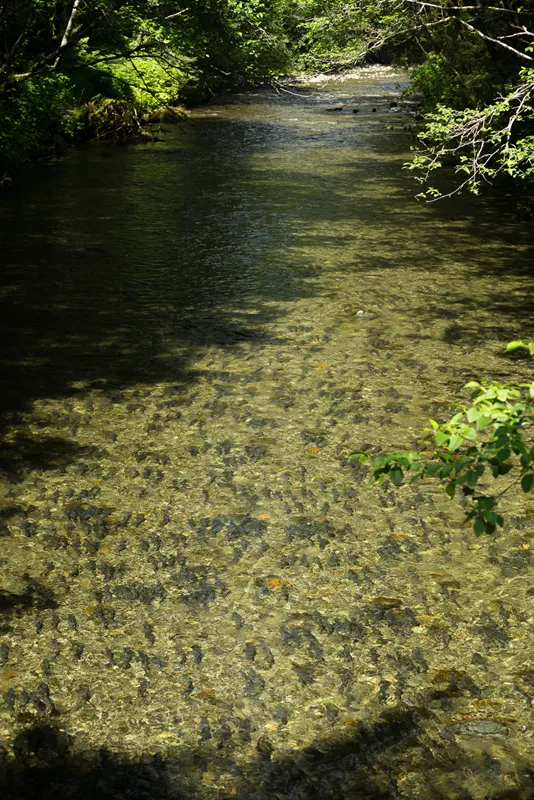
Salmon in the Indian River at Sitka National Historical Park. NPS Photo by Weston Kessler, public domain; date not specified. Fish in a stream show availability, not the labor of harvesting, preserving or distributing food. Image source
Place the salmon photograph next to both strips and ask: “Which box does this image help us discuss? Which boxes remain invisible?” A fish-filled stream is not already a winter food supply. Students should identify the intervening work and cite text for it. The image also cannot establish who held access rights, how work was shared or which tools a particular family used.
Give pairs three removable labels: knowledge, material and coordination. They place each beside an arrow and explain a question it raises. For example, the processing-to-storage arrow raises a material question about containers and a timing question about completing work while a catch is available. These are analytical prompts, not unsupported claims about an exact historical division of labor.
For support, supply the main verbs and ask students to connect two stages with “because.” For extension, have students compare the source’s stated timing with what it leaves unspecified. Neither group needs to prepare food, copy clan designs or perform cultural protocols. Public descriptions of ceremonies are not classroom reenactment instructions.
Assess the connection, not a longer list
The exit task is a three-sentence explanation: name one community-specific case; explain how two tasks connect across seasons; identify one unanswered question and the kind of source needed. A student who writes “They fished, dried and traded” still needs to name the people and explain the relationship. A student who invents a precise calendar has exceeded the evidence.
Put the routine beside the right reading
These are separate reading options, not a requirement to buy all three. Their listings describe editable Google Docs with reading passages, comprehension questions, vocabulary and answer keys. The work strips and source comparison above are additional teaching suggestions, not promised product components.
Pacific Northwest Native Americans Reading Passage and Questions
Use the regional reading to introduce relationships among rivers, resources and settlement. Treat its broad Northwest Coast descriptions as questions to investigate, not identical rules for every nation.
Chinook People Reading Comprehension | Native American History
Use the Chinook reading’s Columbia River, fishing and trade topics for background before students construct the lower Columbia strip. Let the community-partnership source establish the specific seasonal claims.
Tlingit People Reading Comprehension | Native American History
Use selected Tlingit reading sections on geography and economy before the Sitka case. Keep the Kiks.ádi evidence attributed to that clan and place; a general reading does not replace a local account.
View this HistoraEDU resource on TPT
Sources and credits
Chinook Story: fishing in the lower Columbia context
Chinook Story: community–university collaboration
NPS: Kiks.ádi fishing camps and Isabella Brady’s recollection
Sealaska Heritage Institute: Salmon I, teacher background, PDF p. 17
Product covers: HistoraEDU, reproduced from the exact linked TPT listings at the owner’s request. Photographs and archival reproductions are credited beside each image. No claim to original U.S. Government works. Source institutions and depicted people do not endorse HistoraEDU or its products.
