
By HistoraEDU
“Interview an older relative about the Cold War” sounds like an engaging homework assignment. It also assumes that every student has an available relative, a shared language, a comfortable relationship and permission to discuss political memories. Students should not have to explain why one of those assumptions fails before they can earn the same grade.
Use an archived interview as the common starting point instead. Everyone can investigate a real person’s recollection without bringing family beliefs into class. The task is not to decide whether the speaker or a student’s household held the right politics. It is to identify what this account helps us understand and what it cannot establish alone.
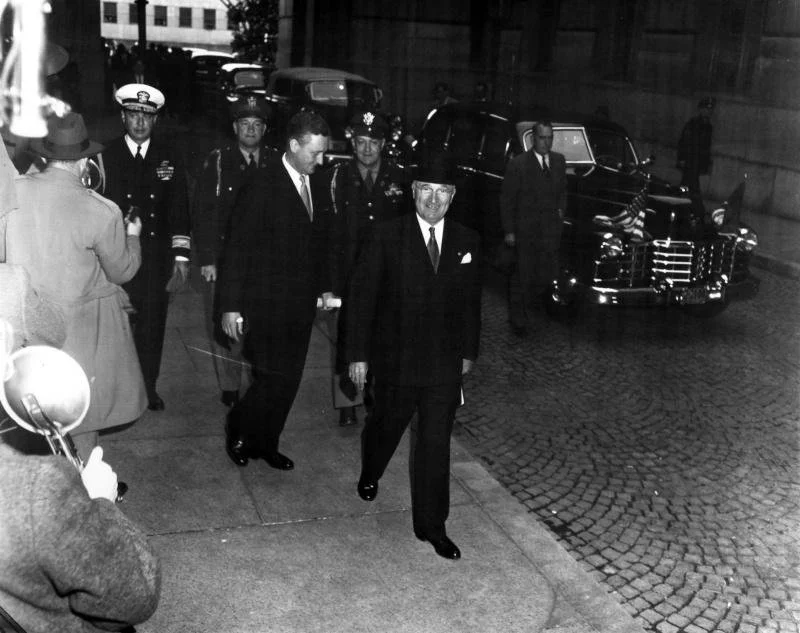
Truman arriving at the State Department Auditorium for the North Atlantic Treaty signing, April 4, 1949. This is not the 1948 working group or the 1972 interview. Credit: Werner, Department of State; Harry S. Truman Library & Museum, 66-2168. Public domain. Image source
Choose a small, identified passage—not a family substitute
Use diplomat Theodore Achilles’s interview with Richard D. McKinzie, Washington, D.C., November 13, 1972, held by the Harry S. Truman Library. Around markers [28]–[29], he recalls 1948 treaty negotiations and representatives seeking revised instructions when disagreements arose.
Focus on his statement: “The NATO spirit was born in that Working Group.” Attribute this evaluation to a participant remembering later, not a neutral narrator. It cannot measure what everyone thought.
Link the identified passage with its source notice: research quotation is permitted, full publication requires permission, and the interviewee made minor edits. Do not republish the transcript wholesale. This task reads text; claims about vocal tone or pauses require checking the recording.
Separate the event date from the remembering date
Give students a four-part source label: speaker and role; interviewer; date of recollection; period described. For this example, they should not place the remembered working-group discussions in 1972 merely because that is when the interview occurred. Nor should they assume the wording was written down during the negotiations.
Then draw two boxes headed “What this account offers” and “What we still need.” A defensible entry in the first is a participant’s retrospective description of negotiating relationships. An entry in the second is another participant’s account or contemporary correspondence with which to check a specific claim. Avoid the shortcut “memory is unreliable, so discard it.” Recollection can reveal meaning and perspective even when factual details need corroboration.
Model a source-based sentence: “Achilles remembered the working group as cooperative and adaptable. His account suggests what he valued about the negotiations, but it does not establish nationwide support for NATO.” Ask students to underline the attribution and circle the limit. Neither part requires a family anecdote.
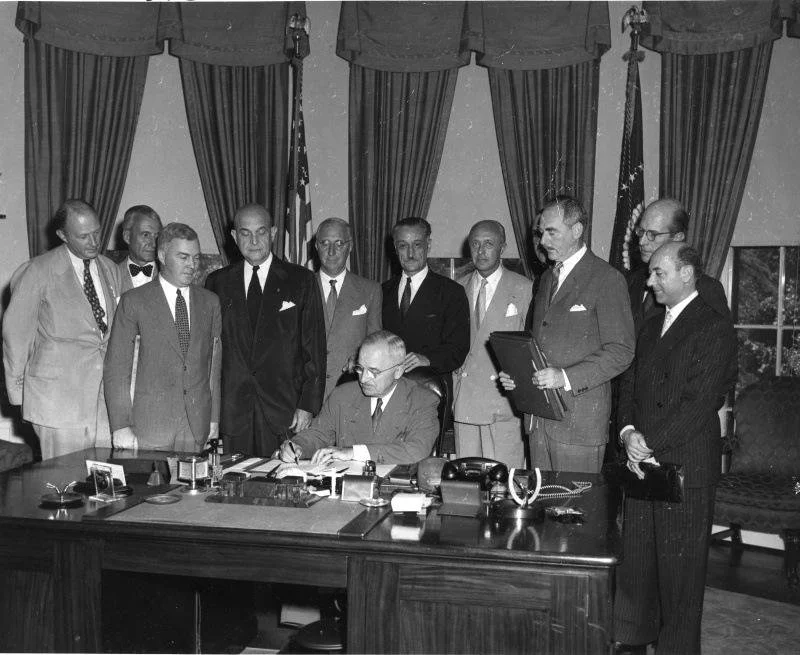
Truman signs the proclamation bringing the North Atlantic Treaty into effect, August 24, 1949. Credit: Abbie Rowe, National Park Service; Harry S. Truman Library & Museum, 73-3194. Public domain. Image source
Let photographs complicate the story, not certify it
Compare the recollection with the photograph of Truman signing the proclamation bringing the treaty into effect on August 24, 1949. This is a later formal event, not a picture of the working-group discussions or of the April 4 treaty-signing ceremony. A room of officials cannot prove that every disagreement had disappeared.
Return to the April 4 arrival photograph above. It records Truman entering the State Department Auditorium for the signing occasion, not the atmosphere in earlier negotiations. Ask students to write one question that neither photograph answers: “How did a representative describe a disagreement privately?” The question points back toward appropriate evidence rather than inviting guesses about facial expressions.
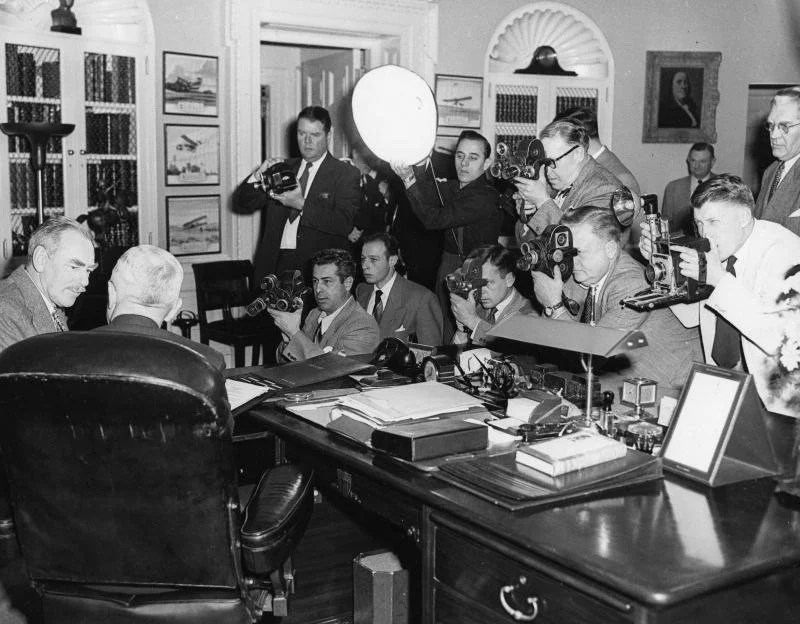
Photographers surround Truman and Dean Acheson during an Oval Office meeting about NATO-related discussions, December 21, 1950. Credit: Abbie Rowe, National Park Service; Harry S. Truman Library & Museum, 73-3487. Public domain. Image source
A December 21, 1950, photograph shows cameras surrounding Truman and Acheson during a meeting associated with NATO discussions. Use the visible photographers to ask how a public record gets framed. The image does not reveal the words spoken, just as a transcript without its recording cannot establish every vocal emphasis. All three photographs concern public officials and diplomacy; none supplies a representative sample of postwar civilian experience.
Make the inclusive option the normal assignment
Set a 25-minute workshop: four minutes for the source label, seven for the passage, six for the two evidence boxes and eight for an individual paragraph. Supply the same materials in class, rather than assuming home internet or access to a willing adult. Offer a readable transcript segment, a glossary of diplomatic terms and partner discussion before independent writing.
Use a sentence frame if needed: “In an interview recorded in ___, ___ recalled ___. This helps answer ___, but not ___.” For extension, have students propose a precise follow-up question and name a source that might answer it. Do not ask them to impersonate the narrator, reenact a discriminatory experience or disclose what their family would have believed.
If a student volunteers a personal connection, thank them without making it the new class evidence requirement. Keep any separate interview project genuinely optional, with advance consent and an equivalent archive-based route. Do not award extra credit for intimate disclosures or the prestige of an interview subject. Assess accurate attribution, contextual explanation and a meaningful limitation instead.
The exit ticket asks students to revise “People thought ___” into a statement naming a particular speaker, date and situation. Successful work narrows the claim while retaining what the source contributes. A famous diplomat is useful here because his access is specific—not because his memory stands for a nation.
Use review games for context, not as oral-history collections
HistoraEDU’s three separate review games can provide a brief retrieval warm-up within the unit you are teaching. Their listings describe digital games, student links, teacher instructions and editable Canva materials. The Achilles passage, photographs and source-based writing task are additions for this lesson; none is claimed as included game content. For another period, select and check a suitable archived interview before transferring the routine.
Cold War Review Game | Social Studies | Interactive Test Prep Trivia
Select origins-of-the-Cold-War or post-WWII-tensions questions before the Achilles passage. Add the specific NATO context yourself; the listing does not promise this interview or an oral-history activity.
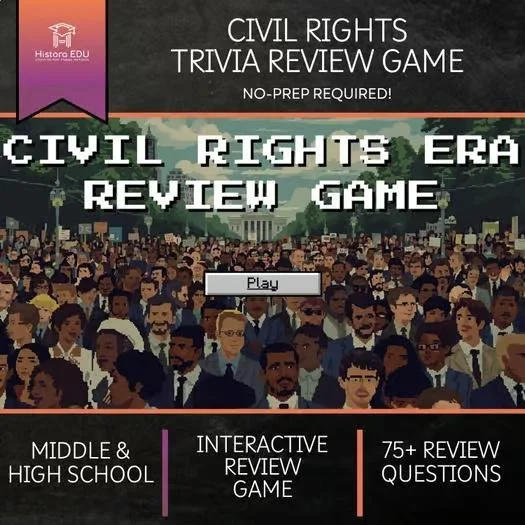
Civil Rights Movement Review Game | Social Studies | Interactive Test Prep
For a civil-rights adaptation, use selected protest-event, leader or legislation questions to establish context before a separately selected, rights-checked participant interview. Assess the archived account, not students’ family political views. The NATO example above is not civil-rights testimony.
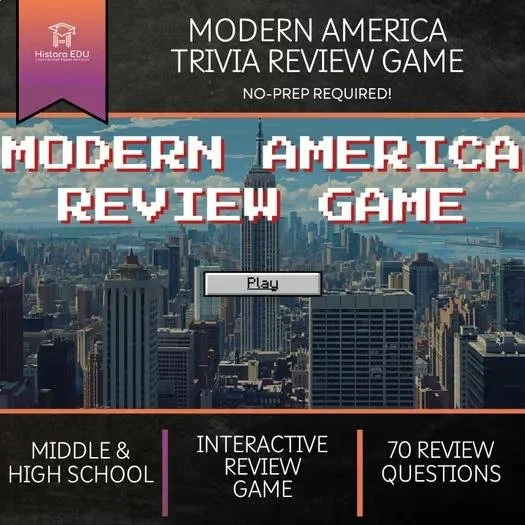
Modern America Review Game | Social Studies | Interactive Test Prep Trivia
Use selected technology, globalization or social-change questions within a checked course endpoint before a separately verified modern-era interview. The game is a context resource, not a live current-events feed or a substitute for permission to use a person’s account.
View this HistoraEDU resource on TPT
Sources and credits
Theodore Achilles oral history, November 13, 1972: transcript and use notice
Truman arriving at the State Department Auditorium, April 4, 1949: 66-2168
Truman signs the treaty proclamation, August 24, 1949: 73-3194
Truman and Acheson with photographers, December 21, 1950: 73-3487
Product covers: HistoraEDU, reproduced from the exact linked TPT listings at the owner’s request. Photographs and archival reproductions are credited beside each image. No claim to original U.S. Government works. Source institutions and depicted people do not endorse HistoraEDU or its products.
