
By HistoraEDU
“They should just fly supplies in.” Once students know how the Berlin blockade ended, the response can sound obvious. A short, dated decision record helps them notice something an outcome summary hides: people making a choice had expectations, competing proposals and unanswered questions. Ask students to explain the uncertainty before they explain the result.
Freeze the evidence on June 28 1948
Use June 28 as the cutoff for a teacher-prepared inquiry packet. Include Lucius Clay’s June 25 telegram and Jacob Beam’s June 28 memorandum recording Robert Lovett’s account of a June 25 meeting with President Truman. The memorandum is an account of a meeting, not a verbatim transcript. Students should record both the event date and the document date.
Establish that the blockade had interrupted surface access to Western Berlin and that supply flights had begun. Do not pretend the airlift was still an undiscovered idea on June 28. The question is narrower: What concerns and proposals were officials weighing while the eventual outcome remained unknown? Keep later photographs and the end of the blockade in a separate reveal packet.
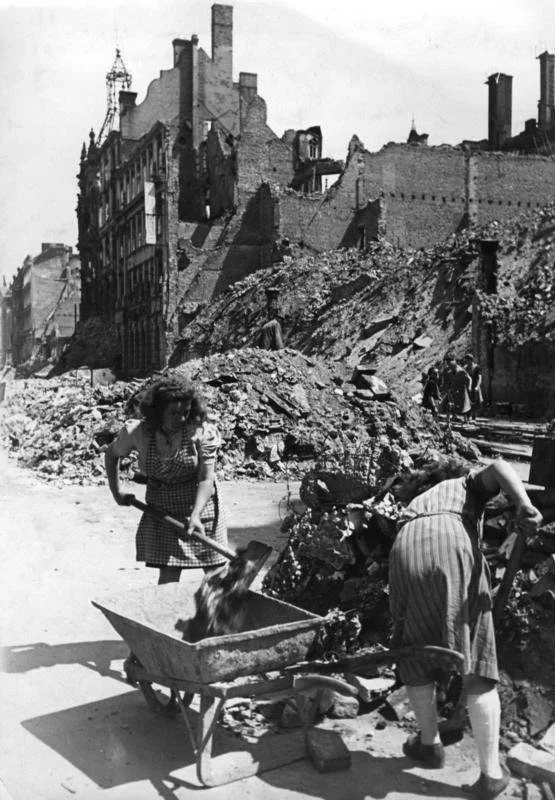
Clearing work in Jägerstraße, Berlin, July 1946—two years before the decision packet. Bundesarchiv, Bild 183-H29659 / Peter Cürlis / CC BY-SA 3.0 DE. Commons version previously cropped by a contributor; no further crop here. This establishes an earlier rebuilding scene, not June 1948 conditions or the workers’ opinions.
Compare two proposals without pretending they were the only choices
In the June 25 telegram, Clay discussed seeking a conference with the Soviet commander, Sokolovsky, about a trade and currency arrangement tied to access guarantees. He doubted it would succeed. He also argued that troop-protected convoys could reach Berlin, while acknowledging the danger of being unable to withdraw once committed.
Put those two proposals in separate rows: negotiated arrangements and troop-protected convoys. Add columns for intended benefit, stated concern and unanswered question. Students should attribute each prediction to Clay rather than turn it into a fact about what would have happened. These are two proposals in one document, not an exhaustive menu or two options that could never be combined with other measures.
A teacher-created model row might read: “Clay hoped a negotiated arrangement could help restore exchange, but he expressed little confidence that it would be accepted.” An appropriate question is “What evidence would show that access guarantees would be honored?” The convoy row should preserve both his confidence and his warning; deleting either changes the source.
Read the Washington account as another perspective
Beam’s memorandum records a discussion of civilian suffering, the consequences of leaving Berlin and the importance of remaining. It also reports doubts about outside economic retaliation and a unilateral American protest without British and French support. Ask students what this adds to the problem, rather than treating it as proof that everyone agreed on one operational solution.
Have each pair write a three-sentence recommendation addressed to a reader on June 28: a provisional priority, a source-based reason and an uncertainty that must be monitored. This is an original classroom exercise, not a reconstructed speech by Truman or Clay. Do not require students to impersonate civilians whose experiences the packet does not document.
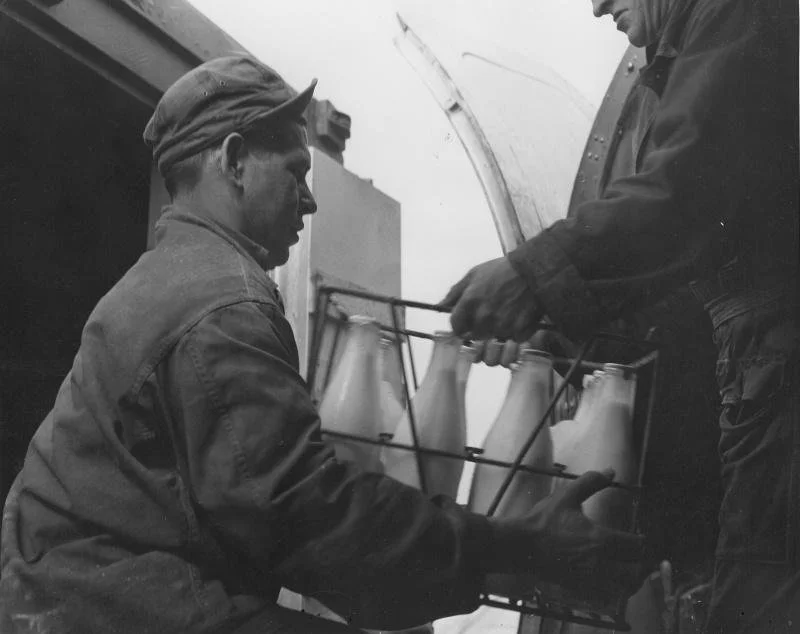
Later evidence to reveal after the first response: supplies being loaded at Wiesbaden, August 18, 1948. Byers, Joint Export Import Agency; Harry S. Truman Library & Museum, 71-3984. Public domain. Do not insert this August scene into the June 28 evidence packet.
Reveal a development without rewriting the earlier record
Next reveal the Office of the Historian’s editorial note on Marshall’s June 30 statement: the United States intended to remain in Berlin and make maximum use of air transport for civilian supply. Label the note as a later editorial summary identifying a dated statement, not as the original statement itself. Students can now update what the government publicly committed to doing; the commitment still does not prove its eventual success.
Then reveal the August 18 aircraft photographs. They show later activity at Wiesbaden. Ask students to revise an uncertainty note in a different color: “By August, these photographs provide evidence of loading and aircraft activity, but they do not establish total deliveries or whether every need was met.” Keep the original June response visible. Later evidence changes what can be known later; it does not make that knowledge available earlier.
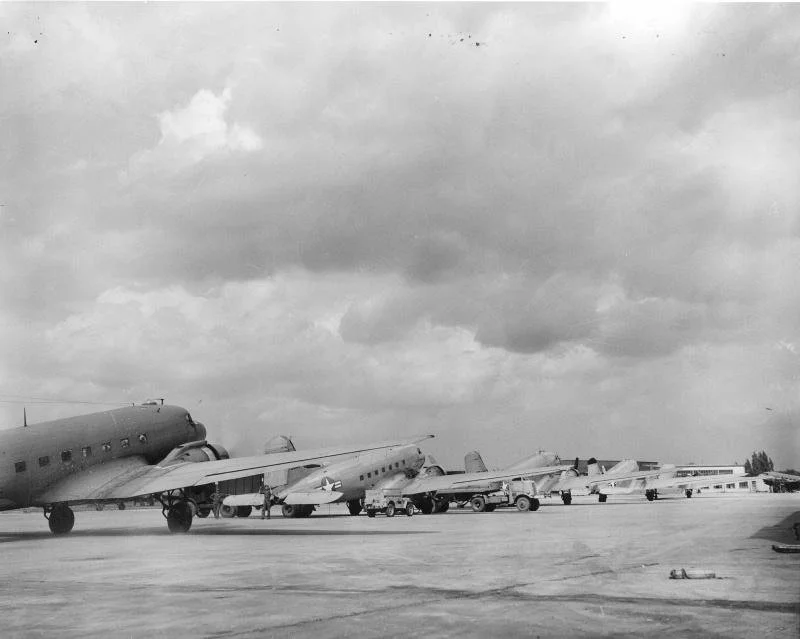
Another August 18, 1948 scene at Wiesbaden: C-47 aircraft waiting on the airfield. Byers, Joint Export Import Agency; Harry S. Truman Library & Museum, 71-3987. Public domain. The two Byers photographs are not independent viewpoints or proof of the operation’s final outcome.
Assess the reasoning rather than whether students guessed the outcome
Use a four-part check: the response respects the cutoff date, distinguishes a proposal from an accomplished action, attributes a prediction to its source, and identifies a genuine uncertainty. A student who predicts the eventual outcome without evidence has not met those criteria. A cautious recommendation can be well supported even when later developments change the situation.
For support, give students the two proposal labels and highlight short passages about confidence and danger. For an extension, ask what additional civilian, British, French or Soviet evidence would change the perspective of this small American official-source packet. The packet is deliberately limited; naming a missing perspective is not the same as inventing it.
Finish with one sentence: “Knowing the result makes ___ look easier, but the dated evidence shows ___.” Look for a specific relationship between a later outcome and an earlier uncertainty, not simply the phrase “hindsight is bad.”
Use the background reading after the frozen date exercise
HistoraEDU’s Berlin Airlift reading can consolidate the wider sequence after this inquiry, or you can select only the early context beforehand. Keep sections that disclose later results out of the initial packet. Supply the official telegram and memorandum separately; this article’s dated recommendation routine is an additional teacher-created activity.
Berlin Airlift Reading Comprehension | Primary Source Evidence

View this HistoraEDU resource on TPT
The sectioned secondary reading, archival photograph questions and separate teacher material offer background and follow-through. Select the sequence carefully so an account of the outcome does not answer the frozen-date inquiry before students begin.
Sources and image credits
Beam memorandum June 28 recording the June 25 meeting
Editorial note identifying Marshall statement June 30 1948
Berlin Airlift historical background
Photograph license CC BY SA 3 0 DE
Product thumbnail reproduced from the exact HistoraEDU listing at the owner’s request. Historical photographs are separate evidence, not product endorsements. Retain the Berlin photograph attribution, license and prior-crop notice. Photographs are documentary context, not a claim of endorsement.

