
By HistoraEDU
A student can place Dred Scott, John Brown and the election of 1860 in order and still struggle to explain why the United States went to war. A timeline is a useful start, but arrows do not explain themselves. Build a lesson around decisions: who acted, what they were trying to protect or change, and what happened next. Keep slavery at the center of the explanation rather than letting a list of political events hide it.
Give every arrow a verb
Begin with three columns: decision, people affected and evidence of a consequence. Model one connection aloud. Instead of writing “election leads to secession,” write “secessionists responded to Lincoln’s election by choosing to leave the Union.” Then ask what a source would need to show before that connection could be defended. The verb makes agency visible.
Have students color-code national institutions, state governments and individuals. A Supreme Court decision, an election and a raid are not interchangeable kinds of action. Students should explain how each changed the situation rather than collecting eight events as if they carried equal weight.

Abraham Lincoln, approximately 1863, NAID 527823. This wartime portrait is later than the election of 1860; it does not depict election day. Credit: National Archives. Public domain; no endorsement implied.
Keep the central issue visible
The National Park Service identifies slavery as the most important issue behind the war while distinguishing government aims from the varied motivations of individual soldiers. Use that distinction to prevent two common shortcuts: treating every person in a region as identical, and using individual motives to erase the Confederacy’s defense of slavery.
When students encounter the phrase states’ rights, follow with a specific question: rights to do what, claimed by whom, and at whose expense? Ask students to identify the subject and object of the policy rather than accepting an abstract label as a complete explanation. Explanation is not justification, and no student needs to argue that enslavement was acceptable.
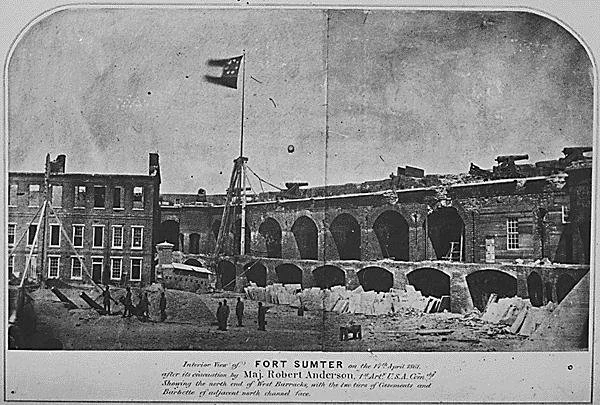
Fort Sumter under the Confederate flag, April 14, 1861, NAID 532292. The date is after the bombardment, not a camera view of the attack. Credit: National Archives. Public domain; no endorsement implied.
Use border states to test the simple story
Add a border-states reading after students have drafted their initial explanation. Ask them to revise any claim that equates the Union with an already slavery-free society. A complication should improve the explanation, not turn the lesson into a claim that all political positions were equivalent.
Pairs can underline one sentence that needs revision and add a qualifying phrase. A student who replaces “all slave states seceded” with a more accurate statement is doing historical thinking, even if the revision makes the sentence less tidy.
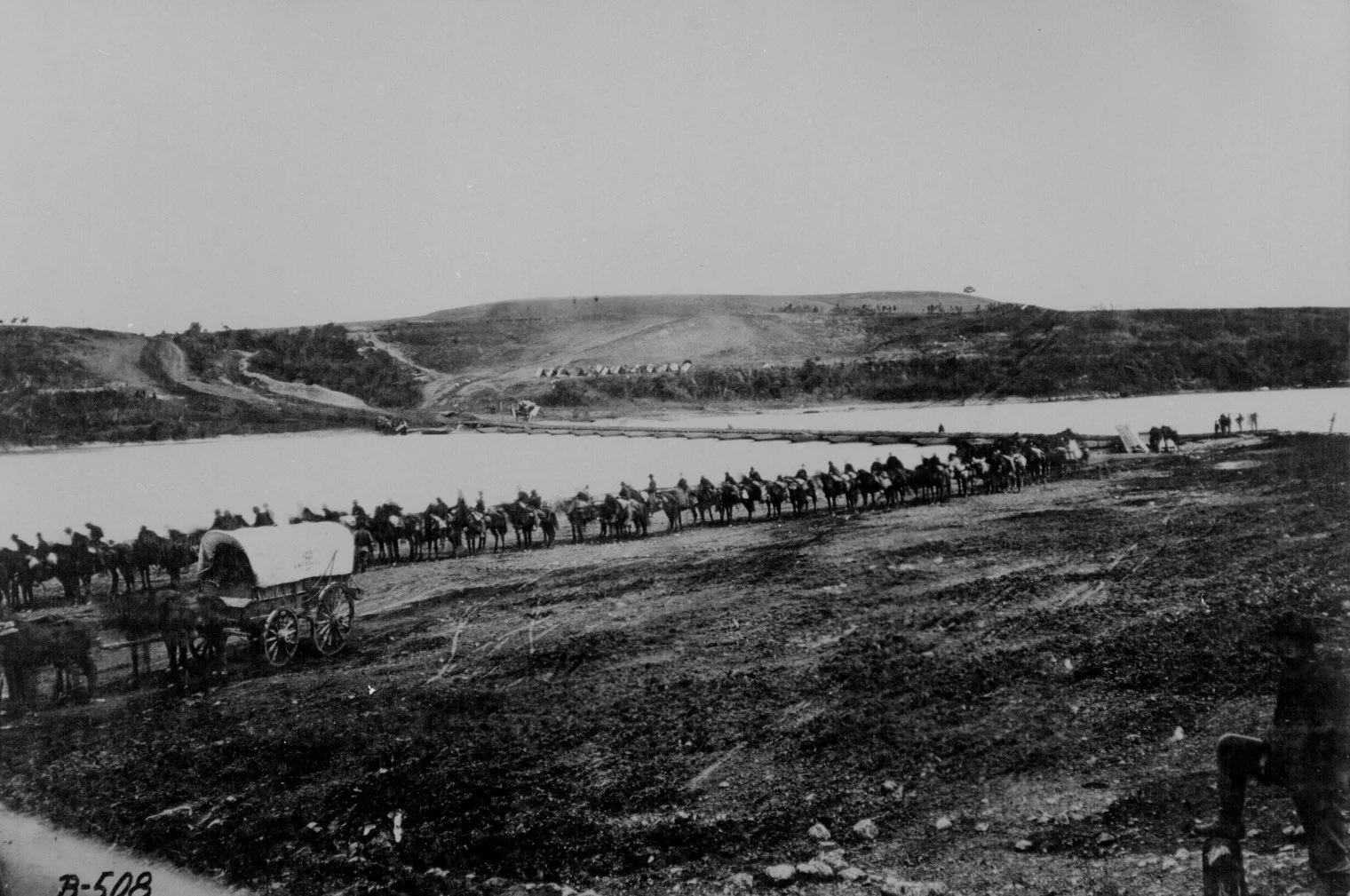
Federal cavalry beside the Rappahannock River, Virginia, 1862, NAID 524925. This later wartime photograph helps separate the outbreak of war from its subsequent conduct. Credit: National Archives. Public domain; no endorsement implied.
Finish with a defensible connection
Give students two events from their organizer and ask for a short explanation containing a decision, a consequence and one piece of evidence. Then have them label one limit: what does this explanation leave out? Assess the quality of the connection, not the number of events squeezed into the paragraph.
Choose only the readings that address the missing link in your class’s understanding. The eight options below can support a sequence across several lessons; they are not a recommendation to assign eight worksheets in one period.
Rise of the Republican Party Reading Comprehension Worksheet | Civil War Causes
View this HistoraEDU resource on TPT
Use for the party-system change around opposition to slavery’s expansion; pair with a specific policy question rather than a modern party comparison.
Dred Scott Decision Reading Comprehension Worksheet | Supreme Court Case
View this HistoraEDU resource on TPT
Use for the Supreme Court decision as an institutional turning point; distinguish the historical ruling from current constitutional law.
John Brown’s Raid Reading Comprehension Worksheet | Harpers Ferry Civil War
View this HistoraEDU resource on TPT
Use to investigate a particular antislavery action and competing responses; do not reduce the entire abolitionist movement to this raid.
Election of 1860 Reading Comprehension Worksheet
View this HistoraEDU resource on TPT
Use to establish the election context before students explain secession decisions.
Southern Secession Reading Comprehension Worksheet
View this HistoraEDU resource on TPT
Use for the secession step in the organizer, with explicit attention to slavery and the claims made by secessionists.
Confederate States of America Reading Comprehension Worksheet
View this HistoraEDU resource on TPT
Use to distinguish secession from the formation of the Confederate government; compare institutions without legitimizing slavery.
Attack on Fort Sumter Reading Comprehension Worksheet
View this HistoraEDU resource on TPT
Use to connect political breakdown to armed conflict and to distinguish the attack from the later photograph above.
Border States Reading Comprehension Worksheet | Civil War Divided Loyalties Act
View this HistoraEDU resource on TPT
Use as a complication to an overly simple North versus South map. The current listing identifies a non-editable PDF, not an editable Google Doc.
Sources and image credits
NPS on the causes of the Civil War
Product thumbnails: HistoraEDU, reproduced from the exact current TPT listings at the owner’s request. Archival sources do not endorse HistoraEDU or its products. No claim to original U.S. Government works.
