
Offering a choice tells you who can select an option. It does not tell you whether the learner feels supported, abandoned, trusted or pressured. Before adding another menu to a lesson, ask what decision it gives students and how they experience making it.

A useful choice can preserve a shared learning goal while allowing a meaningful difference in topic or approach. A nominal choice can leave the consequential decision untouched. The number of options alone cannot settle which kind you have designed.
What a culturally situated study can tell us
Iyengar and Lepper’s first study involved 105 children, aged seven to nine, at two San Francisco schools. Children selected an anagram category and marker, received an experimenter’s selection, or were told that their mother had selected them. The mothers had not actually made those choices: selections were yoked to another child’s. The study examined anagram performance and voluntary task time during a brief free-play period. Group patterns differed: personal choice was strongest for the authors’ Anglo American group, while attributed mother choice was strongest for their Asian American group. The latter sample was specifically selected from Chinese- and Japanese-heritage families using heritage languages at home. These are situated group averages, not a rule for an individual student or evidence about a whole school year. [1]
The practical question is about the meaning of a decision, not a cultural sorting system. Do not assign a chooser on the basis of a learner’s name, appearance or family background. Nor should an educator reproduce the study’s deception by pretending that a parent endorsed a task.
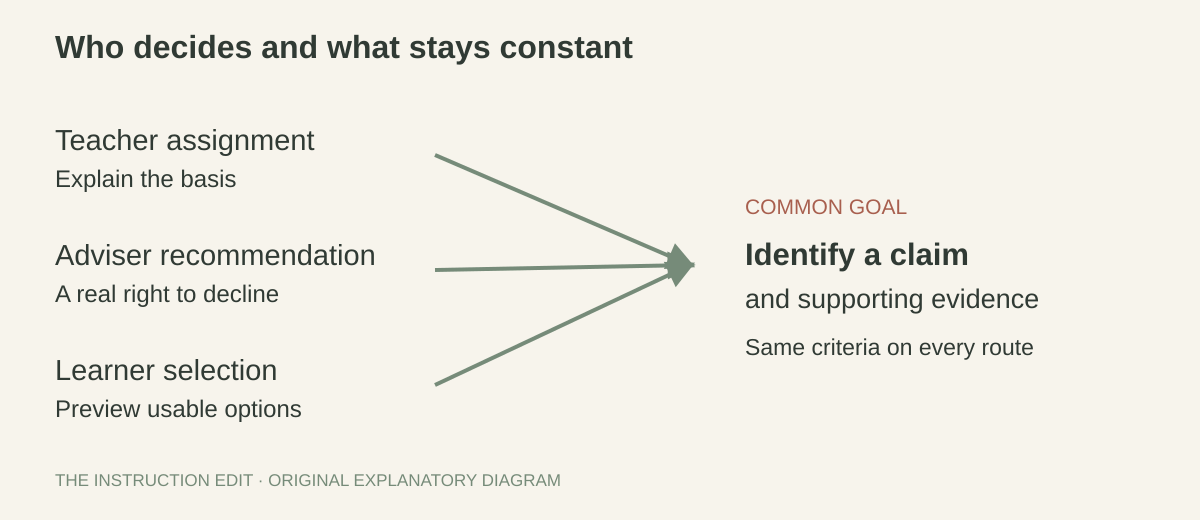
Figure 1. An original design comparison, not the study conditions. A recommendation with a genuine right to decline is different from a choice attributed to a parent.
An adviser can narrow possibilities without taking the final decision away. Conversely, an open menu can be burdensome when the differences between options are unclear. Ask which support the learner wants in this particular task rather than making a permanent label of their answer.
An original fictional task with a shared goal
Imagine two short fictional evidence packs. One concerns a proposed park closing time; the other concerns a library’s weekend opening hours. Both contain a claim, two relevant observations and one irrelevant detail. The common task is to identify the claim, choose supporting evidence and explain its relevance. Neither pack requires personal disclosure or outside purchases.

Offer a brief preview of both packs. A student may choose directly, ask you to recommend one, or ask to begin with an assigned pack and reconsider after reading. Explain that each route uses the same criteria. These are original classroom arrangements, not a replication or a demonstrated motivation intervention.
Suppose a learner asks for a recommendation. You might say, “The park pack uses a shorter timeline; the library pack compares two schedules. Which would help you show your reasoning today?” That makes the basis of the advice visible. It does not pretend that the teacher knows the learner’s interests better than they do.
Make the choice revisable and inspect its consequences
A right to decline is not genuine if declining attracts public persuasion or a lower mark. State a reasonable switching point before work begins, make the required materials available for both routes and avoid attaching prestige to one option. If the assessment is evidence selection, assess that reasoning—not the student’s willingness to choose independently.
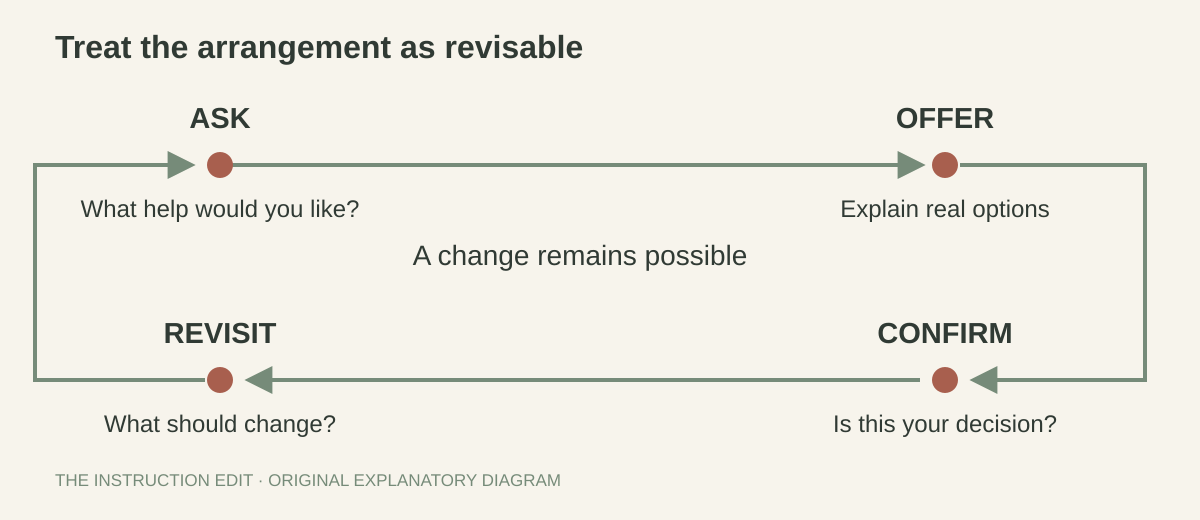
Figure 3. An original feedback loop for this task. The arrows represent a design process, not a measured causal pathway to motivation.
After the task, ask privately: “Was the way you selected a pack helpful? Would you want more information, a recommendation or a different arrangement next time?” A learner can prefer a recommendation here and independent selection elsewhere. Keep that response separate from the quality of the submitted explanation; preference is not mastery.
If most learners cannot explain the difference between the packs, revise the previews before multiplying options. If one pack lacks usable evidence, repair it rather than attributing poor work to a learner’s choice. If a recommendation feels compulsory, change how it is offered. Each diagnosis concerns a feature you can examine rather than a supposed cultural trait.
Ask learners how they experience a choice rather than assuming that more options—or one cultural label—tells you.
