
By HistoraEDU
A student can name Inca roads and quipus without explaining how either helped an empire function. Build the lesson around a practical question: what has to happen for supplies and information to reach the people who need them? Following one imagined administrative task gives students a structure for connecting roads, storage, labor and records without pretending that a classroom activity reproduces Inca life.
Give the class a task with several dependencies
Present a teacher-created scenario: an official needs to know what supplies are available at a distant storehouse. Label the scenario as a learning model, not a recovered historical incident. Ask students to identify what must exist for that information to move and remain useful. A road alone cannot count goods, maintain a bridge or interpret a record.
Read selected sections about the road network and storage. The Smithsonian explains that the system supported imperial administration and that travel was regulated. Do not describe it as a modern public highway open to everyone on identical terms. Ask who could use the network and whose work sustained it.
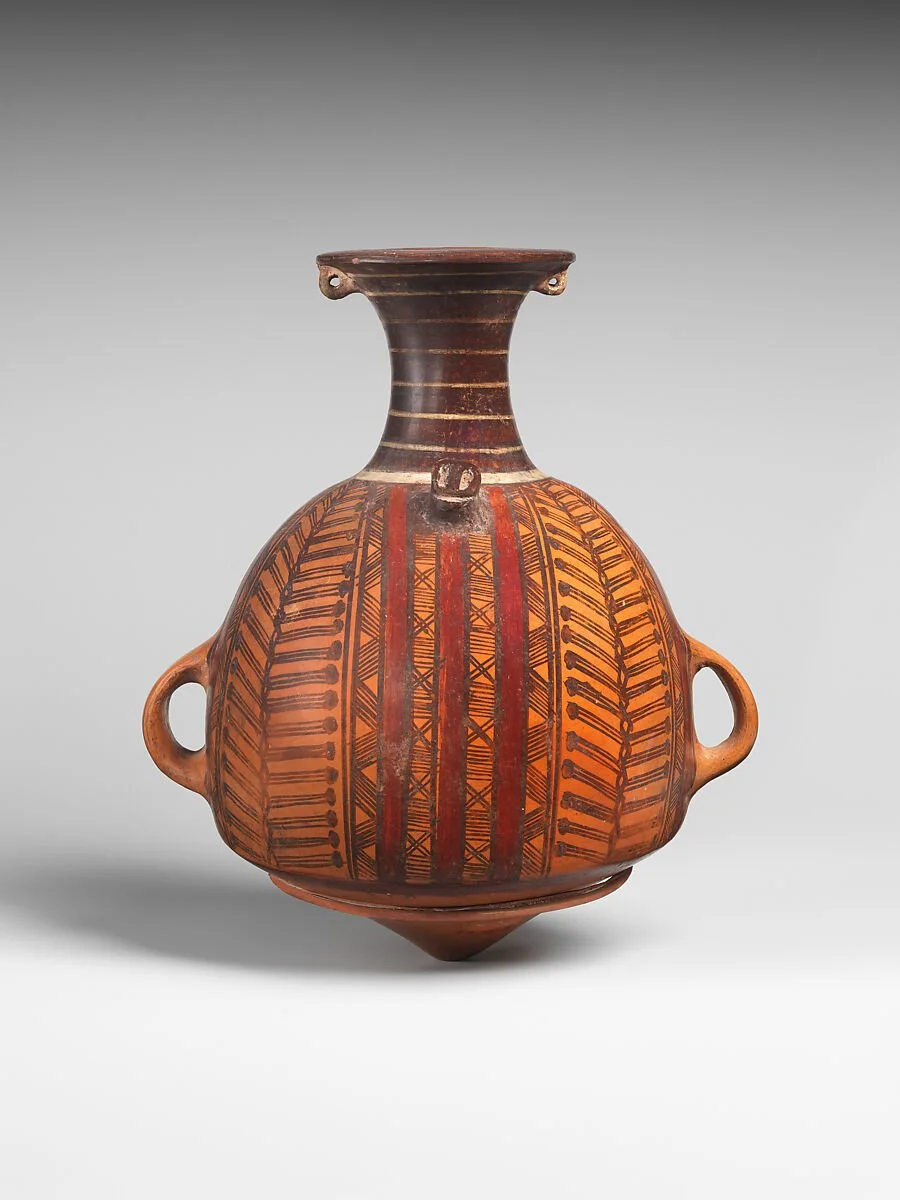
Inca urpu, 1400–1535 CE. This small example is about 22 centimeters high; the Met suggests serving or votive uses. It is not evidence that this particular jar transported bulk supplies. Credit: The Metropolitan Museum of Art, The Michael C. Rockefeller Memorial Collection, Purchase, Nelson A. Rockefeller Gift, 1961, 1978.412.68; Public Domain. No endorsement implied.
Use an object to question an easy assumption
Show the jar before its measurements. Students may assume that all vessels of this form were large storage containers. Reveal the museum’s size and interpretation, then ask them to revise the caption. Larger urpus could serve production, storage and transport functions, but a form does not establish the use of every individual example.
Connect this revision to the supply scenario. What would students need to know about a container before estimating what it could carry? They can identify relevant evidence without calculating a fictional capacity. This is a useful moment to distinguish a documented fact, a plausible inference and an unanswered question.
Make recording a separate problem from carrying
A message can arrive quickly and still be misunderstood. Introduce khipu, also spelled quipu, as a knotted-cord recording system used by trained specialists. The Museo Larco describes numerical records connected with administration and labor. Students should not be told that every surviving khipu has been fully translated or that the cords were merely decorative.
Use the photograph for observation: a primary cord, hanging cords and knots. Then ask what the image cannot establish without expertise and context. If students create a simple classroom counting code, label it an original analogy. Do not call it an authentic Inca message or suggest that a few knots unlock the meaning of the museum object.
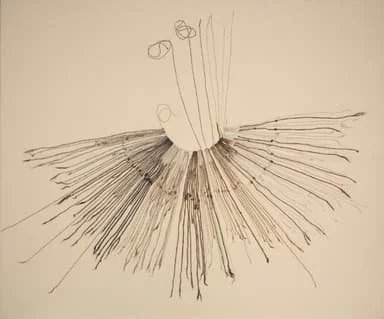
Inka khipu, approximately 1400–1532, cotton and wool. This museum photograph shows the structure of a recording device; the article does not decode its particular record. Credit: The Cleveland Museum of Art, Gift of John Wise, 1940.469; CC0. No endorsement implied.
Connect materials with authority
The tunic provides a third part of the system: valuable goods could carry political meaning as well as meet practical needs. The Met connects fine tapestry tunics with state-controlled production, gifts and status. Ask students why moving and storing textiles could matter to a government. Keep the explanation attached to the source rather than assuming that every garment had the same role.
The image is a surviving textile, not a photograph of a runner wearing it. That distinction matters when students combine sources into a visual explanation. They can draw a labeled connection between goods and authority without inventing a wearer or a journey for this particular tunic.
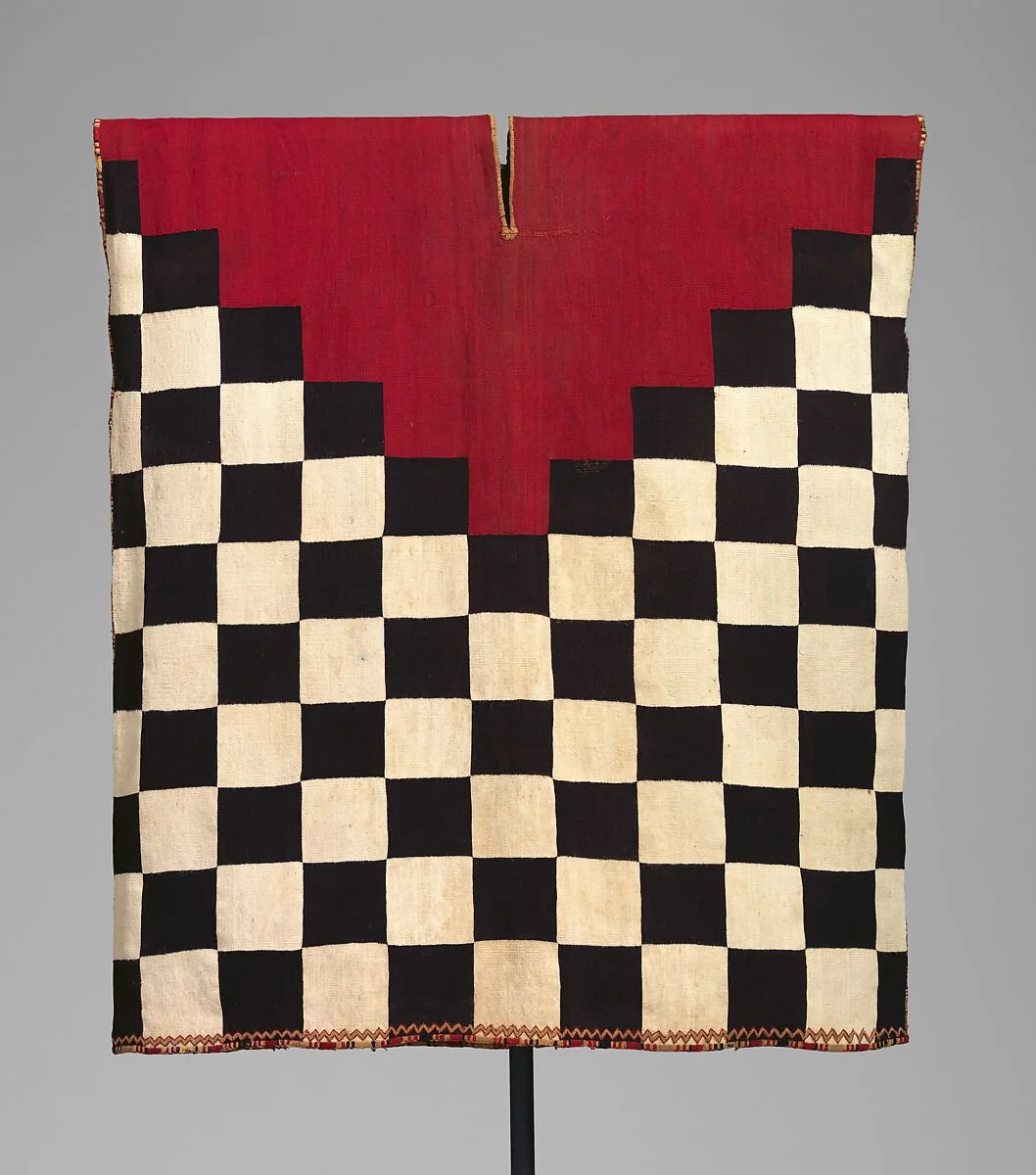
Inca tunic, 1400–1535 CE, woven from camelid fiber. Its museum record links fine textiles with political and social importance; no particular wearer is identified here. Credit: The Metropolitan Museum of Art, Purchase, Fletcher Fund, Claudia Quentin Gift, and Harris Brisbane Dick Fund, 2017, 2017.674; Public Domain. No endorsement implied.
Assess the connections and their limits
Have each pair explain the supply scenario in five sentences: one for movement, one for storage, one for labor, one for recording and one for a limit in the evidence. The sentences should connect rather than read like a vocabulary list. Ask the pair to underline the source-supported parts and mark the hypothetical parts.
For a shorter lesson, use only the road reading and the khipu photograph. For an extension, compare two explanations of the same system and identify which one confuses efficiency with fairness. An empire can organize movement effectively while placing unequal obligations on people. Students should investigate that relationship rather than treat infrastructure as automatic proof of universal benefit.
Inca Empire Reading Comprehension | Ancient Civilizations Worksheet
View this HistoraEDU resource on TPT
The empire overview includes administration, labor and religious context. Selected sections can help students place infrastructure within a political system rather than study roads as an isolated achievement.
Inca Roads and Communication Reading Passage and Questions
View this HistoraEDU resource on TPT
The roads and communication reading focuses on transport, runners, storage and record keeping. Use it for the connections task, then compare a specific claim with the linked institutional sources. The classroom scenario above is a teacher-created extension.
Sources and image credits
Smithsonian Inka Road exhibition
Product thumbnails: HistoraEDU, reproduced from the exact current TPT listings at the owner’s request. Archival sources do not endorse HistoraEDU or its products. No claim to original U.S. Government works.
