
By HistoraEDU
A unit can explain forced removal accurately and still leave students thinking Southeastern Native nations disappeared afterward. Another common problem is merging Cherokee, Muscogee and Seminole histories into a single route and response. Organize the lesson around a continuing question: how did particular communities govern, respond to pressure and maintain their lives? Keep coercion visible without making it the only thing students learn about the people affected.
Begin before the crisis with an institution
Choose one named community and a concrete institution, such as a council, newspaper or capital. Ask students what the evidence reveals about collective decisions. Avoid a checklist that ranks communities by how closely their institutions resembled those of the United States.
New Echota offers one specific entry: the Cherokee national legislature established a capital there in 1825. The site today contains original and reconstructed buildings. Explain that distinction before asking students what a modern site photograph can tell them about earlier political life.
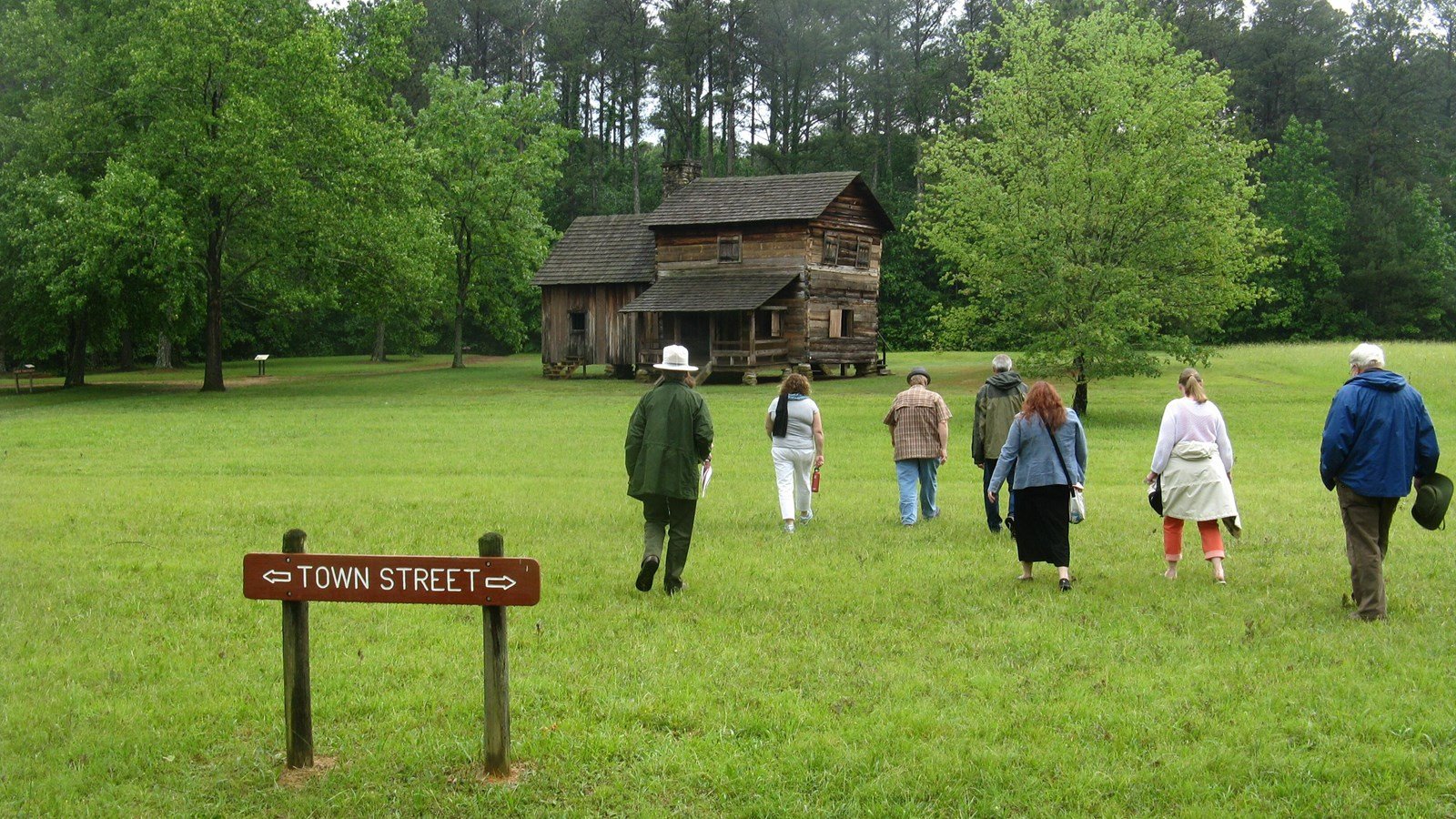
Modern view of Vann’s Tavern at New Echota Historic Site; the site includes original and reconstructed buildings, not an 1825 photograph. Credit: NPS Photo. Public domain; no endorsement implied.
Separate the source from the inference
Students can describe the building and present-day visitors, but the image cannot establish the debates of the Cherokee legislature. Pair it with a short historical account. Have students label each sentence of their explanation as an observation, a statement supported by the account or an unanswered question.
A strong explanation might connect a documented institution with a specific decision. It should not conclude that political organization guaranteed protection from dispossession. Keep the decisions of U.S. and state authorities visible rather than describing removal as an inevitable migration.
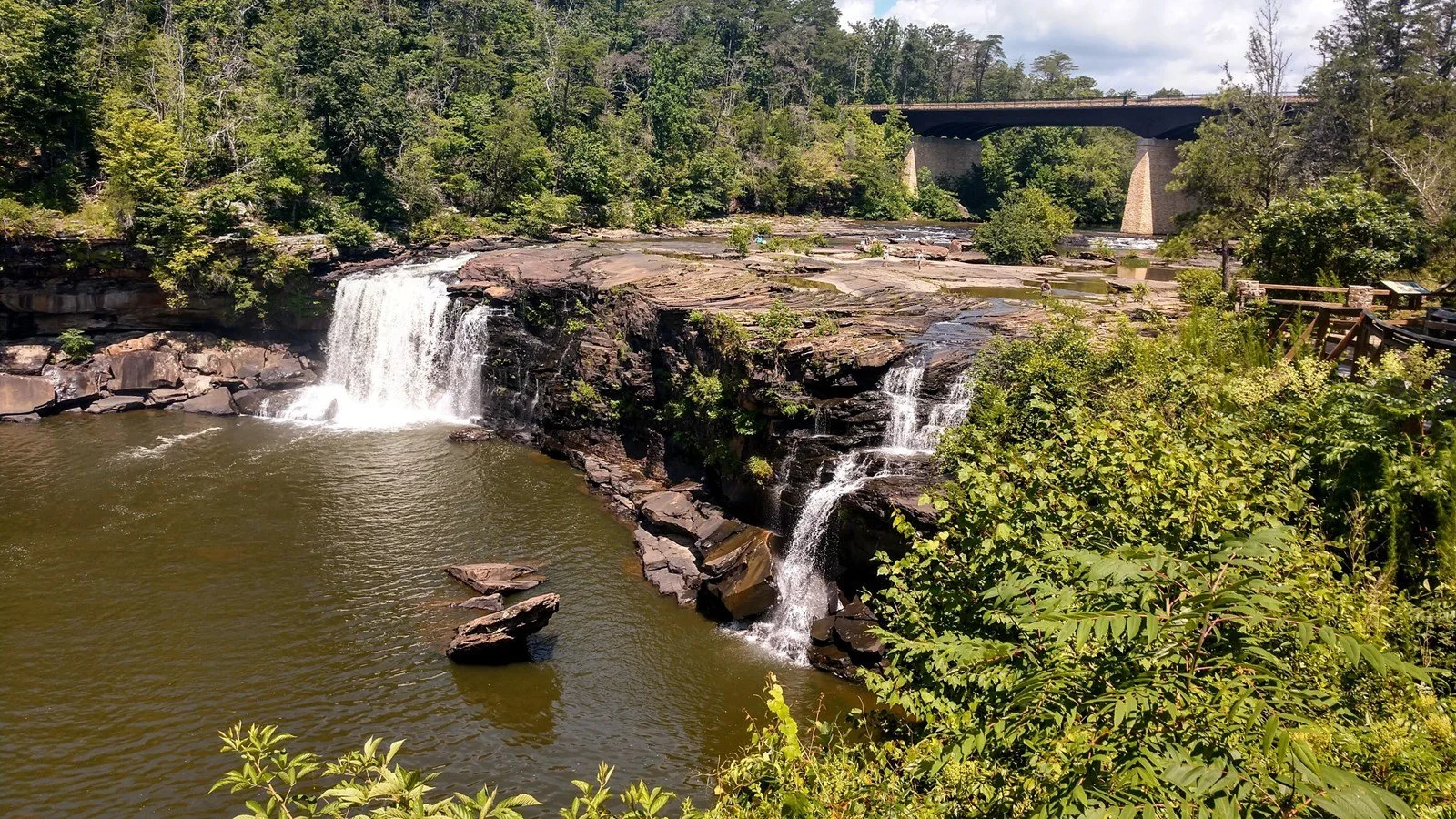
Modern Little River Canyon photograph. The area was crossed during forced removal; this image does not show the nineteenth-century people or crossing itself. Credit: NPS Photo. Public domain; no endorsement implied.
Trace one route without making it universal
The National Park Service identifies the Little River area as part of the history of Cherokee and Muscogee forced removal. Use this as a located example rather than a photograph of all removal routes. The modern waterfall view does not show the people who crossed or their experience.
Give students a source-based route or event to explain, with a date and named group. Ask what was imposed, what choices remained and what the source leaves unknown. Avoid a classroom simulation of forced removal. Evidence analysis can address coercion and human consequences without pretending students can recreate them.
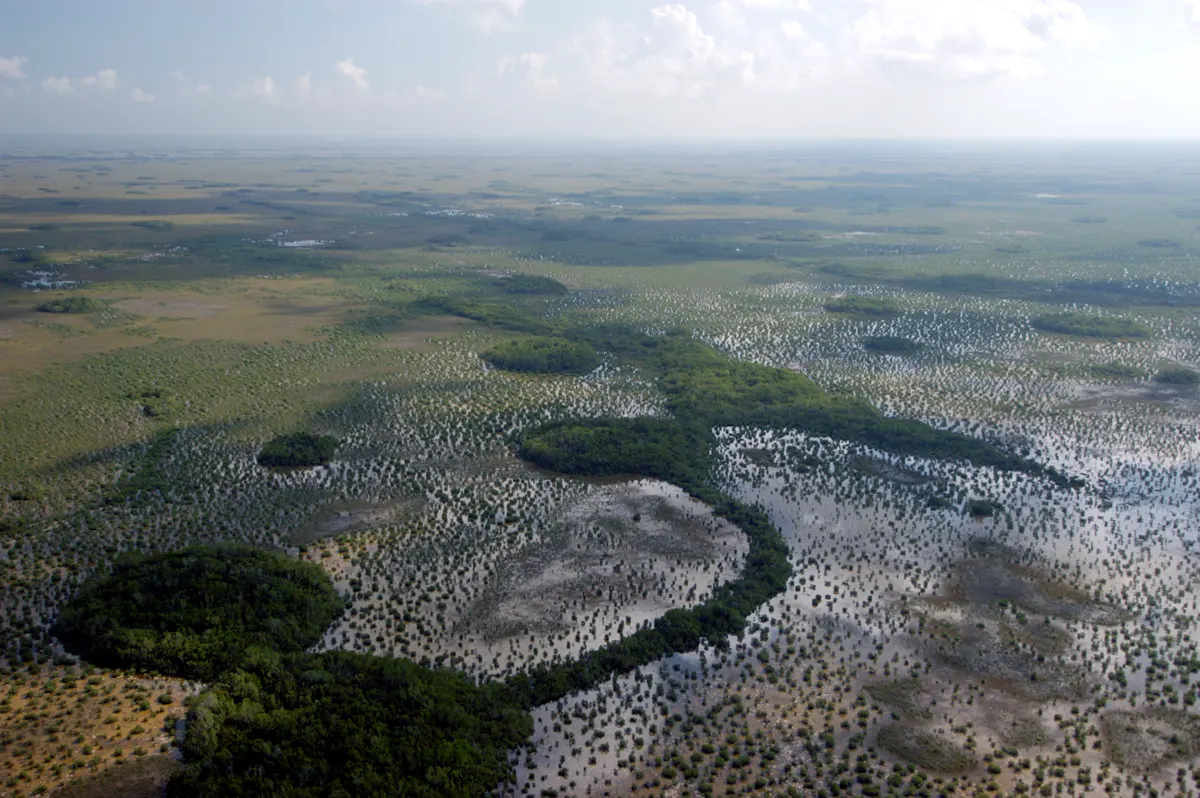
Modern aerial view from sawgrass toward Florida Bay. This landscape view is not evidence of a particular Seminole camp or wartime route. Credit: NPS Photo. Public domain; no endorsement implied.
Keep the Seminole account distinct
The Seminole Tribe of Florida’s history distinguishes leaders who were removed from those who remained. Its account identifies Abiaka with guiding people into the wetlands, while Holatta Micco, known as Billy Bowlegs, eventually left in the removal. Do not merge these individuals into one generic resistance story.
Use the modern Everglades image to locate a landscape, not to invent a particular camp or battle. Ask students to connect one documented action to its source, then explain why the photograph alone cannot verify that action. The distinction is especially important when a compelling landscape makes an unsupported story feel plausible.
Require a source after removal
Add a current public account from the relevant nation rather than ending the timeline with displacement. Ask students to identify the community, institution or continuing activity the source actually describes. Do not use one present-day government to speak for every community with a related history.
For an exit response, ask: “What does our lesson lose if its final date is the removal?” Require a specific example from the earlier institution and a later community source. Students should explain continuity and change without minimizing forced removal or implying that survival erased its consequences.
Choose a bounded reading rather than an interchangeable regional set
The regional and three community readings can support different questions. Assign only the section that matches the explanation students need to make. Use the Seminole reading teacher-led with the leader clarification below, and keep a present-day nation-specific source beside the historical account. These are selected-use suggestions, not a certification of every source passage or answer.
Southeast Native Americans Reading Comprehension Worksheet
View this HistoraEDU resource on TPT
Regional entry for comparison, not a claim that every Southeastern nation had the same government or removal experience. Preview the selected section and its chronology.
Cherokee People Reading Comprehension | Native American History
View this HistoraEDU resource on TPT
Community reading for connecting institutions, removal and continuing Cherokee histories. Pair it with a source from the relevant present-day Cherokee government; do not collapse distinct governments.
Creek People Reading Comprehension | Native American History
View this HistoraEDU resource on TPT
Community reading for Muscogee history and town governance. Use a selected passage alongside Muscogee sources and distinguish shared regional context from one community’s experience.
Seminole People Reading Comprehension | Native American History
View this HistoraEDU resource on TPT
Use a selected passage to compare responses to removal, with the Seminole Tribe of Florida’s leader accounts beside it. Before using the Third Seminole War paragraph, clarify that Holatta Micco, known as Billy Bowlegs, eventually left Florida in the removal; the Tribe identifies Abiaka, also called Sam Jones, with leading those who remained into the wetlands. Do not repeat the reading’s identification of Billy Bowlegs as the leader of the remaining group in a timeline or answer. Keep these leaders distinct from Billy Bowlegs III, a later figure described separately by the Tribe.
Sources and image credits
New Echota capital and historic site
Seminole Tribe historic leaders
Seminole Tribal Historic Preservation Office timeline
Native Knowledge 360 essential understandings
Image record everglades-aerial
Product thumbnails: HistoraEDU, reproduced from the exact current TPT listings at the owner’s request. Archival sources do not endorse HistoraEDU or its products. No claim to original U.S. Government works.
