
By HistoraEDU
Students may remember corn beans and squash without understanding the work of growing, storing or governing food. A food list can also imply that every community used the same method. Shift the lesson to a concrete problem: how did a named community obtain reliable food in a particular place? Students can explain a decision, identify supporting evidence and distinguish a historical account from a modern teaching garden.
Turn the familiar crop list into a question
Begin with the question “What would we need to know before explaining why this planting arrangement works here?” Ask students to identify missing information such as season, crop varieties, rainfall and the people maintaining the garden. Do not ask them to guess a community from the crops alone.
The Three Sisters provides an entry into intercropping, but the phrase should not substitute for a community and a source. A lesson about one garden is not a claim that every Indigenous farmer followed the same pattern or that cultivation replaced all other food practices.
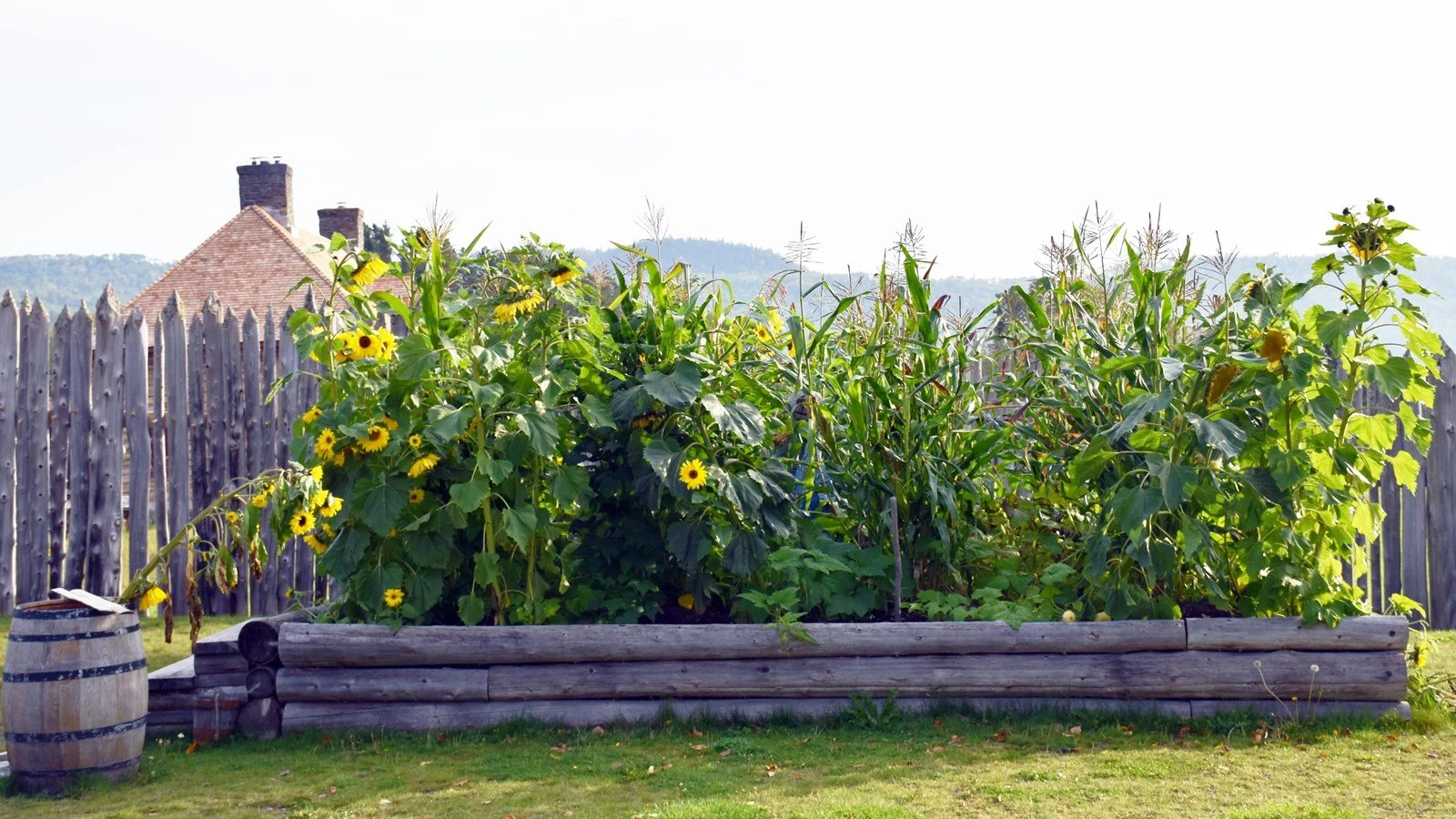
A modern teaching garden at Grand Portage National Monument. The site explains its role in interpreting Anishinaabe lifeways; this is not a photograph of an eighteenth century harvest. Credit: NPS Photo / GM Spoto. No endorsement implied.
Explain a relationship with evidence
Use the Grand Portage account to identify a relationship among plants, such as climbing support or ground cover. Ask students to connect an observed feature to the account without claiming that the photograph proves a harvest yield. The page also describes additional plants in this teaching garden, a reminder that a named system need not be a rigid three-item picture.
For a short task, students draw a plain diagram of the relationship they can explain and attach a source note. Keep it an explanatory diagram, not a copied sacred design or a claim to reproduce a community’s entire agricultural knowledge. Avoid promising that a classroom garden will produce particular results.
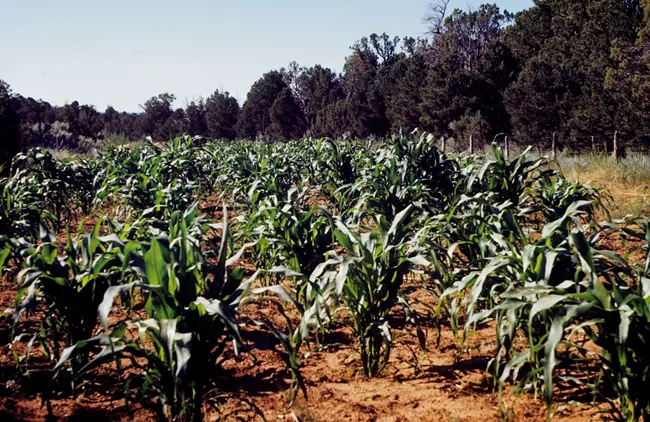
Modern experimental field at Mesa Verde planted with Hopi corn varieties using traditional techniques. It is a research plot and should not be labeled as the Grand Portage garden or an ancient field. Credit: NPS. No endorsement implied.
Compare the problem without flattening the solutions
The Mesa Verde example introduces a different place and research context. Ask what students would need to compare it fairly with Grand Portage. They should not infer equal growing conditions or judge one system as better from two photographs.
Build a small record with the place, source, decision described and evidence still needed. A student might know which varieties the source identifies but not the season’s rainfall. Marking that limit is stronger historical reasoning than supplying an attractive but unsupported explanation.
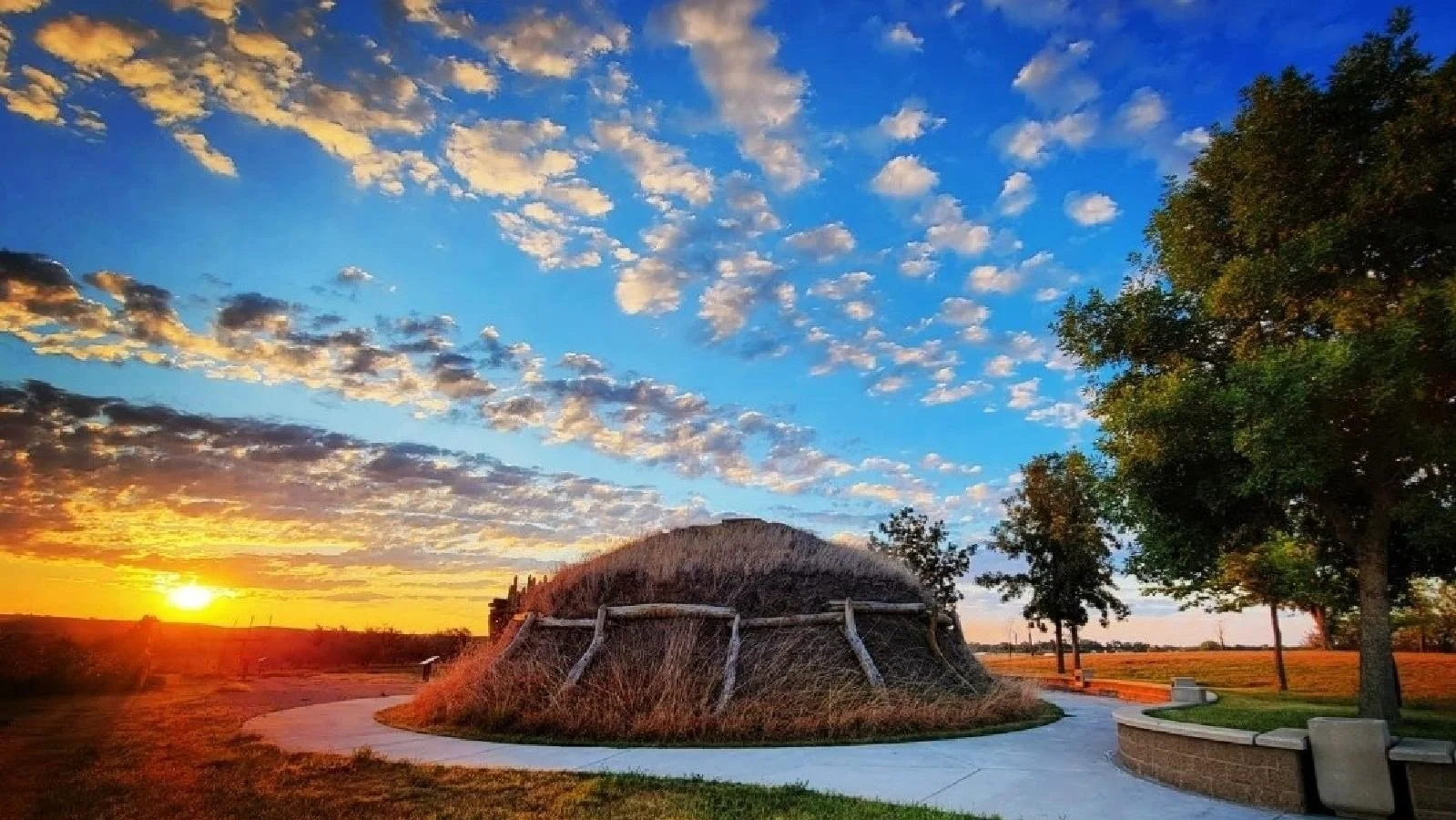
Modern reconstructed Hidatsa style earthlodge at Knife River Indian Villages. Its interpretation connects homes, food preparation and storage; it is not a photograph of an occupied historic village. Credit: NPS Photo / Ashley Bargmann. No endorsement implied.
Bring storage and exchange into the explanation
Food systems extend beyond growing plants. Knife River’s historical interpretation describes Hidatsa villages, agriculture and exchange. Use one selected passage to ask how storage or trade affects the usefulness of a harvest. Keep the reconstructed lodge’s date context separate from the earlier community history.
This example also disrupts an overgeneralization about the Plains as exclusively a hunting region. Ask students to revise a regional claim with a named community and evidence, rather than replacing farming with another universal label. Different strategies could coexist or change over time.
Assess how well the explanation holds together
For an exit response, ask students to explain one decision in a named food system. Require a source, a relationship and one limitation. “Corn beans and squash were important” is a starting observation, not yet an explanation.
A useful extension compares how two sources present agricultural knowledge. Ask whose account each is, what the creator could know and which questions would benefit from a community-authored source. Do not turn the task into food tasting, wild-plant identification or an imitation of a ceremony; those activities require different preparation and are not needed to meet this objective.
Use the resources as focused reading rather than an unqualified recipe
Choose the Three Sisters reading for crop relationships, Farming for a broader comparison or Foodways for the connections among cultivation and other practices. Preview the exact section against its source and use the Farming vocabulary note below. These are historical reading resources, not dietary guidance or a promise of garden performance.
Three Sisters Agriculture Reading Passage | Native American History
View this HistoraEDU resource on TPT
Reading for discussing crop relationships and the cultural context of agriculture. Review broad nutrition and ecological-performance claims before assigning them; this article makes no claim that three crops alone are a complete diet.
Native American Farming Reading Comprehension Worksheet
View this HistoraEDU resource on TPT
Use a selected farming passage for the comparison, but do not assign the unfinished Three Sisters glossary entry as a complete definition. Supply a separate teacher note: Three Sisters refers here to growing corn, beans and squash together; at Grand Portage, the NPS teaching-garden account describes beans climbing corn and squash shading soil. Name that example rather than implying that all Indigenous communities used the same arrangement. Do not guess the missing ending or use the reading as a gardening or nutrition prescription.
Indigenous Foodways Reading Comprehension | Native American History
View this HistoraEDU resource on TPT
Reading for connecting farming with hunting, fishing, gathering, storage and exchange. Select a bounded example and corroborate it; avoid universal yield, nutrition or species-identification claims.
Sources and image credits
Mesa Verde people and farming research
Knife River community and agriculture history
Knife River reconstructed earthlodge
Image record three-sisters-garden
Image record hidatsa-earthlodge
Product thumbnails: HistoraEDU, reproduced from the exact current TPT listings at the owner’s request. Archival sources do not endorse HistoraEDU or its products. No claim to original U.S. Government works.
