
By HistoraEDU
A patterned border can make an Indigenous history display look finished while leaving students with little understanding of the people whose designs it borrows. Instead of asking a class to make generic Native art, ask students to investigate one documented object. Who made it, where and when was it made, and what can a source establish about its meaning? The result can be a thoughtful museum label rather than an imitation of a cultural design.
Start with an artist and an object
Show the photograph of the plate by Maria and Julian Martinez. Keep their names, San Ildefonso Pueblo connection and the museum’s approximate 1930s date beside the image. Ask students to describe the contrast between matte and polished surfaces before they propose an interpretation. “I see a dark geometric design” is an observation; “this symbol means…” requires an identified source.
The Smithsonian describes the couple’s development of black-on-black pottery as innovation informed by earlier pottery. That account offers an alternative to teaching tradition as something unchanging. Students can investigate how knowledge, collaboration and new audiences interact without suggesting that an artist becomes less Indigenous by innovating.
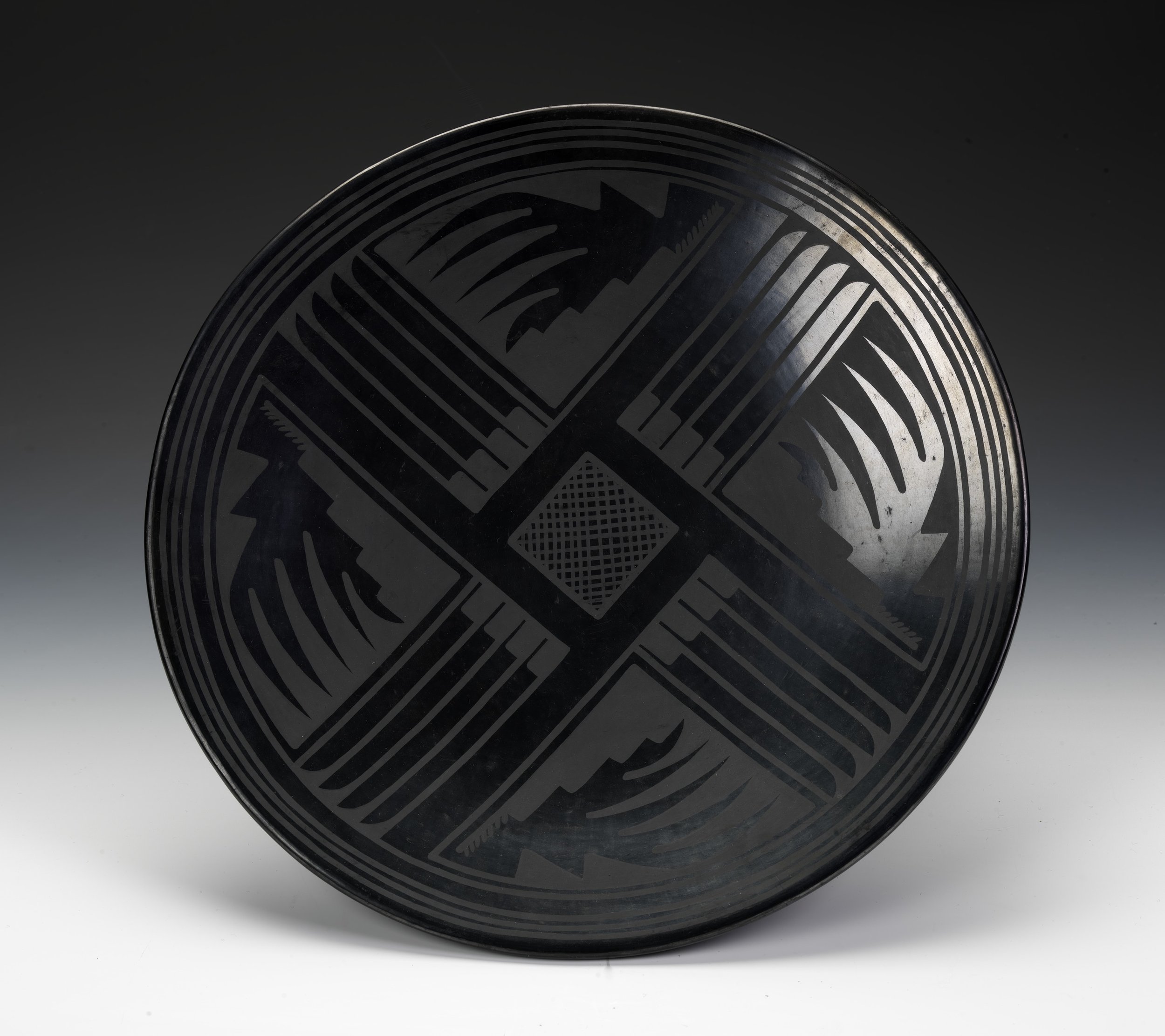
Plate by Maria and Julian Martinez, approximately the 1930s. This museum photograph identifies a particular work and its makers; it is not a pattern sheet for copying. Credit: Smithsonian American Art Museum, Gift of International Business Machines Corporation, 1966.27.15. No endorsement implied.
Give the comparison a manageable purpose
A useful note catcher has room for the maker or community, materials, date, documented use and remaining questions. Compare two carefully sourced examples rather than presenting an entire continent as one artistic style. If the maker is not recorded, write that explicitly instead of treating anonymity in a museum catalog as proof that individual artists did not matter.
For a Northwest Coast example, use a community-led resource that explains the particular work and its context. Do not have students invent clan crests or treat every design as a freely interchangeable motif. The reading’s discussion of crests is an invitation to ask about rights and relationships, not a license to reproduce them.
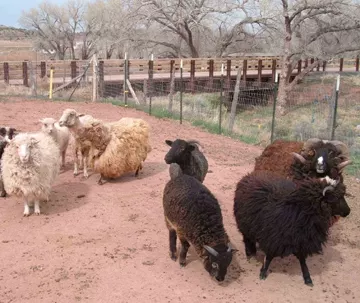
A photograph of Churro sheep accompanies the NPS account of New Mexico fiber arts. It can prompt questions about materials; it cannot establish the meaning of a particular textile design. Credit: Photo/NPS. No endorsement implied.
Connect materials to choices without reducing art to resources
The sheep photograph offers a different kind of evidence from the plate. Students can ask how a raw material becomes a finished object, then identify what additional sources would be needed to explain a specific weaving practice. A photograph of an animal does not establish who spun its wool, who wove a textile or what that textile meant.
Let students identify a gap in their evidence. This is often more demanding than copying a list of materials. A response such as “I need the artist’s account before interpreting this design” shows that the student understands the limits of visual observation.
Keep the circumstances of making in view
When teaching Plains ledger art, include the context of confinement rather than presenting the drawings as attractive historical illustrations. The NPS account of Fort Marion describes the imprisonment of Native people and the coercive educational practices associated with Richard Henry Pratt. A teacher can ask how those circumstances affect the questions we bring to an artwork without assuming that every drawing has the same meaning.
Use a museum’s identified drawing and interpretation if the class is going to analyze an individual image. The fort photograph below locates a setting; it is not a substitute for an artist’s work or testimony. Avoid asking students to reenact captivity or pretend to produce an Indigenous ceremonial object.
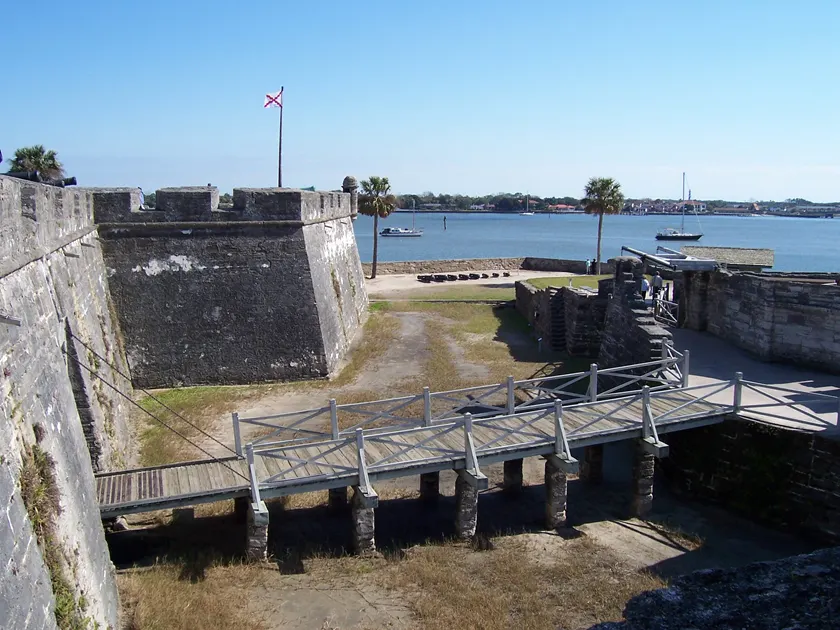
Modern view of the entrance at Castillo de San Marcos, later called Fort Marion during periods of U.S. military use. The photograph locates the site; it does not depict nineteenth century prisoners or their artwork. Credit: National Park Service. No endorsement implied.
Assess the label rather than artistic imitation
Ask students to write a short label naming the object, maker when known, place and date. Require one supported interpretation and one question the available evidence cannot answer. They can then underline the words supported by observation and circle those supported by a source.
For a creative extension, students can design a label layout or make an artwork about their own experience using their own visual vocabulary. They do not need to copy another community’s crest or ceremonial design to demonstrate thoughtful engagement with its history. The learning target is evidence-based interpretation, not producing something that looks stereotypically Indigenous.
Indigenous Art and Cultural Identity Reading Comprehension Worksheet
View this HistoraEDU resource on TPT
The reading compares Northwest Coast, Southwestern and Plains artistic traditions and includes vocabulary and analysis questions. Use selected passages to prepare students for source analysis; it is not a permissions guide or a substitute for an artist or community account. Preview the reading and answer key for your class before use.
Sources and image credits
Maria and Julian Martinez plate record
Maria Martinez historical context
Fort Marion and educational coercion context
Image record castillo-entrance
Product thumbnails: HistoraEDU, reproduced from the exact current TPT listings at the owner’s request. Archival sources do not endorse HistoraEDU or its products. No claim to original U.S. Government works.
