
By HistoraEDU
A unit organized entirely around battles can leave students thinking that Indigenous leadership means only military resistance. Broaden the evidence without adding a disconnected list of famous names. Build one inquiry around how people sustain a community through teaching, writing, making, governing and organizing. Keep each example attached to a named person or nation and a particular period.
Replace the biography checklist with a question
Instead of asking students to collect five facts about a leader, ask what problem the person was trying to address, what action they took and what evidence helps us assess its limits. A speech, a school or a community project can become evidence of leadership just as a battle can. Avoid ranking people as the single most important voice for every Indigenous nation.
Sarah Winnemucca provides a focused example. The NPS account describes her work as an interpreter, writer, public advocate and educator. Students can investigate how her audiences and circumstances shaped her choices. Her work with U.S. officials should not be flattened into either complete agreement with federal policy or a simple story of unqualified success.
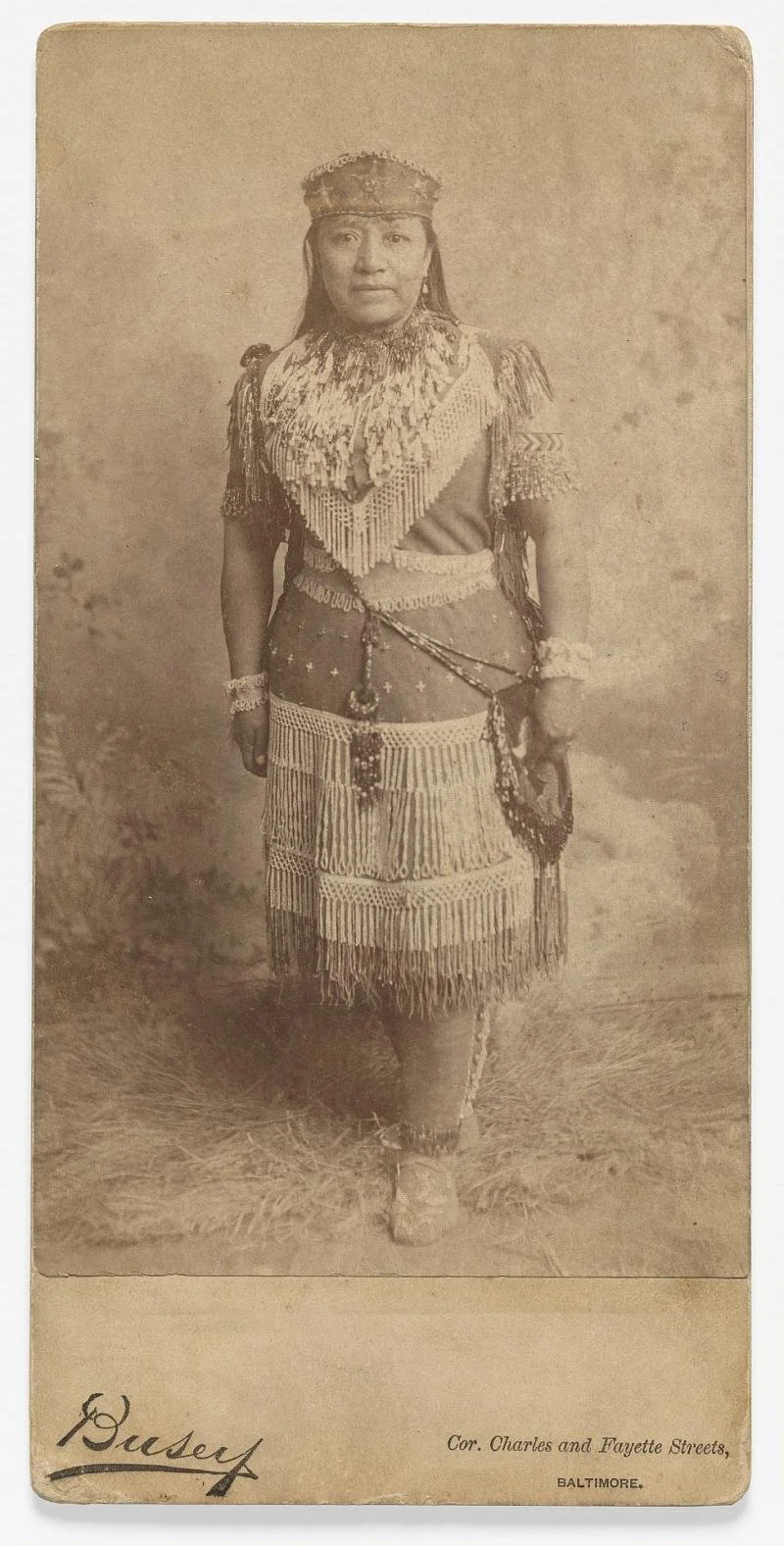
Sarah Winnemucca photographed by Norval Hamilton Busey in 1883. This is a studio portrait in a performance costume, not a neutral record of everyday Northern Paiute dress. Credit: Norval Hamilton Busey, 1883, National Portrait Gallery, Smithsonian Institution, NPG.82.137. No endorsement implied.
Read the portrait beside the person’s work
Have students describe how the photograph presents Winnemucca, then read a short, teacher-selected passage from her writing or an institution’s sourced account. The NPS explains that she used the expectations of white audiences strategically. Ask what the portrait alone leaves out about her advocacy.
Do not turn the costume into a classroom dress-up prompt. The analytical task is to consider audience and representation. Students should distinguish the image, the photographer’s record, Winnemucca’s own words and a later historian’s explanation rather than treating them as interchangeable voices.
Make knowledge work visible
A second example can focus on making and teaching rather than elected office. The plate by Maria and Julian Martinez is useful because its museum record names the collaborators and places their work in a specific community. Ask what students would miss if the label simply said “Native pottery.”
This comparison does not mean all women held identical roles or that one artist represents every Indigenous community. A precise sentence names who did what in a particular setting. It is a stronger historical claim than a broad statement about what Indigenous women always did.

Maria and Julian Martinez’s blackware plate, approximately the 1930s, makes collaboration and named artistic work visible. It is not evidence for a universal division of labor. Credit: Smithsonian American Art Museum, Gift of International Business Machines Corporation, 1966.27.15. No endorsement implied.
Treat children as learners within communities
Bring education into the inquiry through a documented example of learning, language or cultural knowledge. The modern Three Sisters teaching garden at Grand Portage offers an entry point for asking what knowledge a community passes on and how a public educational site communicates it. Use the site’s account to establish its context, not the photograph alone.
If the class studies boarding schools, clearly distinguish coercive removal and assimilation from community-directed education. Use age-appropriate sources, give students a content note and avoid simulations that ask them to experience forced separation. A factual timeline and a source comparison can teach the policy without turning trauma into a classroom performance.
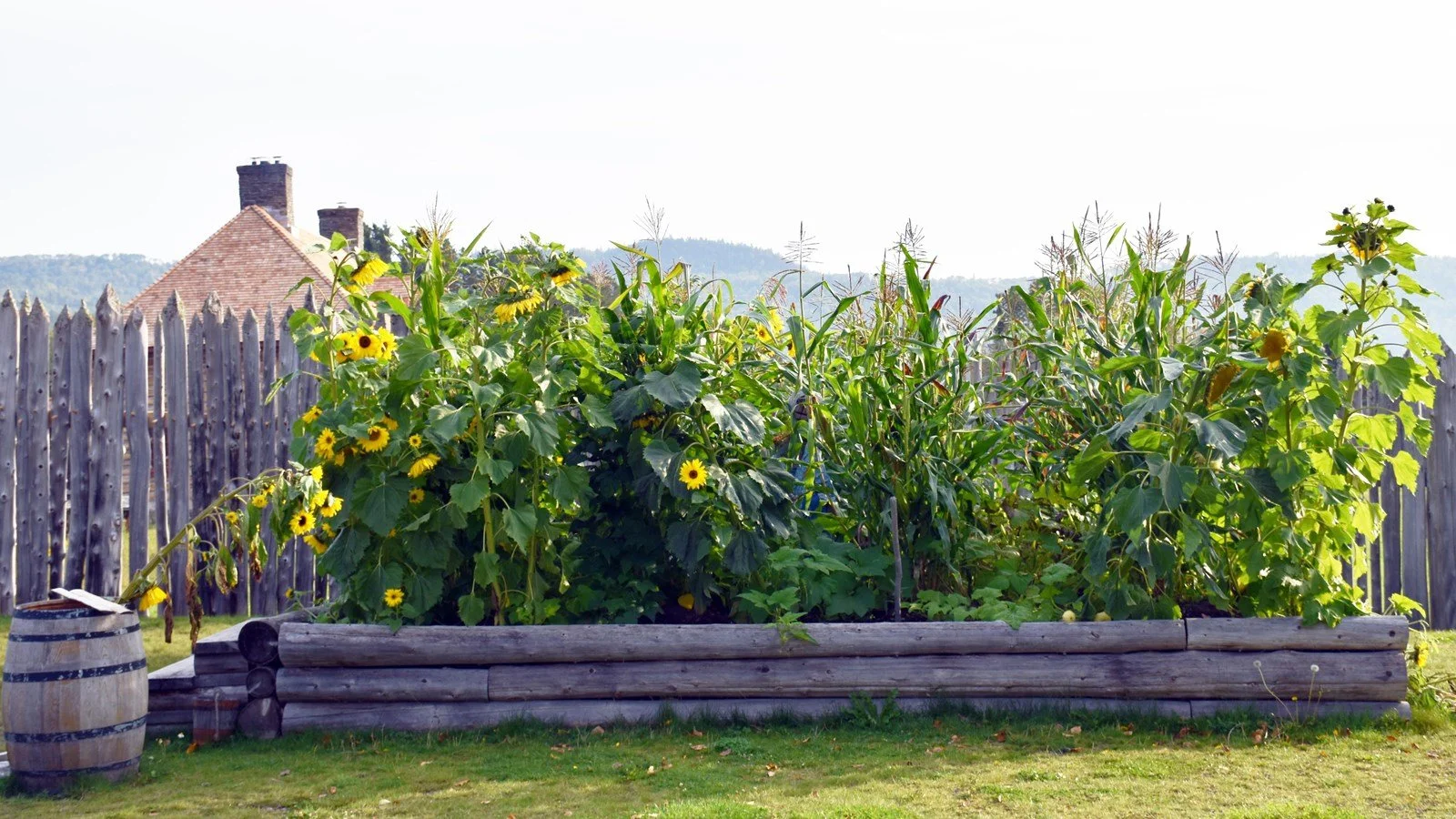
Modern Three Sisters teaching garden at Grand Portage National Monument. This is a present-day interpretive setting, not a photograph of historical children learning or an image of a boarding school. Credit: NPS Photo / GM Spoto. No endorsement implied.
Ask students to compare actions and constraints
End with a short comparison of two examples. Students should identify a community need, the person or group responding, the evidence for the action and a limitation on what they can conclude. An answer can recognize significance without claiming that a single person solved a community’s challenges.
For the next lesson, add a tribal government or community education source chosen for the actual example. Keep living communities in the unit without asking an Indigenous student to speak for everyone or disclose family experiences. The class’s responsibility is to investigate sources carefully, not to seek a representative anecdote from a classmate.
Indigenous Childhood and Education Reading Comprehension Worksheet
View this HistoraEDU resource on TPT
Use a selected learning passage to generate questions about how knowledge is shared, then test those questions against the named Grand Portage example rather than assigning one pattern to all communities. If the class uses the Carlisle passage, supply the precise distinction: founded in 1879, Carlisle was the first federal off-reservation boarding school for Native children, not the first federal boarding school of any kind. Keep coercive schooling separate from community-directed education.
Women in Indigenous Societies Reading Comprehension Worksheet
View this HistoraEDU resource on TPT
Use the opening discussion of stereotypes as a prompt for investigating a named woman or collaboration, not as proof that every community distributed authority alike. Pair it with the Winnemucca account or the Martinez museum record and ask which specific claims the source supports. Leave the unfinished Ecological knowledge glossary entry and the overbroad Dawes Act explanation out of this lesson; they are not needed for the portrait and collaboration inquiry.
Indigenous Leaders and Changemakers Biography Reading Comprehension
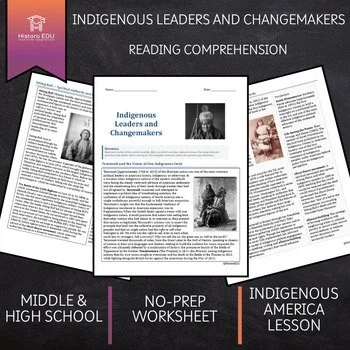
View this HistoraEDU resource on TPT
Select the Sarah Winnemucca section for a source comparison about writing, public speaking and advocacy, using the NPS biography to check particular claims. Do not require unsupported rankings of the most effective leader. The Sitting Bull battle passage is outside this activity; if it is used later, clarify that the whole Seventh Cavalry was not annihilated at Little Bighorn—Reno and Benteen’s command included survivors. Keep the focus here on documented actions and constraints.
Sources and image credits
Winnemucca biography and portrait context
Carlisle off-reservation distinction
Image record three-sisters-garden
Product thumbnails: HistoraEDU, reproduced from the exact current TPT listings at the owner’s request. Archival sources do not endorse HistoraEDU or its products. No claim to original U.S. Government works.
