
By HistoraEDU
Students can shade cultural regions neatly and still picture each region as an isolated island. A trade lesson can correct that misconception, but a map full of arrows can create another: that every connection was a direct journey, that every exchange was commercial or that connected peoples shared one identity. Teach students to match each kind of connection to the evidence that supports it.
Start with the claim that a material can support
Give students a short source account naming a material’s origin and the place where it was found. Ask them to distinguish the source location, the find location and the unknown route between them. Archaeological evidence can demonstrate movement across distance without identifying every intermediary or proving that one person made the whole trip.
Use a dashed line for an inferred connection and a different mark for a documented route. Label the time period. The map should not silently combine sites separated by centuries into one simultaneous trading network. A concise key can make the limits of the evidence visible.

Modern view of Mound City Group in Ohio. Use the accompanying archaeological account to investigate connections; the grass-covered mounds themselves do not reveal a trade route. Credit: NPS / Tom Engberg. No endorsement implied.
Distinguish exchange from a universal market system
The NPS discussion of Hopewell earthworks describes connections across a broad area and cautions that Hopewell is an archaeological label rather than the name of a known tribal nation. That makes it a useful case for asking what shared objects or practices can show without turning a network into a single government.
Have students write a claim using the strongest verb the evidence warrants. “This material reached this site” is different from “these two communities traded directly.” Gifts, travel, exchange and later movement of objects are not interchangeable explanations. Students can list possibilities while marking which are supported by their source.
Put relationships back into the map
A reconstructed earthlodge at Knife River provides a second setting for thinking about communities rather than isolated commodities. The NPS account identifies the structure as a Hidatsa earthlodge reconstruction and explains its construction. Students should not infer the exact trading practices of its occupants from the modern photograph.
Ask what a material map leaves out: language, hospitality, obligations, political authority and decisions about access. Then select a source that addresses one of those questions for a named community. Resist the temptation to use a generic rule that all Indigenous peoples treated exchange in exactly the same way.
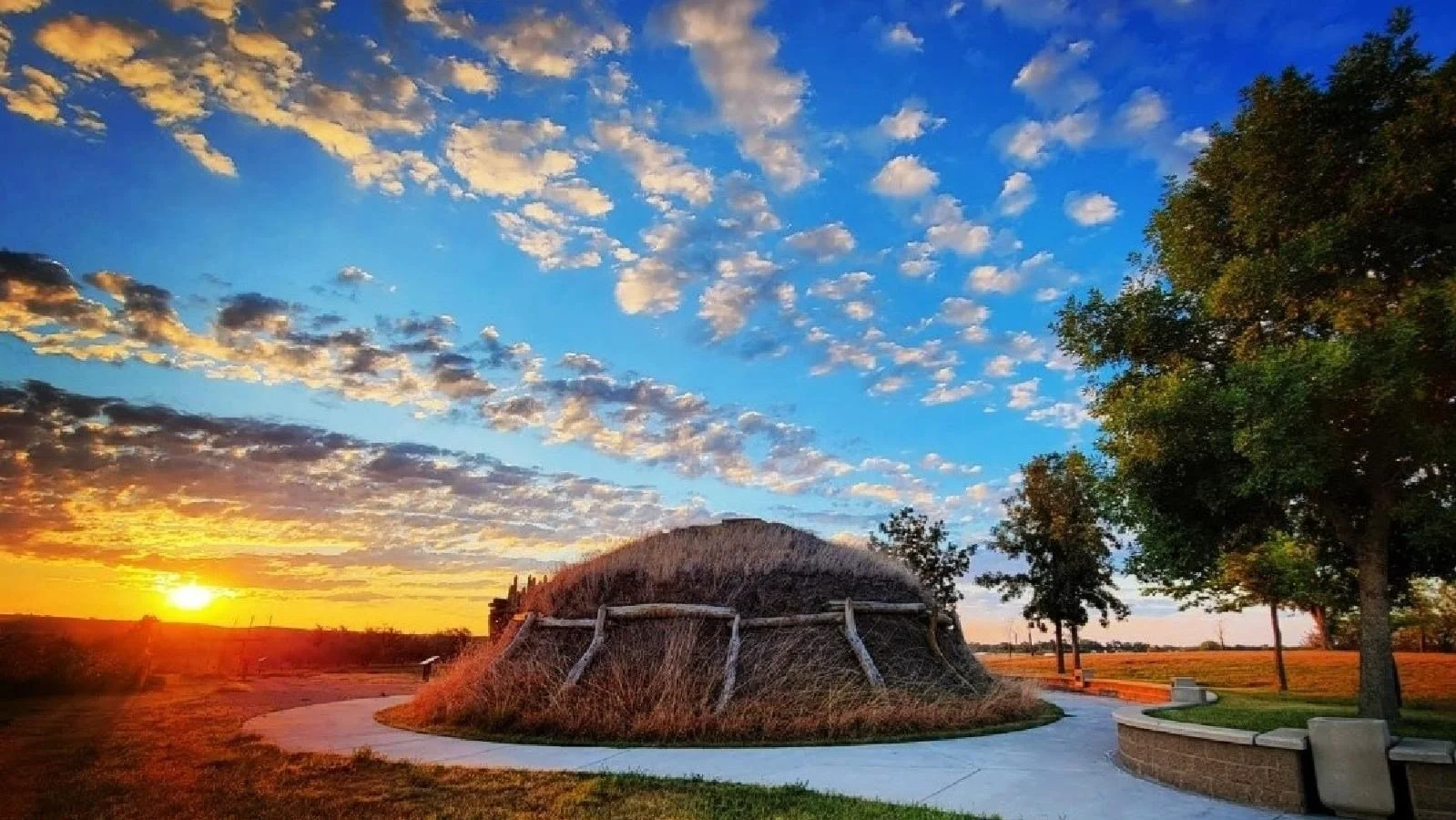
Modern reconstruction of a Hidatsa earthlodge at Knife River Indian Villages. It establishes a specific community and interpretive setting, not a photograph of a historic trade gathering. Credit: NPS Photo / Ashley Bargmann. No endorsement implied.
Keep diplomacy connected but distinct
The 1794 Treaty of Canandaigua offers a different form of evidence: a written diplomatic agreement. Place it in its own period rather than using it as a direct illustration of pre-contact exchange. A treaty record and an archaeological object answer different questions. Students can compare what each records and whose perspectives require additional sources.
A productive prompt asks students to identify the parties, commitments and historical context of one agreement. Avoid substituting a sweeping numerical claim about every treaty for analysis of a particular text and its implementation. This is historical source work, not advice about present-day legal rights.
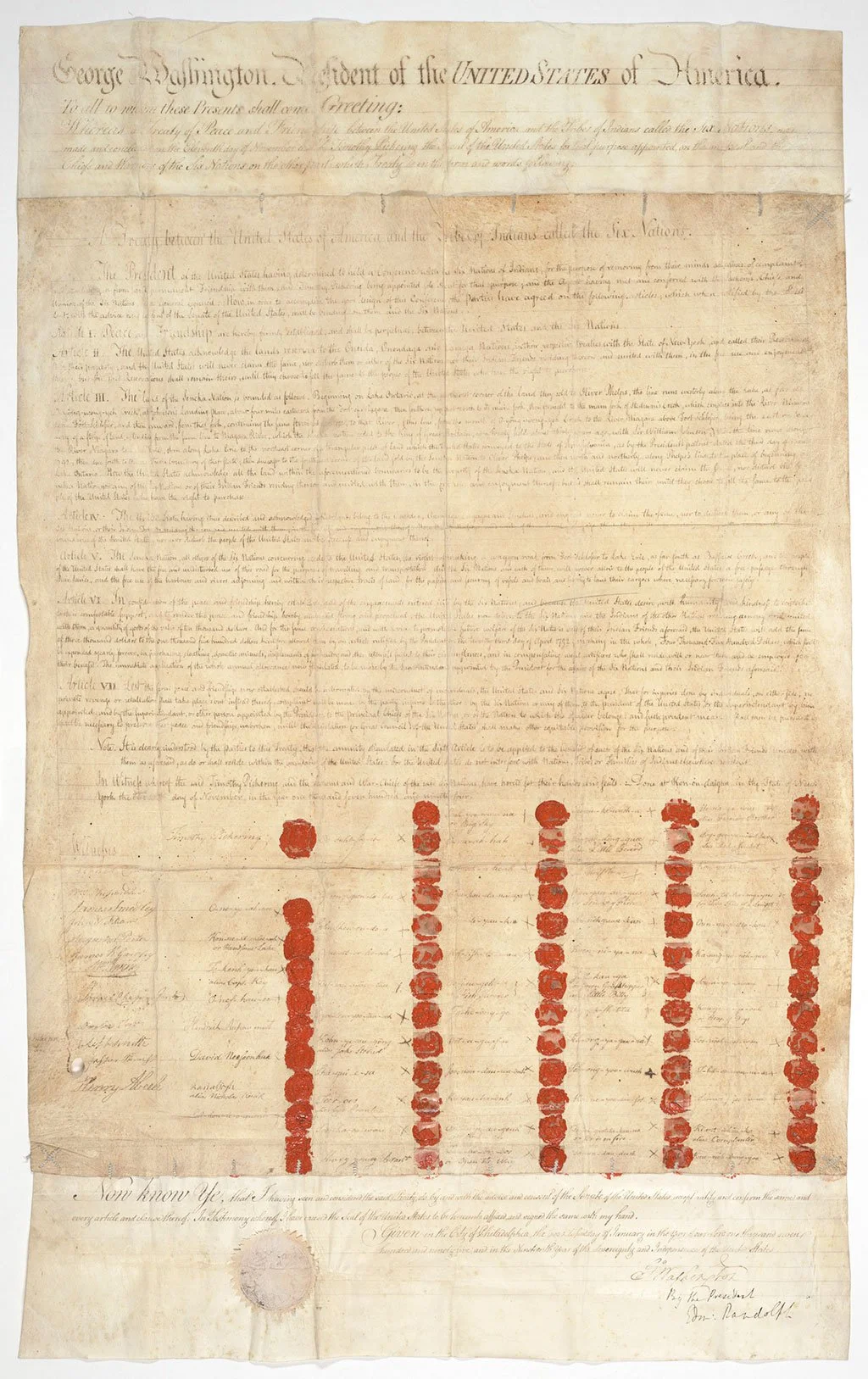
A page of the 1794 Treaty of Canandaigua preserved by the National Archives. This later diplomatic record is not a map of pre-contact trade. Credit: National Archives, General Records of the U.S. Government. No endorsement implied.
Use the two trade readings as alternatives before combining them
The catalog contains two trade readings with overlapping scope. Choose one as the main reading and use a carefully selected passage from the other only if it answers a new question. Requiring both in full may repeat content without advancing the inquiry.
If students investigate an innovation, ask them to name the people, materials and evidence involved rather than build a list of inventions credited to a whole continent. Do not turn historical medicinal examples into instructions to use plants as treatments. A technology’s history and a claim about safe medical use require different evidence.
Assess a map note that explains uncertainty
Ask students to submit one annotated connection and a brief explanation. It should identify the source, date or period, what moved or was agreed, and one uncertainty. A student who declines to draw an unsupported exact route has made a sound historical decision, not left the map unfinished.
For an extension, give students two accounts of the same connection and ask what new evidence would help resolve a difference. This keeps the lesson centered on historical reasoning instead of rewarding the largest number of arrows or the most confident story.
Native American Trade Networks Reading Passage and Questions
View this HistoraEDU resource on TPT
A broad trade passage covering materials, routes and cultural exchange. Its body and vocabulary use different minimum ages for Celilo Falls; those bounds are not inherently contradictory. Verify the source and phrasing before using either date in teaching.
Indigenous Trade Networks Reading Comprehension | North America
View this HistoraEDU resource on TPT
Choose the Mandan–Hidatsa village passage as one option for identifying a named trade setting, then check the agricultural goods and network against the NPS Knife River account. Use a selected passage rather than automatically assigning both trade readings. Leave the Southwestern turquoise-origin generalization out of this map task; a material’s presence does not by itself establish its mine of origin or direct route.
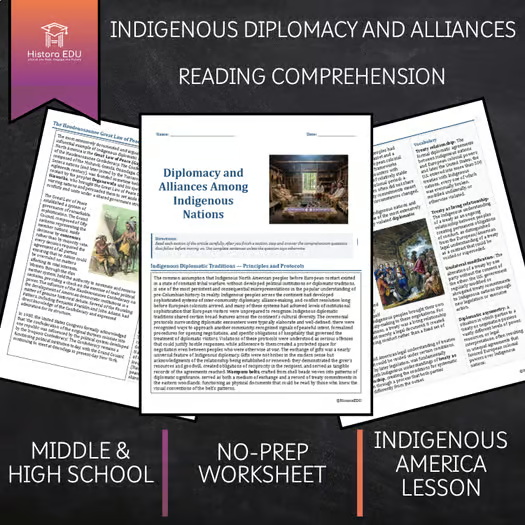
Indigenous Diplomacy and Alliances Reading Comprehension Worksheet
View this HistoraEDU resource on TPT
Use a selected diplomatic-agreement passage to introduce questions about parties, commitments and records, then investigate the specific 1794 Canandaigua text. Read Article VII for its complaint process and distinguish an agreed procedure from evidence that it was implemented. Do not use categorical counts or a universal claim about every treaty in place of this dated inquiry. The current access guide links an editable lesson and separate PDF answer key; its final extended question depends on a previous unit reading.
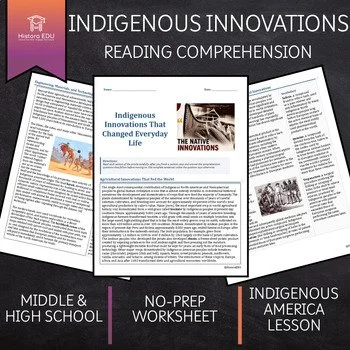
Indigenous Innovations Reading Comprehension | Native American History
View this HistoraEDU resource on TPT
Select the maize-domestication passage as a starting point for mapping a named technology’s origin and movement. Check the specific claim against the UC Davis maize-history account: domestication from teosinte began in southwestern Mexico roughly 9,000 years ago, but that does not establish every later exchange route. Leave the unfinished raised-field glossary entry, global calorie estimate, invention rankings and medicinal-use claims outside this lesson. The map annotation is an additional teacher-created task, not a promised worksheet feature.
Sources and image credits
Hopewell connections and archaeological labels
Hidatsa earthlodge reconstruction
Treaty of Canandaigua archival record
Image record hidatsa-earthlodge
Image record canandaigua-treaty
Product thumbnails: HistoraEDU, reproduced from the exact current TPT listings at the owner’s request. Archival sources do not endorse HistoraEDU or its products. No claim to original U.S. Government works.
