
By HistoraEDU
A lesson that ends with abandoned cities can accidentally teach students that the Maya disappeared. Start by separating a change in political centers from the survival of people, languages and knowledge. Then use a small collection of objects to practice a second distinction: what an image lets us observe and what its interpretation requires. Students can study ancient achievements without turning living Maya communities into a footnote.
Set the time frame before introducing a collapse
Write two questions separately: what changed in particular ancient cities, and what continues among Maya peoples? The Smithsonian’s Living Maya Time introduces contemporary Maya voices alongside the study of calendars. Use a short teacher-selected segment or transcript to establish that Maya history does not stop with the Classic period.
A timeline can include political change without becoming a disappearance diagram. Ask students to identify the place and period behind any claim about abandonment. Do not assume that one center’s decline describes every region or that a later community must look unchanged to count as continuous.
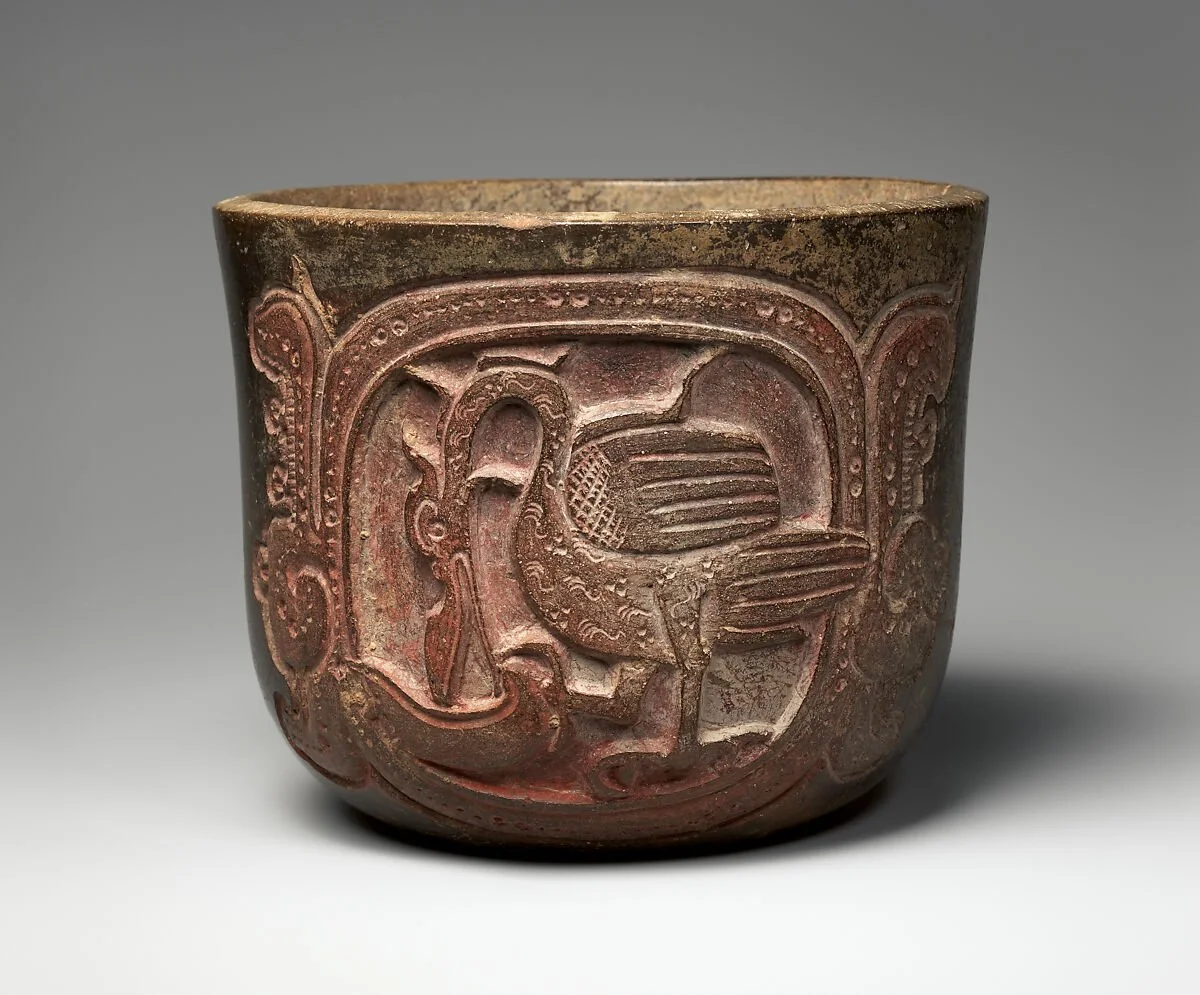
Maya vessel with a water bird and hieroglyphic text, dated 600–900 CE in the Met’s record. This photograph shows a particular ancient object, not contemporary Maya life. Credit: The Metropolitan Museum of Art, Gift of Justin Kerr and Dicey Taylor, 2017, 2017.396. No endorsement implied.
Let one object connect writing and everyday materials
The Met identifies the water bird vessel as a ceramic object with an inscription related to its use for a cacao drink and its owner. Use the museum’s interpretation as an attributed source, not as a translation students can infer from looking at the photograph. Ask what evidence connects the object’s form, image and writing.
This can replace a disconnected achievements list with a bounded inquiry. Students describe what is visible, read the interpretation and explain what new information it adds. They should not conclude that every Maya vessel served the same purpose or that a museum object represents all households.
Compare records with different levels of detail
The second vessel has a shorter museum record: a date range, material, cultural identification and dimensions. That limited record is useful. Students can identify what they know without inventing a named owner, an exact workshop or a translation for marks on the surface.
Have pairs exchange captions and highlight unsupported details. The goal is not to make every caption equally elaborate. A concise, accurate caption is better than a vivid story whose details are not in the evidence. This exercise also makes uncertainty an ordinary part of historical work rather than a reason to dismiss it.
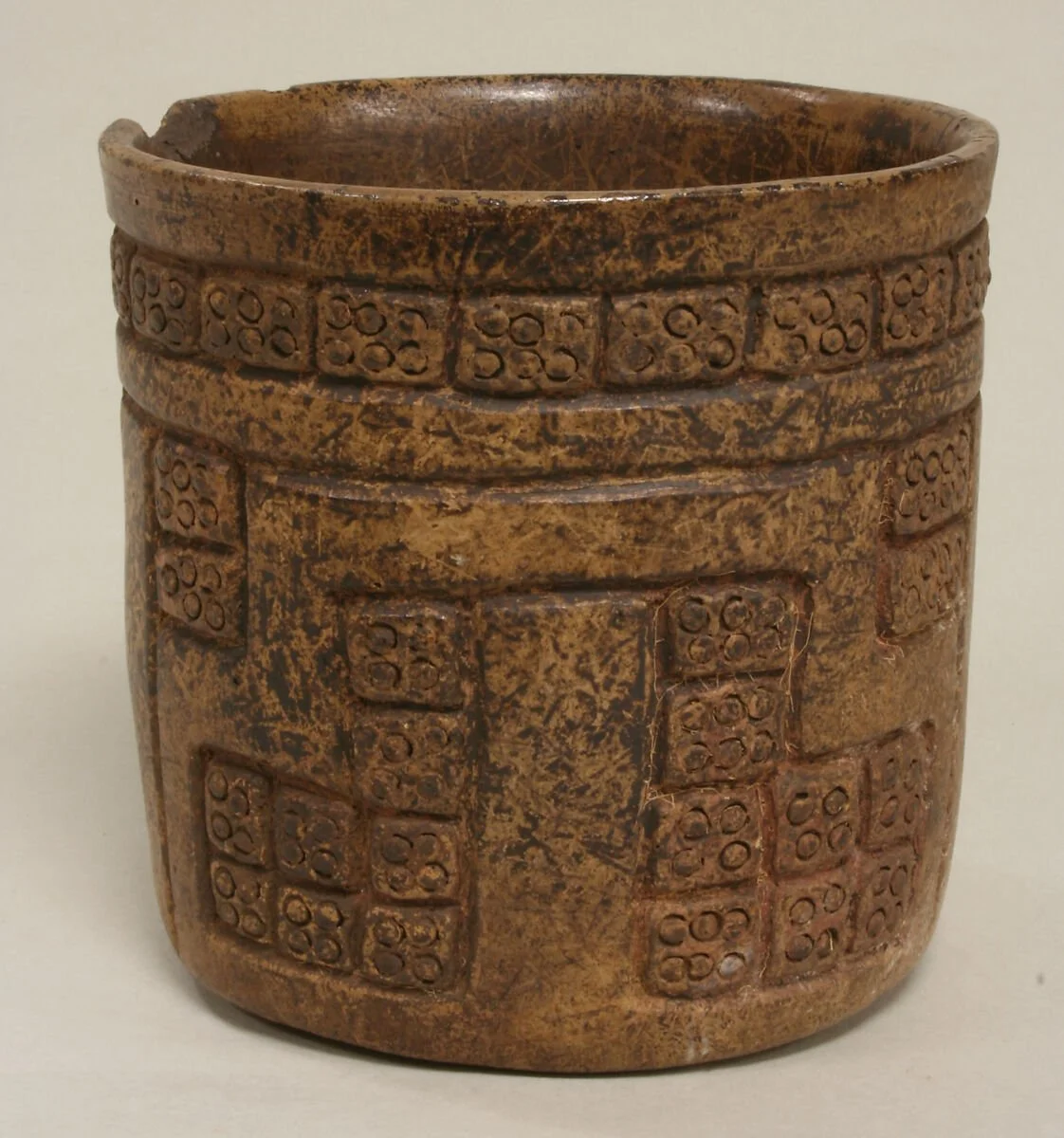
Maya ceramic vessel from Mexico, dated to the sixth through ninth centuries in the Met’s record. Its maker is not named in that record; the photograph alone does not supply one. Credit: The Metropolitan Museum of Art, The Michael C. Rockefeller Memorial Collection, Bequest of Nelson A. Rockefeller, 1979, 1979.206.1048. No endorsement implied.
Separate observations from a reconstruction of function
The double-chambered whistling vessel adds a further question: what can researchers learn that a still image cannot show? The Met describes an internal air chamber and a sound-producing function. Attribute that information to the museum’s investigation rather than suggesting the photograph proves it.
The museum also discusses ritual associations. Students can study that interpretation respectfully without reenacting a ceremony or inventing a sacred narrative. A public collection image is evidence for a lesson, not permission to claim cultural authority over the practices it represents.
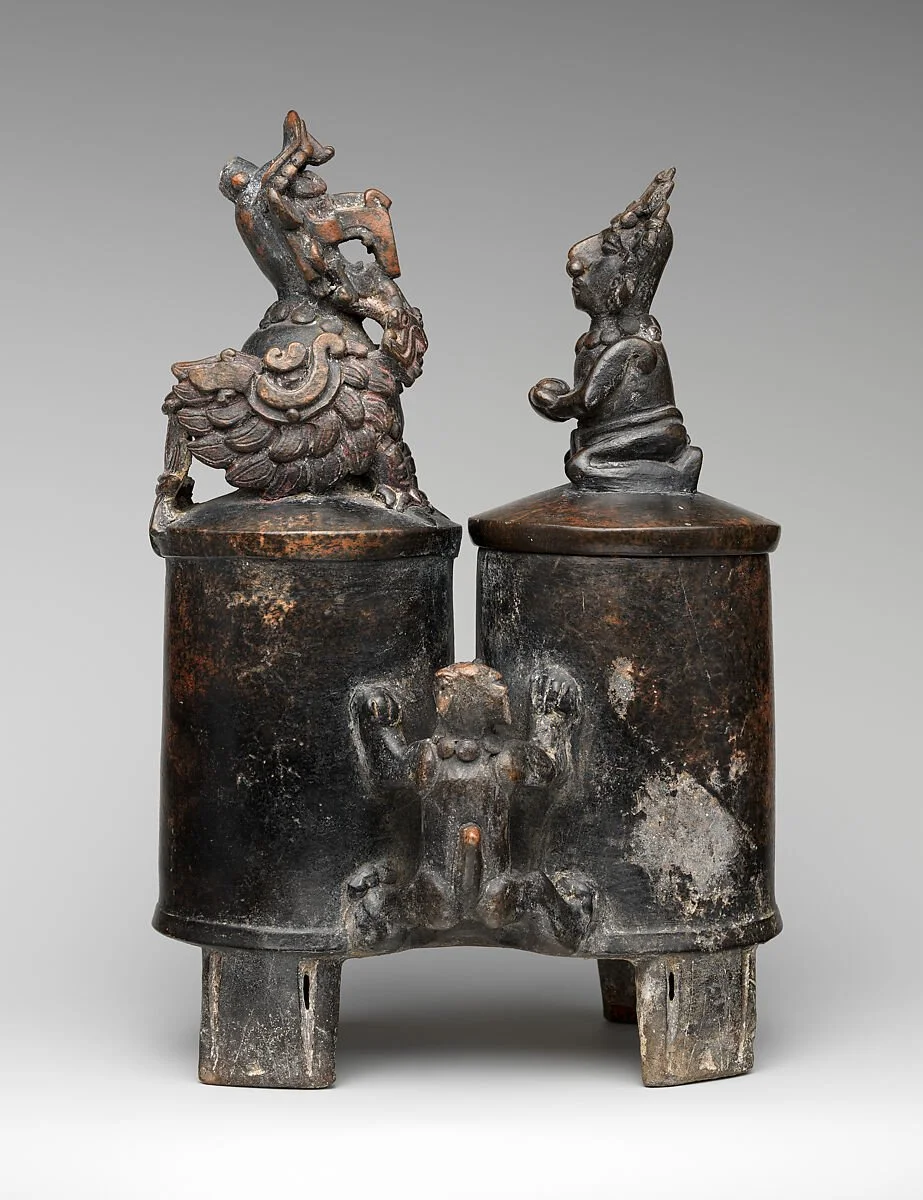
Maya whistling vessel, 400–500 CE, from Guatemala or Mexico according to the Met. The photograph shows its modeled figures and linked chambers; its internal mechanism requires additional evidence. Credit: The Metropolitan Museum of Art, The Michael C. Rockefeller Memorial Collection, Gift of Nelson A. Rockefeller, 1963, 1978.412.90a b. No endorsement implied.
Teach calendar systems without a contest of civilizations
If the class moves to timekeeping, distinguish the 365-day Haab, the 260-day Tzolk’in and the Long Count using the Smithsonian’s explanation. Students can compare what a repeating cycle and a running count accomplish. They need not declare one civilization smarter than another to recognize the intellectual work involved.
Avoid an unsupported precision claim or a calendar apocalypse hook. Have students identify the source and limits of a numerical statement. A simple task is to explain why two repeating cycles and a long count are different tools, rather than memorizing a list of extraordinary-sounding statistics.
End with continuity and a question still worth asking
Return to a contemporary Maya speaker or community source, with the person’s name and context intact. Ask students to revise the sentence “The Maya disappeared.” A stronger answer distinguishes changes in ancient political centers from the continued lives and cultures of Maya peoples.
An exit response can pair one ancient object with one contemporary source and explain why neither alone tells the whole story. Do not ask students to treat present-day Maya people as unchanged survivals from the past. Continuity can include adaptation, disagreement, innovation and political change.
Maya Civilization Reading Comprehension | Ancient Americas Worksheet
View this HistoraEDU resource on TPT
Use the selected continuity section to distinguish changes in ancient political centers from the lives of Maya people today. Pair it with a named contemporary speaker from Living Maya Time, keeping that person’s community and perspective visible. Ask students to identify the region and period behind a claim about a city rather than turning political change into the disappearance of a people.
Maya Achievements Reading Comprehension | Ancient Americas Worksheet
View this HistoraEDU resource on TPT
Use the named calendar cycles as the starting point for the comparison question: what do the Haab, Tzolk’in and Long Count each record? Supply the Smithsonian explanation directly: the Haab has 365 days and approximates the solar year, the Tzolk’in has 260 days, and the Long Count records elapsed days in larger cycles. Keep the task about their different functions. Leave the Gregorian-equivalent accuracy, Venus-to-the-second precision and equinox-only shadow claims out of this lesson; they are not needed to recognize Maya intellectual achievements.
Sources and image credits
Contemporary Maya voices and context
Water bird vessel and attributed interpretation
Whistling vessel research and catalog record
Product thumbnails: HistoraEDU, reproduced from the exact current TPT listings at the owner’s request. Archival sources do not endorse HistoraEDU or its products. No claim to original U.S. Government works.
