
By HistoraEDU
A memorable anecdote about Clara Barton can introduce a lesson, but it should not be the whole lesson. Help students follow the practical work behind care: locating people who needed assistance, moving supplies, organizing space and sustaining help over time. This keeps the focus on evidence and human decisions rather than shock details or a single heroic figure.
Start with a problem that required more than courage
Use a short, age-appropriate excerpt from Barton’s account of Antietam. Her description of moving wagons and supplies provides a concrete problem for students to trace. Ask them to identify a need, a barrier and an action taken in response. Avoid assigning the graphic portions of the full account simply because they are available online.
Label the source accurately. This is a first-person account from Barton’s papers at the Library of Congress, transcribed by the National Park Service, not a modern transcript recorded during the battle. Students can value an eyewitness perspective while recognizing that a person’s account is not a complete record of everyone involved.
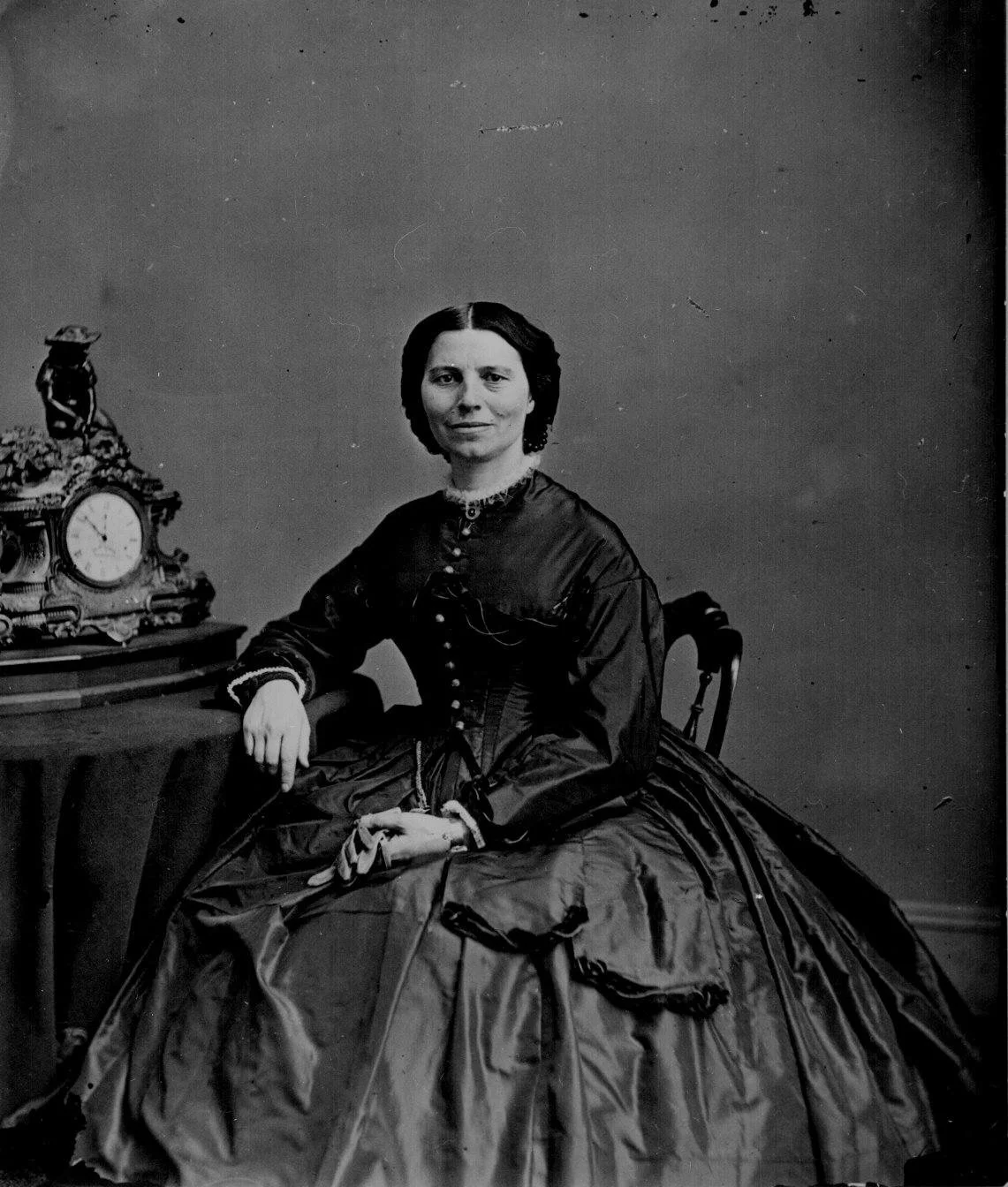
Clara Barton, NAID 526057. A portrait introduces the person; the account provides evidence about her actions. Credit: National Archives. Public domain; no endorsement implied.
Trace people and materials through the care process
Have students draw a simple chain in their notes: supplies obtained, supplies transported, care provided, further needs identified. Under each stage, they should name the people or work described by the source. Use a question mark where the account is silent instead of filling a gap with a guess.
Barton’s account discusses assistance from drivers and helpers and supplies provided by others. Those details support a classroom question about collaboration. They do not require students to dismiss her contribution; they make the work more intelligible than an isolated hero story.
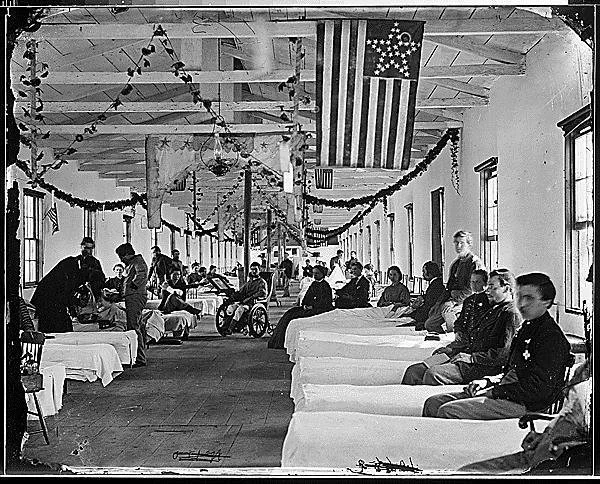
Carver Hospital, Washington, D.C., approximately 1860–1865, NAID 524592. This is not the Antietam field setting in Barton’s account. Credit: National Archives. Public domain; no endorsement implied.
Compare sources without pretending they show the same place
Place the hospital photograph beside the account and ask what each can establish. The image can support observations about the visible ward arrangement; it cannot verify Barton’s particular experience. A useful comparison identifies differences in setting and source type before drawing a conclusion.
Then broaden the inquiry with a nurses or women’s wartime roles reading. Ask which kinds of work appear in the new text and which are absent from the portrait and account. Avoid implying that all women served in the same role or that a nursing story represents every wartime experience.
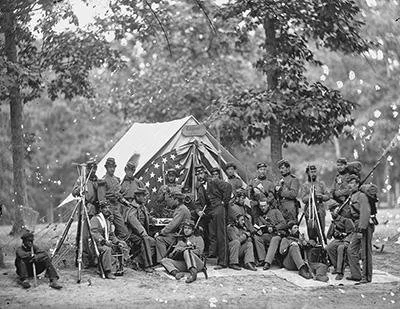
Engineers of the 8th New York State Militia, 1861, NAID 524918. This separate camp scene prompts logistical questions, not claims about Barton’s helpers. Credit: National Archives. Public domain; no endorsement implied.
Assess a supported explanation of care
An exit response might explain one logistical obstacle and how people tried to address it. Require a source detail and a sentence distinguishing what is documented from what remains unknown. Students do not need to describe an operation or rank suffering to demonstrate understanding.
The three resources below offer different entry points. Choose Barton for a named-person focus, nurses for care work, or women’s wartime roles for a wider comparison. They can be paired selectively rather than assigned as a stack of similar readings.
Clara Barton: The Woman Who Changed War Medicine | Reading Worksheet
View this HistoraEDU resource on TPT
Use to introduce Barton’s wartime work, then pair the reading with the sourced Antietam account for a distinction between overview and first-person evidence.
Civil War Nurses: Heroes Behind the Battle Lines | Reading Worksheet
View this HistoraEDU resource on TPT
Use for a broader care-work inquiry; the article’s logistics organizer is a suggested extension rather than a claim about included materials.
Women of the Civil War: Spies, Soldiers, and Survivors | Reading Worksheet
View this HistoraEDU resource on TPT
Use to widen the discussion beyond nursing and avoid treating one woman’s experience as universal.
Sources and image credits
NPS transcription of Clara Barton on Antietam
NPS Clara Barton history and primary-source gateway
Product thumbnails: HistoraEDU, reproduced from the exact current TPT listings at the owner’s request. Archival sources do not endorse HistoraEDU or its products. No claim to original U.S. Government works.
