
By HistoraEDU
Population, factories and railroads are easy to turn into a scoreboard. The problem comes when students assume the side with more of each must win quickly. Ask a different question: how could an advantage become usable power, and what might prevent that from happening? A short comparison lesson can move students from listing resources to explaining strategy without pretending they could predict the war’s outcome.
Separate resources from aims
Give students a two-part organizer. On the left, record a resource or constraint. On the right, explain the task that resource might help accomplish. A railroad is not a victory; it can help move supplies or troops if routes, equipment and coordination support that purpose. Require the word because in the connection.
Next, compare aims. Preventing secession and establishing Confederate independence required different kinds of success. Do not turn that comparison into moral equivalence: the Confederacy’s project protected slavery. Strategic analysis explains how actors pursued aims; it does not endorse those aims.

The ironclad St. Louis, later renamed Baron de Kalb, NAID 533123. Use the vessel to ask about transport, construction and maintenance rather than treating technology as an automatic outcome. Credit: National Archives. Public domain; no endorsement implied.
Make one prediction and then interrupt it
Before a short account of First Bull Run, have students write a provisional claim using only the information available in the opening comparison. Label it “prediction from limited evidence.” After reading, students should identify which assumption needs revision. The exercise assesses reasoning, not who guessed the winner.
The NPS account of First Manassas describes inexperienced Union troops, a valuable rail junction and Confederate reinforcements arriving by rail. Those details make a manageable case study of coordination and timing. Students can explain why an aggregate resource advantage did not settle this particular battle.
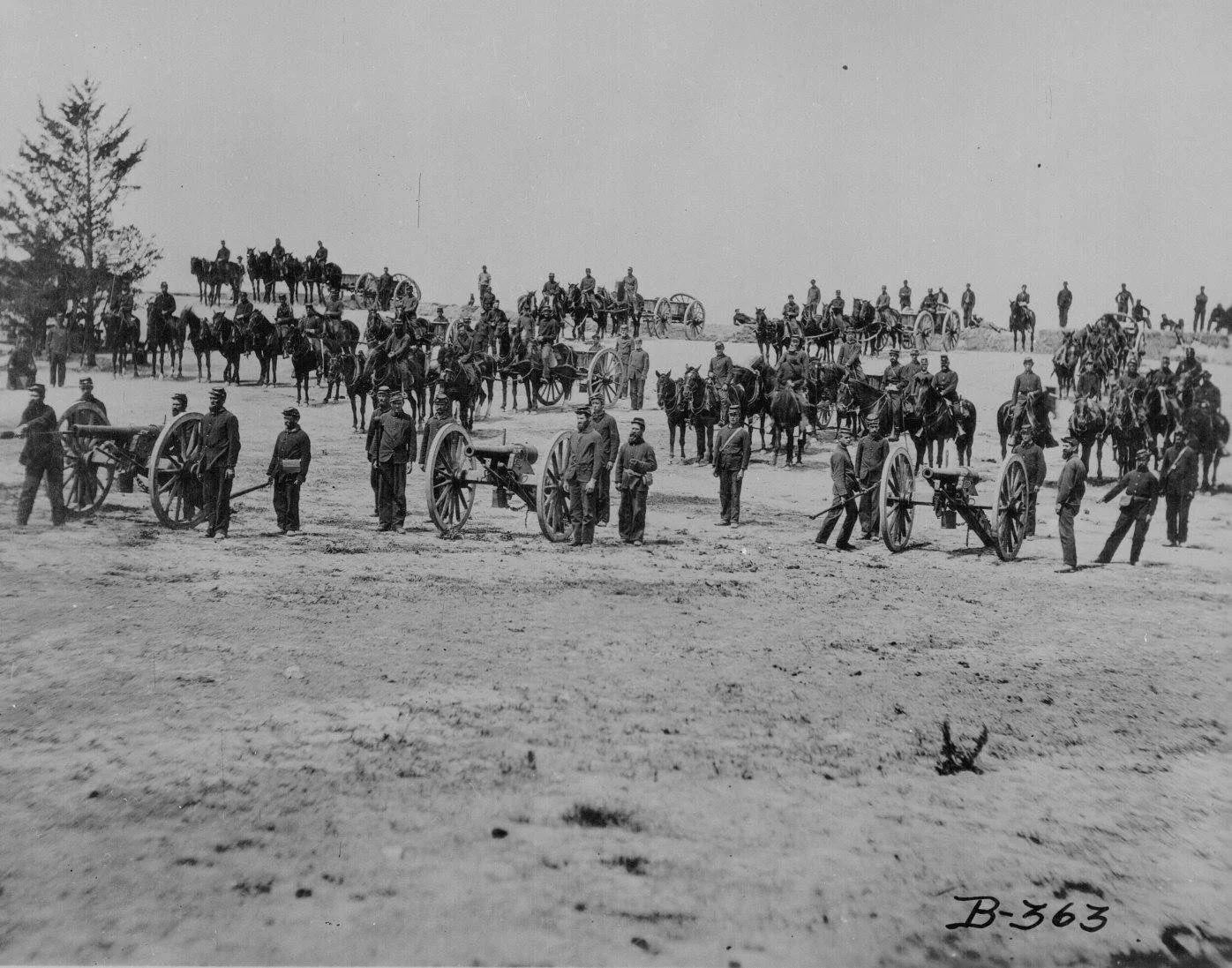
Ringgold battery at drill, NAID 524783. A drill photograph is not a photograph of combat at Bull Run. Credit: National Archives. Public domain; no endorsement implied.
Treat confident language as a claim to examine
The title “Why Did Everyone Think the Civil War Would Be Short?” is a starting question, not evidence that every person held the same view. Ask who is represented in the reading’s examples and who is absent. Students can replace everyone with a narrower, supported phrase in their own explanation.
Likewise, better plan needs criteria. Was a plan feasible with available resources? Did it respond to geography? How did it depend on assumptions about the opponent? Use those criteria instead of asking students to vote for a side.
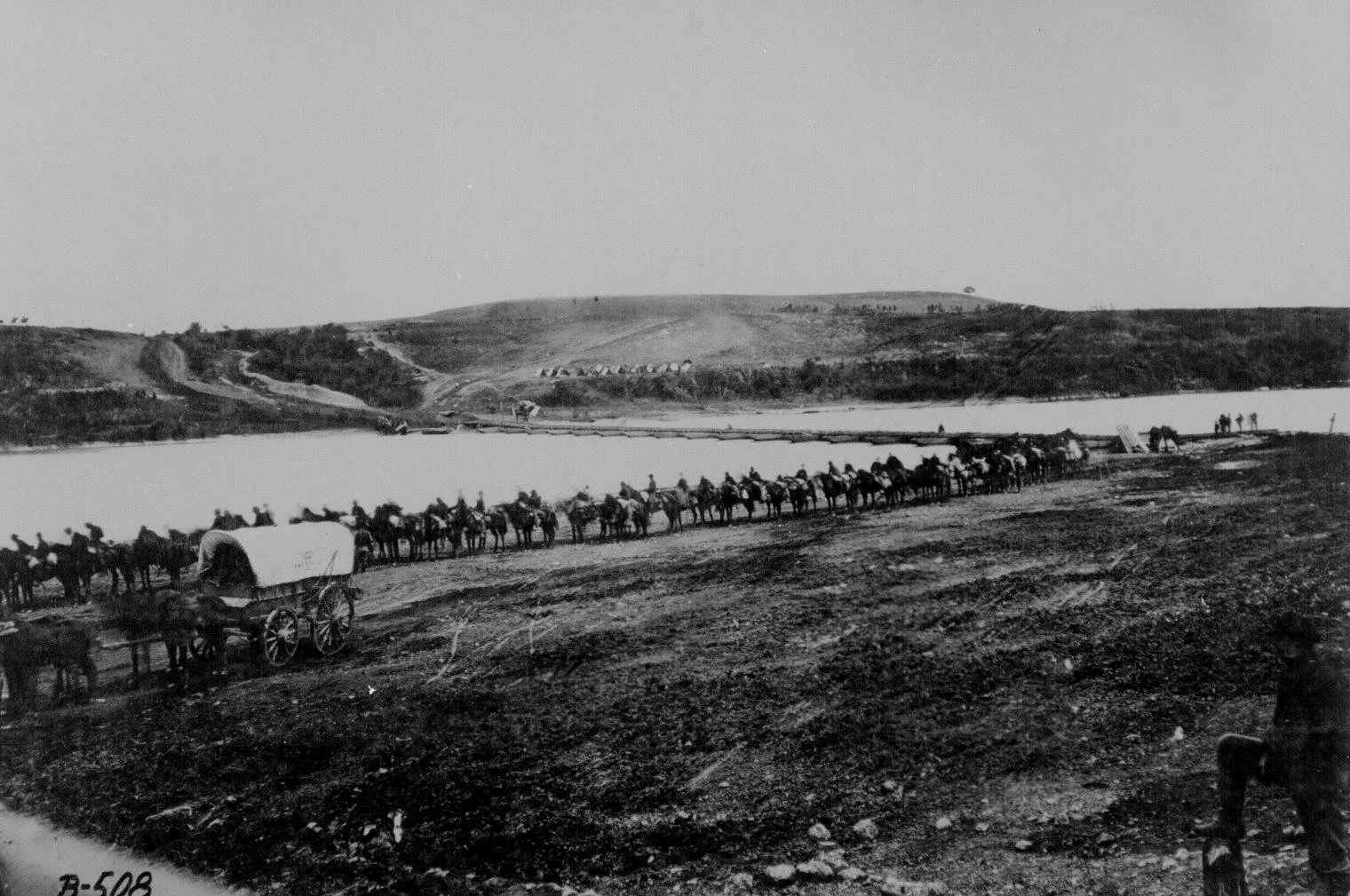
Federal cavalry by the Rappahannock River, 1862, NAID 524925. The image offers a concrete starting point for transport and coordination questions. Credit: National Archives. Public domain; no endorsement implied.
Assess the mechanism rather than the list
An exit ticket can be just three sentences: identify one advantage, explain how it might matter, and name a condition that could limit it. Accept different examples when the causal explanation is sound. If a student writes only “more factories,” prompt for what those factories would need to produce and how the supplies would reach an army.
The two North and South readings below overlap in topic. Treat them as alternatives for background or comparison, not as proof that students need both. Preview the texts and choose the one that fits the specific gap you are addressing.
North vs South: Who Really Had the Advantage? | Civil War Reading Worksheet
View this HistoraEDU resource on TPT
Use to examine wartime advantages and limits. The title is a question to investigate, not a claim that one factor guaranteed victory.
Civil War | North and South Comparison Reading Comprehension Worksheet
View this HistoraEDU resource on TPT
Use as an alternative background reading on antebellum regional differences. Do not automatically assign this and the advantages reading as separate new content.
Union vs Confederate Strategies: Who Had the Better Plan?
View this HistoraEDU resource on TPT
Use to connect military aims to proposed strategies and the assumptions each strategy required.
Why Did Everyone Think the Civil War Would Be Short?
View this HistoraEDU resource on TPT
Use to examine expectations with attention to whose expectations are actually documented.
Battle of Bull Run: The Shocking First Battle of the Civil War
View this HistoraEDU resource on TPT
Use as a bounded case study for revising a resource-based prediction after new evidence.
Sources and image credits
NPS on causes and individual motivations
Product thumbnails: HistoraEDU, reproduced from the exact current TPT listings at the owner’s request. Archival sources do not endorse HistoraEDU or its products. No claim to original U.S. Government works.
