
By HistoraEDU
Students may remember a snow house and a cold landscape but leave a unit thinking Inuit life belongs to a distant past. The problem is not solved by adding one modern photograph at the end. Build place, time and community into every source students use. A short source comparison can show how environmental knowledge and contemporary life belong in the same account without making one community stand for the entire Arctic.
Name the place before describing the practice
Start with a source’s own geographic and community labels. “Arctic” describes a broad region; it is not a synonym for one people. Inuit Tapiriit Kanatami describes four regions of Inuit Nunangat in Canada and explains that the homeland includes land, water and ice. Do not transfer a statement about one Canadian region to Alaska or Greenland without another source.
Give students a source card with place, date, creator and community named. If the photograph is undated, label that uncertainty rather than assigning a period from the clothing or equipment. Ask students which question the source can help answer before asking what they learned.
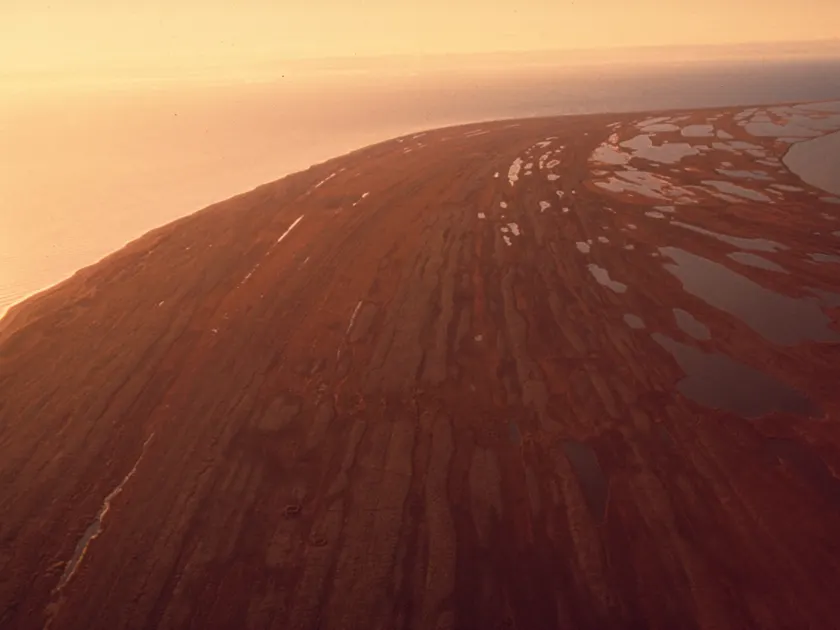
Modern coastal view at Cape Krusenstern, northwestern Alaska. NPS Photo, public domain. It provides a specific Alaskan landscape, not a picture of Canadian Inuit Nunangat or a universal Arctic homeland.
Use present tense when the source supports it
Pair a historical account with material published by the relevant contemporary community or representative organization. ITK describes Inuit working in fields including government, medicine, academia and the arts. Use that evidence to challenge the idea that cultural continuity requires people to live exactly as an older photograph depicts.
Ask students to revise a sentence such as “Inuit lived in the Arctic and hunted.” A stronger version names the source, place and period, then distinguishes historical evidence from contemporary activity. Do not replace one stereotype with an equally broad claim about how every person lives today.
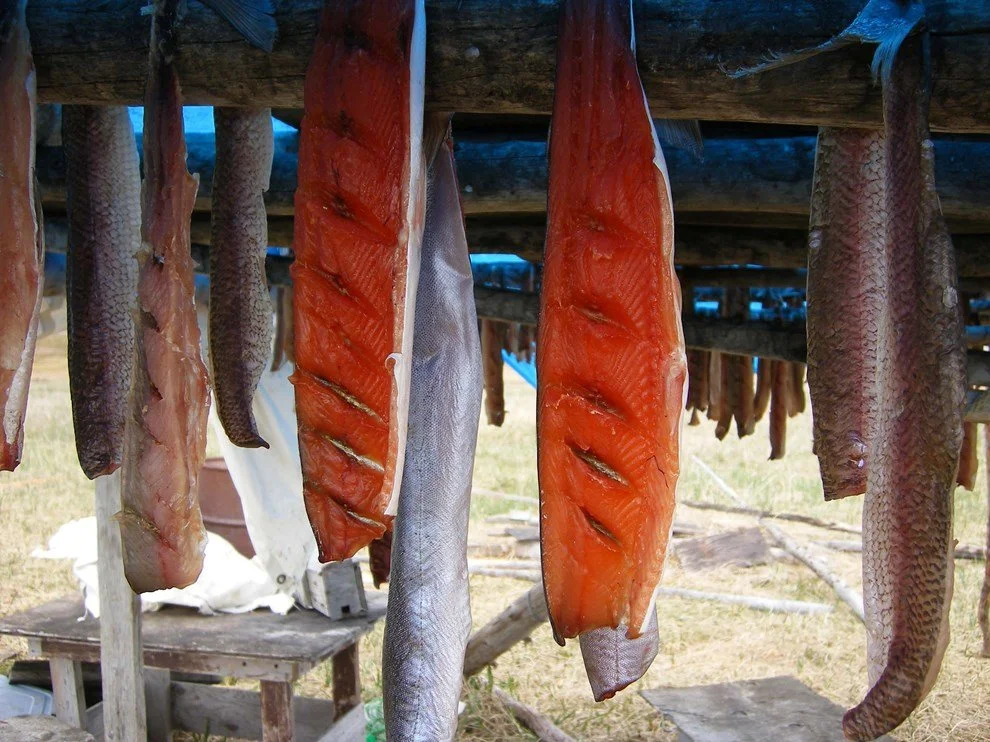
Fish drying on a rack, shown by Cape Krusenstern National Monument. NPS Photo, public domain. The source identifies pike at the sides and trout in the middle. The image is not evidence that every Arctic community processes the same fish in the same way.
Ask what knowledge an object or process requires
Students can observe the drying rack’s structure and the spacing of the fish. To explain the process, they need a source about local knowledge, conditions and use. Have them distinguish visible details from information supplied by the caption and from questions still unanswered.
Keep the work analytical. Do not stage a survival challenge, imitate ceremonies or ask an Indigenous student to authenticate the class’s conclusions. A useful task is to compare how two sources describe the relationship between place and knowledge, including whose perspective each source represents.
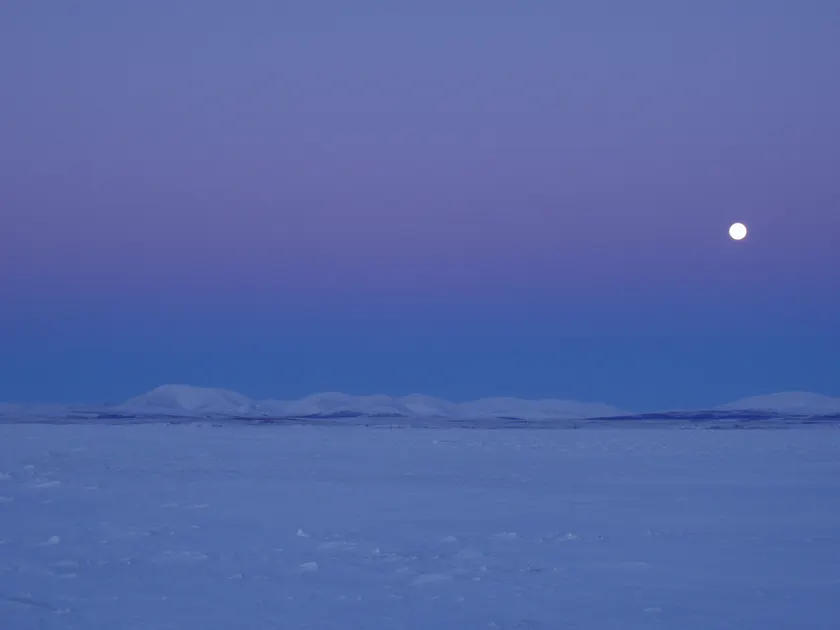
The moon over the Igichuk Hills near Cape Krusenstern at about 2 p.m. in January, according to the NPS caption. NPS Photo, public domain. One winter scene cannot represent the region in every season.
Make season and scale part of the explanation
Place the winter photograph beside a source with a different season or activity. Ask what a student would misunderstand if only one image appeared in the textbook. The goal is not to infer a yearly schedule from three photographs; it is to recognize the need for seasonal and community-specific evidence.
For an exit task, ask students to correct two captions: one that calls every northern community Inuit and another that labels an undated image “ancient life.” A successful answer identifies the missing information and proposes a responsible caption without inventing it.
Preview the readings before using their generalizations
Use selected passages as claims to compare with place- and community-specific sources, rather than assigning either overview as a complete account of Arctic peoples. Keep the following qualifications beside the reading.
Arctic Native Americans Reading Comprehension Worksheet
View this HistoraEDU resource on TPT
Use selected descriptions of clothing, shelter or contemporary change for a teacher-led comparison. When discussing Nunavut, explain that it became a Canadian territory in 1999 with public government serving all residents. Its creation was linked to Inuit land-claims negotiations and political self-determination; public territorial government is not interchangeable with Inuit-specific land-claim institutions or self-government arrangements.
Inuit Culture Reading Comprehension | Arctic Native Americans
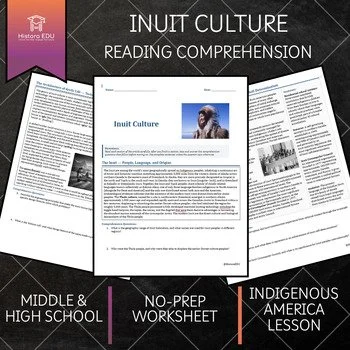
View this HistoraEDU resource on TPT
Use selected material-culture descriptions to practise separating observation, source claim and community-specific evidence. Do not teach the opening three-family classification of North American Indigenous languages as established fact. In its discussion of Alaska, the Alaska Native Language Center distinguishes established Inuit–Aleut and Athabascan–Eyak–Tlingit relationships, Tsimshianic languages and the Haida isolate, and cautions that proposed distant groupings are not demonstrated relationships.
Sources and image credits
Canadian Inuit and Inuit Nunangat explained by ITK
Alaska Native Language Center language classifications
Cape Krusenstern Native heritage
Product thumbnails: HistoraEDU, reproduced from the exact current TPT listings at the owner’s request. Archival sources do not endorse HistoraEDU or its products. No claim to original U.S. Government works.
