
By HistoraEDU
The chart is complete: climate, food, shelter, clothing. Yet the explanation underneath says only that people lived differently because the weather was different. A regional comparison can organize information while quietly teaching that geography determines culture. Keep the useful comparison, but change what students must explain. Ask how people used knowledge, made choices, maintained relationships and responded to change in a named place and period.
Give the region label a limited job
Begin with a map and one carefully selected example rather than a continent of empty boxes. Explain that a cultural region is an analytical grouping, not a single nation, government or language. A boundary on the classroom map cannot tell students how every community lived or where its relationships ended. Write the specific people and period beside the region name.
Use a small evidence organizer with four prompts: what the source shows, whose experience it describes, what decision or knowledge matters, and what the source cannot establish. This is an explanation task, not a request for students to rank ways of life.
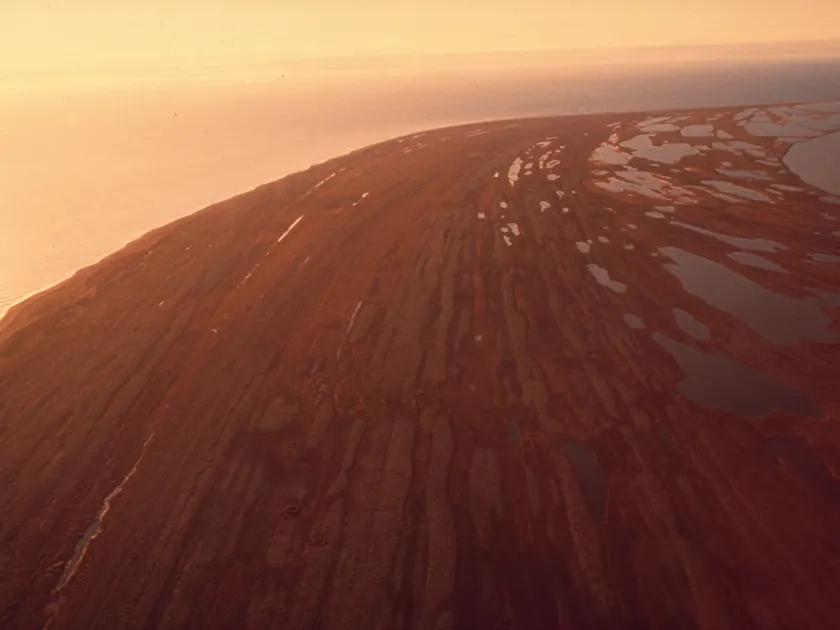
Modern aerial photograph of beach ridges at Cape Krusenstern, Alaska. NPS Photo, public domain. The view supports an observation about one coastal landscape, not a reconstruction of all Arctic communities.
Separate an observation from a claim about people
Show the labeled photograph before providing a historical interpretation. Students might observe water, ridges and a coastline. They cannot identify a community’s government or daily routine from that view. Ask them to mark those unanswered questions rather than fill the gaps with guesses.
Then provide a short, appropriately sourced account of a named community. Students add one explanation that uses both the account and the landscape evidence. Model the difference between “water made everyone fish” and “this account identifies fishing as one activity in this community and period.” The second sentence has a source and a meaningful boundary.
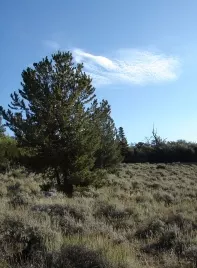
Pinyon pine among sagebrush along the Wheeler Peak Scenic Drive in Great Basin National Park. NPS Photo, public domain. This modern photograph identifies vegetation at one site; it does not show a historic harvest.
Make comparison reveal knowledge rather than a hierarchy
Give pairs two short accounts of the same broad problem, such as storing food or organizing movement. Require them to compare how the problem was addressed and what evidence supports each explanation. Avoid a scorecard in which permanent buildings automatically mean a more advanced society.
A useful sentence frame is “In this place and period, the source describes [write here]; this required knowledge of [write here].” Follow it with “We would need another source to know [write here].” Students can explain an evidence limit without pretending that nothing is knowable. The Smithsonian framework emphasizes cultural diversity, change and continuing Native presence; these principles should shape the comparison rather than appear only in a final disclaimer.
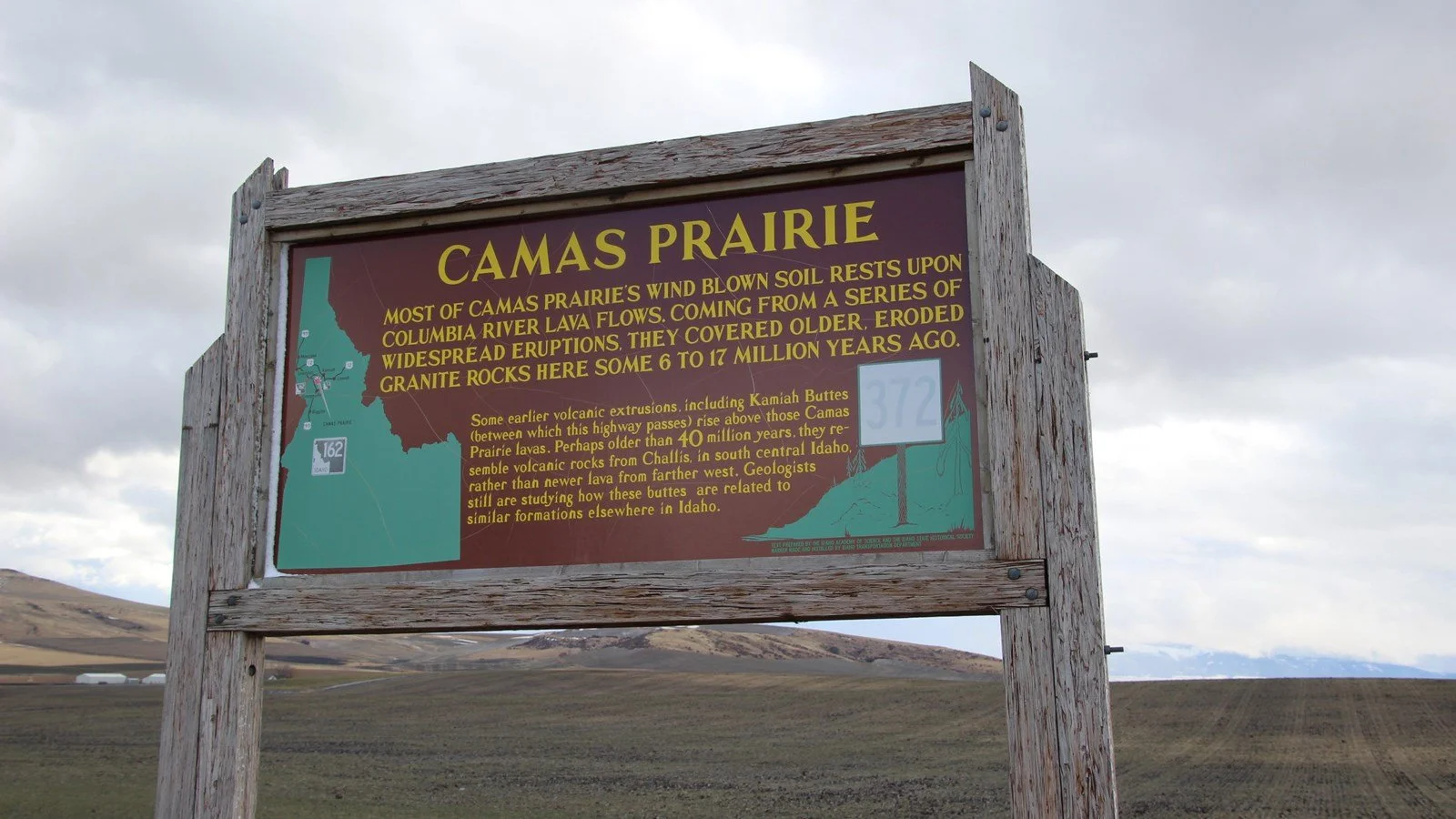
Modern Camas Prairie interpretive sign and surrounding field, Nez Perce National Historical Park. NPS Photo, public domain. The sign is a present-day interpretation of a place with a longer history; it is not a photograph of an earlier harvest.
Put change inside the organizer
Add a second date or a contemporary source from the community rather than ending the lesson with an isolated “still here” sentence. Ask what continued, what changed, and who describes that change. Students should not have to choose between cultural continuity and participation in contemporary life.
For an exit response, give students this claim: “People in the same cultural region had the same culture.” Ask them to correct it with one specific example and a source limit. Assess the specificity of the example and reasoning, not the number of region names recalled.
Choose a reading for the missing piece
The two readings below serve different purposes: one foregrounds geography, while the other explains regional grouping. Assign a focused excerpt rather than treating both as interchangeable extra work. A review game can be a retrieval check after the explanation task, but a correct answer in a game does not by itself show that a student can make a qualified comparison.
Geography and Native American Life Reading Comprehension Worksheet
View this HistoraEDU resource on TPT
The reading addresses geography and environmental relationships. Use a selected section to ask students how an account supports a geographic explanation; do not turn broad claims into rules for every nation. Preview the question wording against the chosen excerpt.
Native American Cultural Regions Reading Passage and Questions
View this HistoraEDU resource on TPT
The reading explains cultural regions as analytical categories rather than political boundaries. It fits the initial map-label discussion and a comparison of regional patterns with particular communities.
Indigenous America Review Game | Native American Societies Quiz | Test Prep
View this HistoraEDU resource on TPT
The current listing describes an Indigenous America review game with 60 questions. Use only after previewing the questions and checking the actual game in your teaching environment. Runtime, answer-key accuracy and accessibility have not been independently tested.
Sources and image credits
Native Knowledge 360 essential understandings
Product thumbnails: HistoraEDU, reproduced at owner request. Archival sources do not endorse HistoraEDU or its products. No claim to original U.S. Government works.
