
By HistoraEDU
If a student calls the governor “the legislative branch” or places the president above every state official on a single ladder, another branches worksheet may not address the misconception. The student is answering two different questions at once: What kind of work does this institution do, and at what level of government does it operate? Teach those questions separately, then combine them in a small sorting task.
Use two labels for every institution
Write “job” across the top of a chart and “level” down the side. For the first pass, use only national and state government. Put legislative, executive and judicial across the columns. Congress and a state legislature belong in the same kind-of-work column but different level rows. The president and a governor also occupy different rows.
Explain that the chart is an introductory model. It does not describe every institution or every allocation of power. Local government structures vary and operate within state legal frameworks; add a local example only after checking the structure students actually live under. Tribal governments should not be squeezed into a state-local ladder.
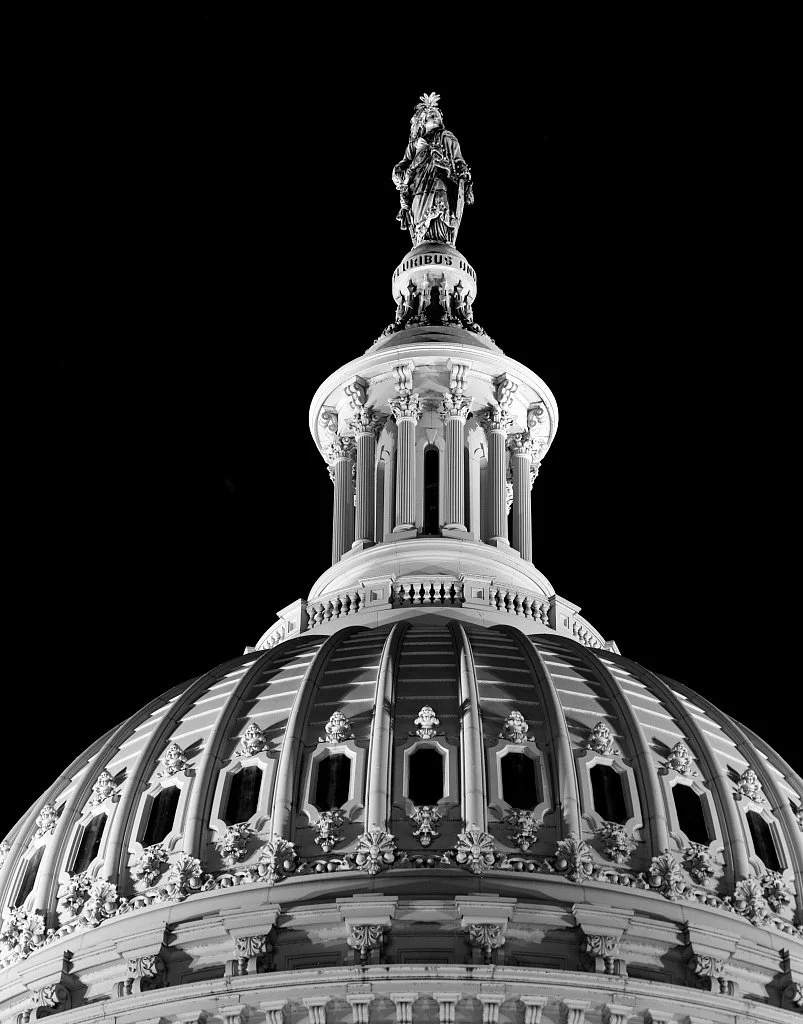
The U.S. Capitol in Washington, D.C., photographed between 1980 and 2006. Carol M. Highsmith, Library of Congress, Prints and Photographs Division, LC-DIG-highsm-17865. Public domain.
Sort actions only after students can sort institutions
Give students these introductory cards: Congress considers a federal bill; a governor signs a state bill; a federal court hears a case within its jurisdiction; a state legislature debates a state budget. Each placement needs both a row and a column. Ask students to explain which word in the card establishes the level.
Do not use “makes laws, enforces laws, interprets laws” as if branches never interact. Those labels are a starting point. The Constitution assigns powers that require cooperation and create checks. The purpose of the sort is to establish a distinction, not to imply three sealed departments.
Trace one federal decision through checks
Use an invented bill so current partisan disagreement does not crowd out the institutional reasoning. Both chambers of Congress pass the same bill. The president vetoes it. Congress may override the veto with a two-thirds vote in each chamber. Ask students to name the branch at each step and explain what changed.
Now ask a deliberate trick question: “Has this example shown federalism?” Not yet. It has shown interactions among branches at the national level. Federalism concerns the division of authority between the national government and the states, not simply disagreement inside Washington.

The White House at dusk, photographed between 1980 and 2006. Carol M. Highsmith, Library of Congress, Prints and Photographs Division, LC-DIG-highsm-13962. Public domain.
Add courts without turning them into an automatic final step
Students often draw a lawmaking arrow that ends with “Supreme Court approves.” Replace that with a question: What would have to happen for a court to consider a legal dispute? Courts decide cases within their jurisdiction; they do not routinely approve every bill before it becomes law.
The federal judiciary includes lower federal courts as well as the Supreme Court. State courts are a separate system, and the relationship between the systems is not a simple appeal ladder for every case. Use the federal courts’ official overview when extending the lesson. Keep the introductory chart smaller than the system it represents.
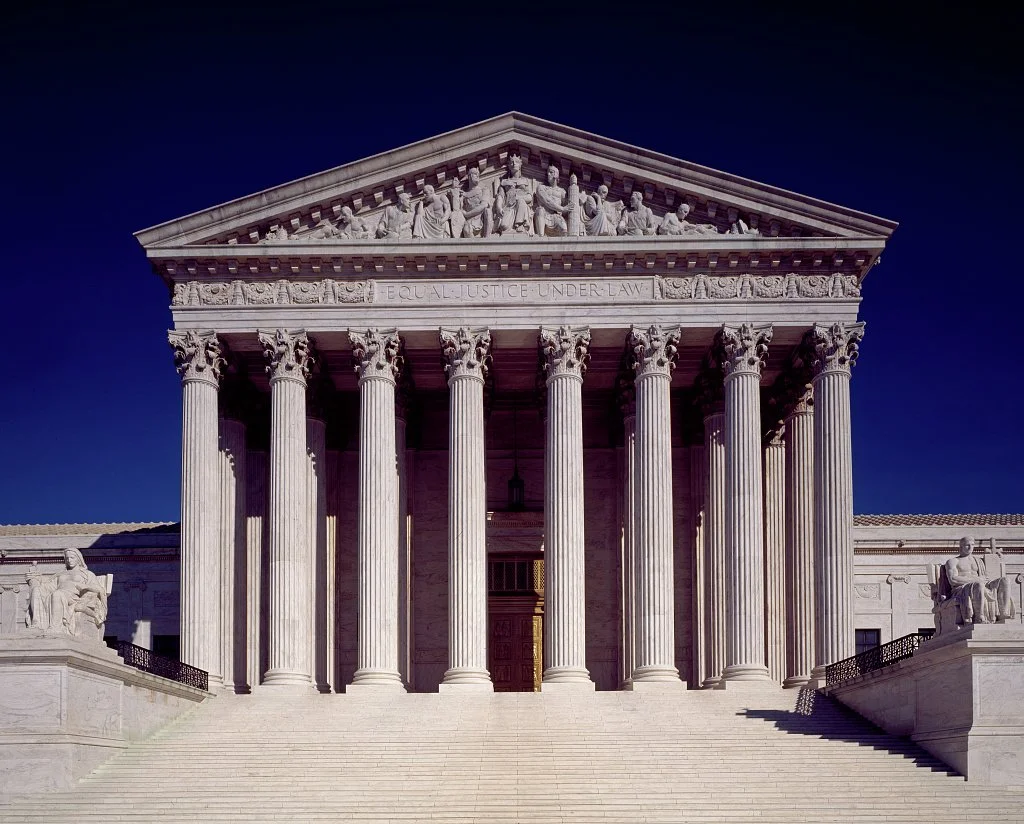
The Supreme Court building, Washington, D.C., photographed between 1980 and 2006. Carol M. Highsmith, Library of Congress, Prints and Photographs Division, LC-DIG-highsm-13879. Public domain.
Use a comparison that exposes the misconception
Present two explanations: “The president vetoes a bill passed by Congress” and “National and state governments have different constitutional powers.” Ask students which concerns checks and balances and which concerns federalism. Then require them to replace one vague noun with a specific institution or action.
For a quick check, ask students to correct this sentence: “Federalism means the three branches share power.” A satisfactory revision should distinguish branches from levels, not merely substitute another definition from memory.
If students are ready for a harder example, let them research one state responsibility and one federal responsibility using official sources. Ask whether either example involves shared or overlapping authority. Do not assume that a topic such as roads, health or education belongs exclusively to a single level just because one familiar official is involved.
Pick the smallest resource that addresses the gap
These HistoraEDU resources are related, but they serve different purposes. A student who confuses levels may need federalism practice rather than another introduction to the president. Use the diagnostic response to choose what comes next; the chart and invented-bill sequence above can also be taught without a purchase.
The Three Branches of Government Explained | Legislative, Executive & Judicial
View this HistoraEDU resource on TPT
The Three Branches of Government reading provides an overview with embedded questions and skill activities. Use it before the two-axis sort if students need a common vocabulary.
Federalism Explained | Dividing Power | State and National Governments | Civics
View this HistoraEDU resource on TPT
Federalism Explained focuses on power shared between national and state governments. Use it when students understand branch roles but confuse levels. The listing describes a non-editable PDF.
Checks and Balances Explained | How the Branches Limit Power | Government Lesson
View this HistoraEDU resource on TPT
Checks and Balances Explained focuses on limits and interactions among branches. Use it after students can identify the institutions in the veto example. The listing describes a non-editable PDF.
The Legislative Branch Explained | Congress | Government Lesson
View this HistoraEDU resource on TPT
Legislative Branch Explained gives focused reading on Congress, the House and Senate, and lawmaking. Use it for students who confuse the two chambers with two different branches. Non-editable PDF.
Executive Branch Explained | Presidential Powers & Enforcing Laws | Government
View this HistoraEDU resource on TPT
Executive Branch Explained focuses on presidential roles and executive responsibilities. Use it to distinguish the national executive from state executives. Non-editable PDF.
Judicial Branch Explained | Supreme Court, Judicial Review & Interpreting Laws
View this HistoraEDU resource on TPT
Judicial Branch Explained focuses on the courts, Supreme Court and judicial review. Use it to revisit the misconception that courts approve every new law. Non-editable PDF.
Sources and image credits
Constitution transcript including Articles I through III
Branches of government overview
Bill of Rights transcript including the Tenth Amendment
Product thumbnails: HistoraEDU, reproduced from the exact current TPT listings at the owner’s request. Archival sources do not endorse HistoraEDU or its products.
