
A student can calculate accurately when a heading names the method and still struggle when a problem does not. In a review assignment, “find the area” above a run of rectangles makes one decision for the learner. Mixing problem types can return that decision to the student—but the quality of the problems and feedback still matters.
What the classroom trial supports
Rohrer and colleagues randomly assigned 54 seventh-grade mathematics classes within teachers to mostly interleaved or mostly blocked assignments. Practice extended across about four months; both groups then received an interleaved review. One month later, the interleaved group scored higher on an unannounced test. This tested a sustained assignment schedule with corrective feedback, not a single shuffled worksheet. [1]
Important limits remain. Time on task was not measured, and every teacher reported that the interleaved assignments took longer. Mixing also changes spacing and retrieval demands, so the result cannot isolate strategy selection as the sole cause. Initial instruction and ordinary blocked practice still occurred. The study does not show that every new procedure should be introduced through mixed problems or that explanation and worked examples are unnecessary. [1]
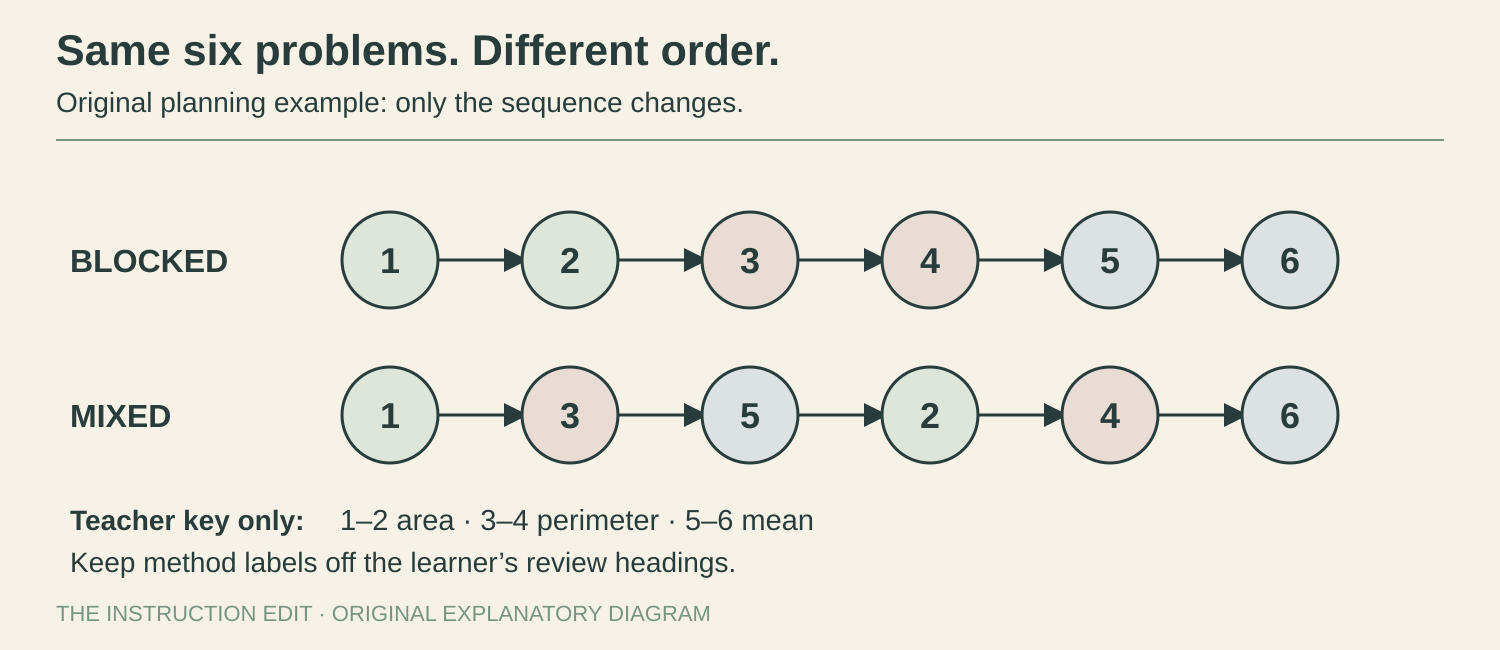
Figure 1. An original six-problem planning example. The teacher key makes the schedule visible here; do not print method labels beside the learner’s review items.
For a useful audit, cover the assignment title, section headings and neighboring answers. Read each problem alone. Does its wording give enough information to choose a method? If not, repair the problem before changing its position. Removing necessary information is not the same as removing an accidental hint.
An original fictional garden review
Use these invented problems after learners have already encountered area, perimeter and arithmetic mean. The numbers do not describe the photographed greenhouse. Keep the question IDs neutral; method names belong in the teacher’s key, not in the learner’s headings.
Q1. A rectangular bed is 6 m by 4 m. What ground area does it cover? Q2. A rectangular bed is 8 m by 3 m. What ground area does it cover?
Q3. A rectangular bed is 6 m by 4 m. How much edging is needed to go once around it, with no gap or overlap? Q4. A rectangular bed is 8 m by 3 m. How much edging is needed under the same conditions?
Q5. Three trays hold 4, 6 and 8 plants. What is the mean number of plants per tray? Q6. Three trays hold 5, 7 and 9 plants. What is the mean number of plants per tray?

A blocked order is Q1, Q2, Q3, Q4, Q5, Q6. One mixed order is Q1, Q3, Q5, Q2, Q4, Q6. The problems remain identical; only the order changes. This tiny example illustrates a design distinction. It is not the study’s assignment or a tested replacement for its longer schedule.
Look at the decision before the arithmetic
Before calculating, ask for a brief method note: “I need a surface measure, so I will multiply the side lengths,” or “I need the distance around the bed, so I will add all four sides.” For the trays, the student should explain why the sum is divided by three. These notes let you distinguish a wrong method from a calculation error.
Teacher key: Q1 = 24 m²; Q2 = 24 m²; Q3 = 20 m; Q4 = 22 m; Q5 = 6 plants per tray; Q6 = 7 plants per tray. The first two answers are deliberately equal: different dimensions can produce the same area, so a remembered number is not a method explanation. Q1 and Q3 use the same dimensions but ask about different quantities. Discuss that contrast when returning feedback.
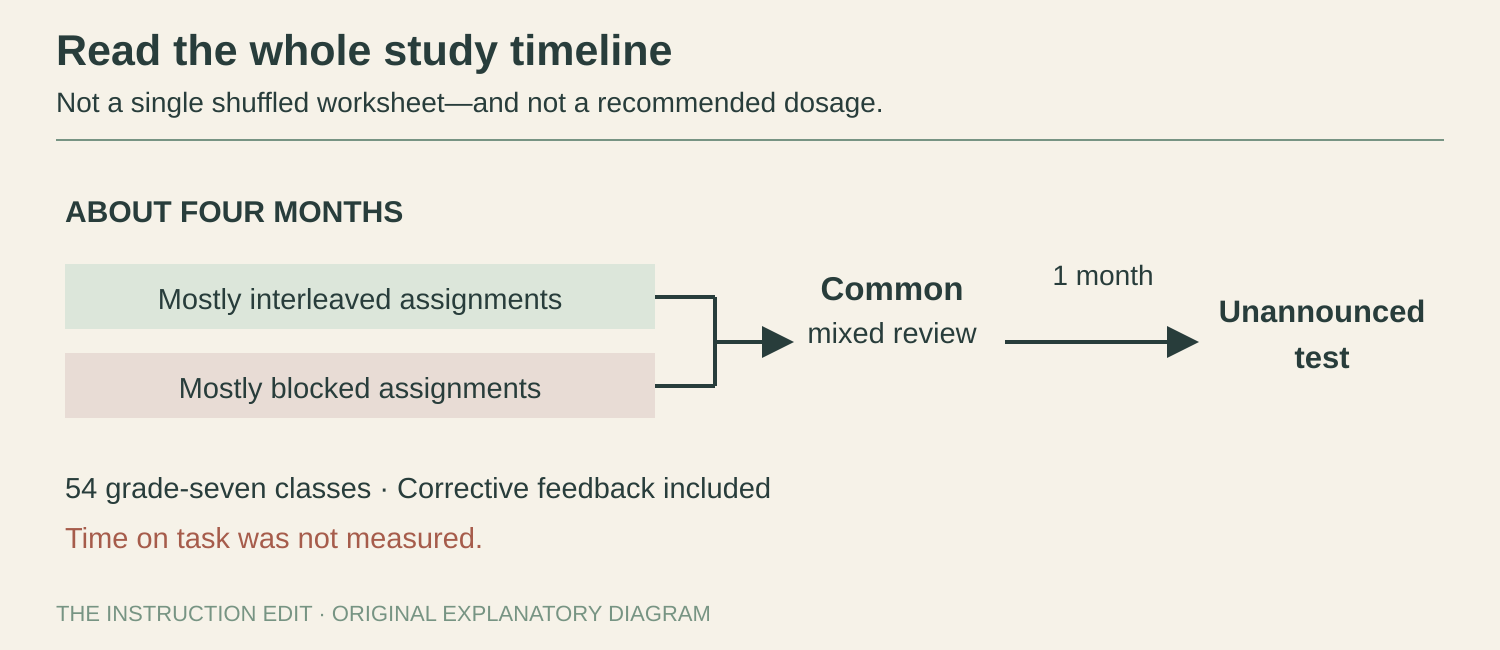
Figure 3. Original timeline of the study’s assignment and assessment sequence. It shows the comparison’s timing, not an invented score chart or a recommended dosage.
If a learner selects the wrong method, ask what quantity the question requests and revisit the relevant representation. If they choose appropriately but calculate incorrectly, target the calculation. Give a chance to correct the response. Do not use a more difficult mixed set merely to collect a new total score with no way for students to understand their errors.
Inspect whether the heading or sequence of one assignment gives away the strategy before the student reads the problem.
