
A peer-teaching task can contain three different jobs: organizing an explanation, delivering it and responding when someone does not understand. Calling all three “learning by teaching” makes it hard to say what students actually did—or which part a study tested.
What the preparation study did—and did not test
Nestojko and colleagues changed what university students expected before studying a passage: some expected to teach it, while others expected a test. Everyone was subsequently tested; nobody actually taught. In Experiment 1, the teaching-expectancy group produced more complete and better-organized free recall. Experiment 2 was more qualified: its overall expectancy effect was not statistically significant, although results differed by information type. The main-point comparison alone was also not statistically significant at .05. These were tests after short distractor intervals, not evidence of durable learning across a term. [1]
The study does not establish an extra benefit from explaining or responding to a listener. For classroom design, keep preparation distinct from those later opportunities. Make a promised audience real instead of borrowing the experiment’s deception.
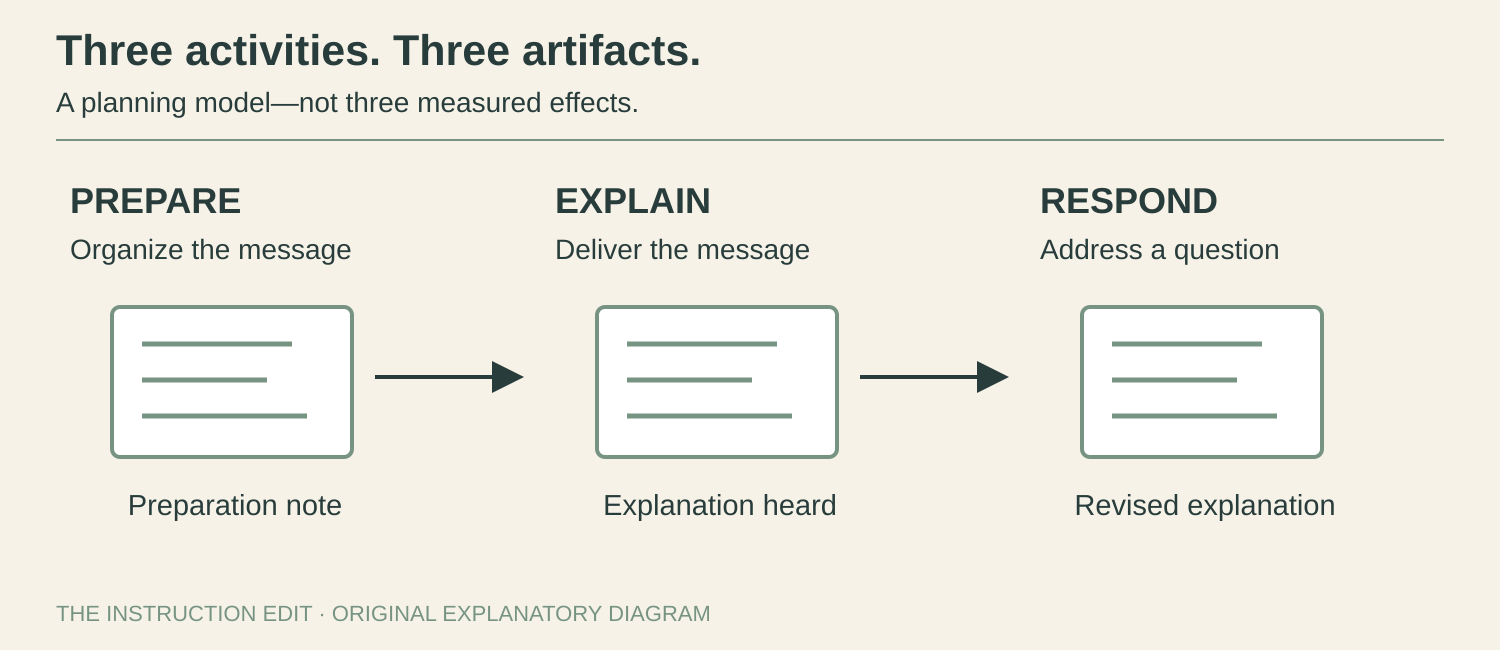
Figure 1. Three activities, three kinds of evidence to inspect. This is an original planning model, not three experimentally established effects.
Name the intended process before choosing the format. A preparation note can show what a student chose to organize. An explanation lets you examine the message delivered. A response to a question lets you see how that message changes. None of those artifacts, by itself, proves a lasting improvement in learning.
An original fictional example: explain a map legend
Imagine a museum using a deliberately simple invented map. Marker shape tells visitors the kind of place: a circle is an exhibit and a triangle is a help desk. The marker’s line tells its current availability: a solid line means open; a dashed line means closed. Shape and line answer independent questions. These are fictional rules, not a claim about standard museum symbols.
Give the explainer this real assignment: “In a moment, your partner will use this legend to read two new markers. Prepare a short explanation that helps them separate place type from availability.” Allow a small note, but ask for an organizing idea and one contrasting example rather than a copied list of every possible marker.

An inspectable preparation note might say: “Ask two questions: what kind of place, and is it open? A solid triangle is an open help desk; a dashed triangle is the same kind of place but closed.” The two triangles hold place type constant while availability changes. That contrast is more revealing than merely counting how many notes the student wrote.
Make the promised explanation happen
Now let the partner receive the explanation and interpret a solid triangle and a dashed circle. The intended answers are an open help desk and a closed exhibit. Ask the listener to explain how each visible feature contributed. If they say “triangles mean open,” the explainer has a specific confusion to address rather than a general invitation to speak more.
A useful response would preserve one feature while changing the other: compare solid and dashed triangles, then compare a solid triangle with a solid circle. The explainer should correct the invented rule explicitly: triangle means help desk, not open. Keep the original preparation note, the listener’s answer and the revised explanation as separate artifacts. They answer different instructional questions.
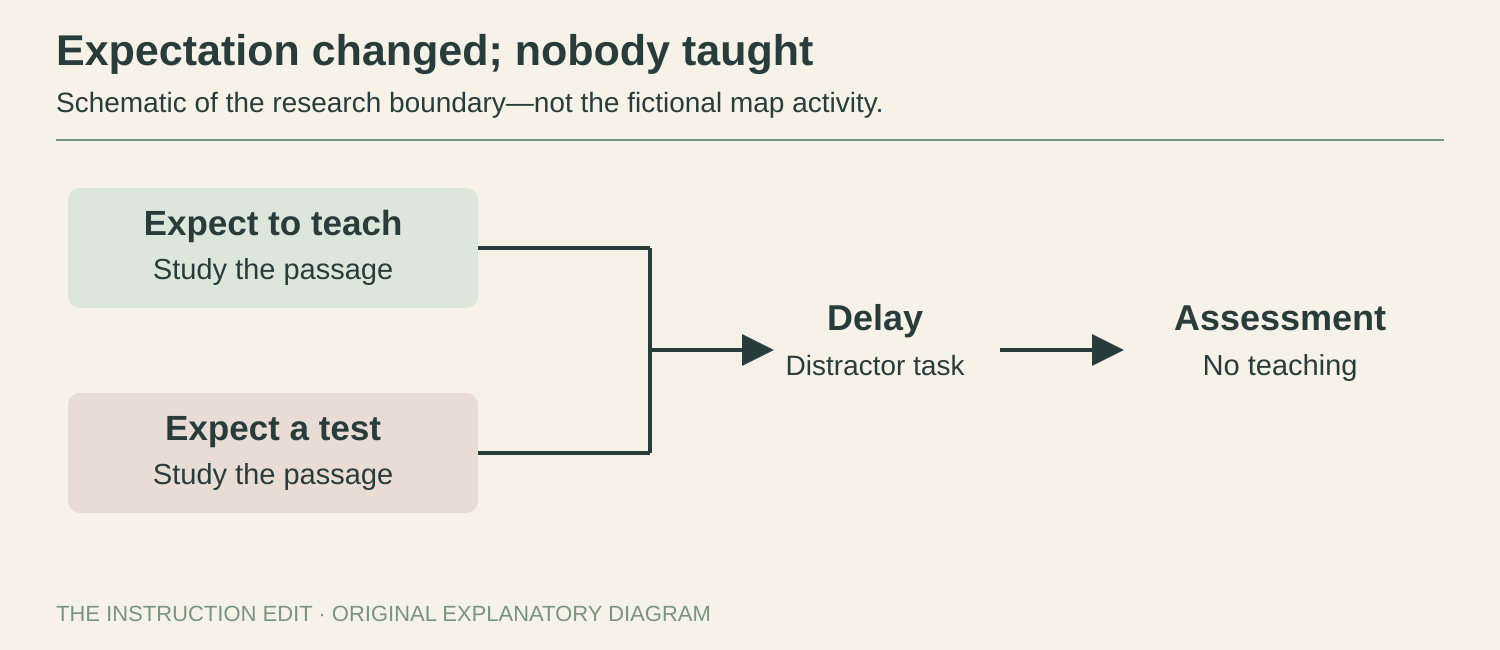
Figure 3. The research boundary: a changed expectation before study, followed by assessment without actual teaching. Original schematic based on Nestojko and colleagues; not a reproduction of their figure.
This activity is a design example, not a replication or a validated intervention. You could later ask both students to interpret fresh markers independently, but a successful immediate answer would still not establish long-term retention. Avoid turning a plausible classroom routine into a stronger research claim than its evidence supports.
State which learning process your peer-teaching task targets, and make the promised audience or explanation opportunity real.
