
By HistoraEDU
You have a branches reading, a federalism reading and separate lessons on each branch. The folder is full, but the sequence still feels uncertain. Teaching every page in order of purchase can create repetition while leaving a prerequisite untaught. Plan backward from one explanation students should be able to give, then assign each lesson a different job.
Choose the final explanation first
Try this clearly fictional planning prompt: “Congress considers a federal program to support public-library access. Explain which institutions could make the law, carry it out and hear a qualifying legal challenge. Distinguish federal action from state decisions, and identify a constitutional limit or unresolved authority question.” Students are explaining relationships, not assuming that a worthwhile proposal is automatically constitutional.
Build a six-lesson dependency map. Each lesson should produce one small piece students will reuse in that explanation. A lesson is ready to move on when students can explain that piece, not simply when they finish a worksheet. The sequence below is a planning option, not a claim about a tested pacing requirement.
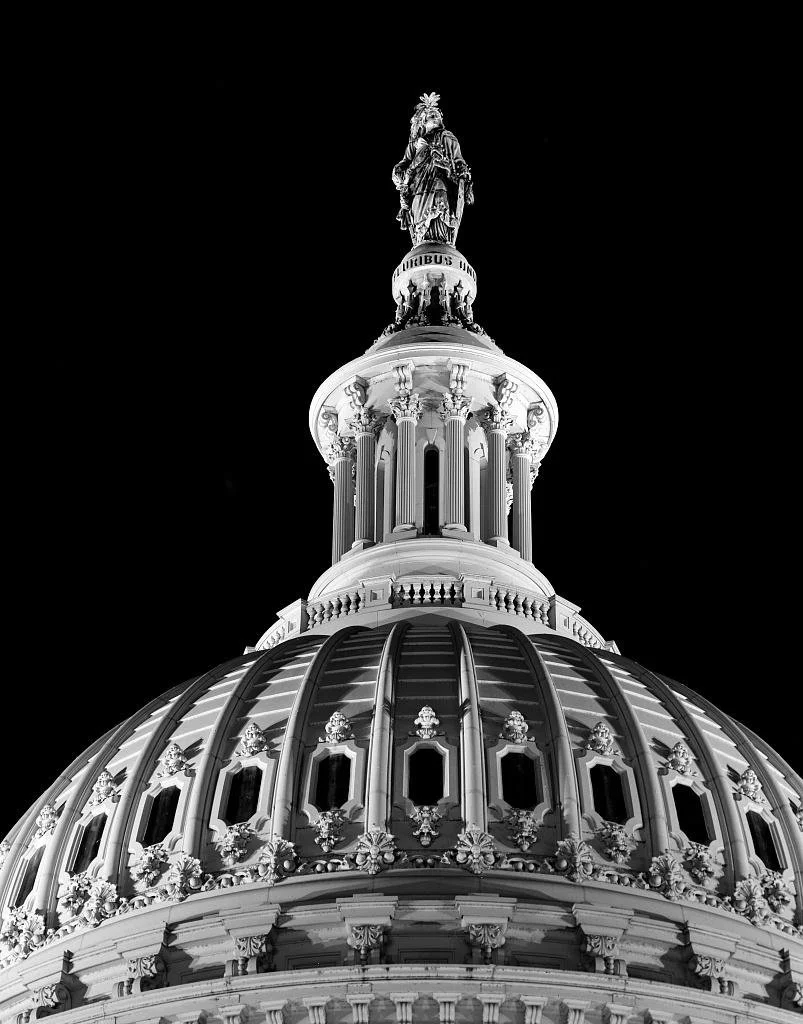
U.S. Capitol dome and Statue of Freedom, photographed between 1980 and 2006. Carol M. Highsmith, Library of Congress, LC-DIG-highsm-17865. Public domain. Connect this institution to Congress’s work, not to every action taken by government. Image source
Lessons 1 and 2 establish the framework
Lesson 1—Institutions. Use the Three Branches reading to establish Congress, the President and the federal courts. Students produce three sentences with an institution and a meaningful verb. The prerequisite for later work is a basic account of lawmaking, execution and adjudication—not an exhaustive list of officials or trivia.
Lesson 2—Levels. Use Federalism to establish that the national government and states are not different branches of one government. Students write a question they would need to answer about the fictional program: “What constitutional authority supports the federal action, and which decisions remain with states?” The Tenth Amendment provides language for discussing reserved powers; it is not a slogan that settles every shared-policy question.

Massachusetts State House, Boston. Carol M. Highsmith, Library of Congress, LC-DIG-highsm-12099, reproduced in the National Park Service’s Capitols resource guide. Photograph date not specified there. Public domain. This state institution is not another branch of the federal government. Image source
Lessons 3 and 4 explain action
Lesson 3—Legislative detail. Students now have somewhere to place the House and Senate. Use the Legislative Branch lesson to expand “Congress makes laws” into an explanation of two chambers and the legislative process. Their reusable product is a short account of what a proposal must pass through before it can become federal law—not a new memorization chart of the three branches.
Lesson 4—Executive detail. Use the Executive Branch lesson to distinguish carrying out a law from writing any rule the President prefers. Add the President’s role in approving or vetoing legislation, then return to the fictional program. Students explain that implementation would require lawful authority and institutional action, not merely a presidential announcement that libraries should improve.
Lessons 5 and 6 explain review and limits
Lesson 5—Judicial detail. Use the Judicial Branch lesson to introduce courts, interpretation and judicial review. Students add a conditional sentence: a legal challenge must reach an appropriate court through an actual case; the Supreme Court does not automatically approve every bill. Ask what claim and additional facts would be needed rather than staging an instant classroom verdict.
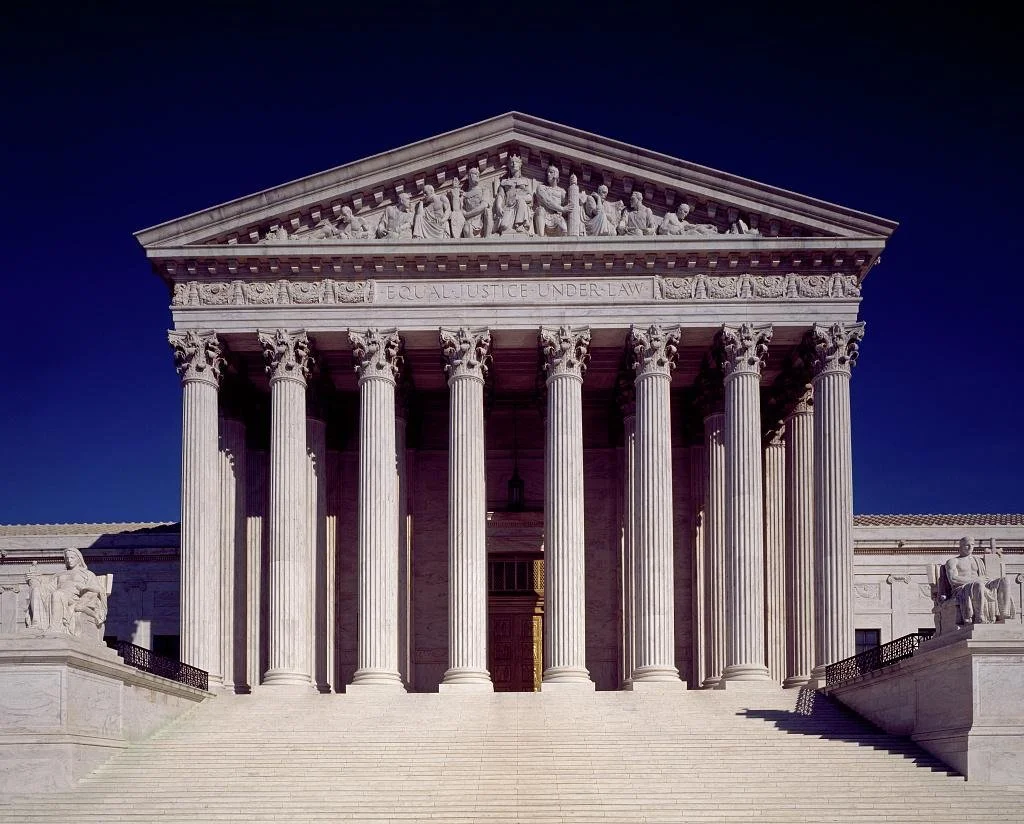
U.S. Supreme Court building, Washington, D.C., photographed between 1980 and 2006. Carol M. Highsmith, Library of Congress, LC-DIG-highsm-13879. Public domain. A building identifies an institution; it cannot tell us the outcome of a legal question. Image source
Lesson 6—Synthesis. Use Checks and Balances after students can name the actors and actions being checked. Have students annotate their final explanation with one limit on a branch’s power and one distinction between federal and state authority. The Constitution’s Articles I–III and the Tenth Amendment are reference points, not decorative quotations at the end.
Decide what to cut before deciding what to add
If students already explain all three institutions accurately, shorten Lesson 1 to a diagnostic. If they confuse the President with Congress, keep Lessons 3 and 4 distinct. If they understand each branch but cannot connect them, spend more time on Lesson 6 instead of assigning every comprehension question again. Select relevant sections from resources you own; this plan does not require buying or teaching all six in full.
A workable three-meeting version combines the framework, pairs the legislative and executive details, then pairs judicial review with synthesis. Do not compress by removing the prerequisite explanation. Give readers who need support the same final question, but provide a vocabulary bank and one institution at a time. Offer extensions through more precise evidence, not merely more pages.
Before collecting the final response, ask students to mark each sentence’s job: institution, level, action or limit. If two sentences do the same job while one job is missing, revise the explanation. That is also the teacher’s planning test: a sequence is coherent when each lesson supplies something the final task actually needs.
Match each resource to its job
These are separate lesson options. The proposed sequence and fictional synthesis prompt are added planning suggestions, not claims that the resources include a six-day unit or this exact assessment.
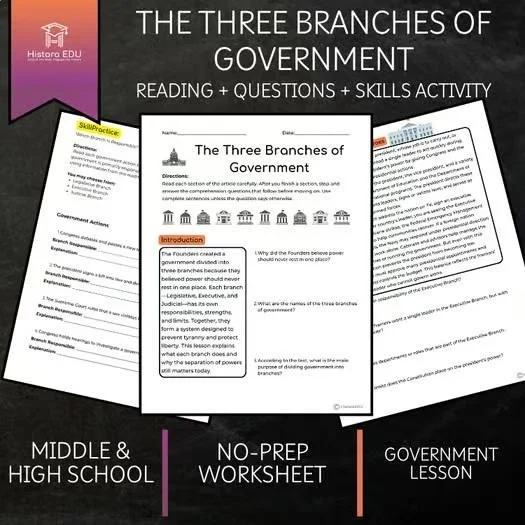
The Three Branches of Government Explained | Legislative, Executive & Judicial
Three Branches: the framework. A print-and-go PDF with chunked reading, embedded questions, branch-role practice, reflection, vocabulary, pacing guidance and keys.
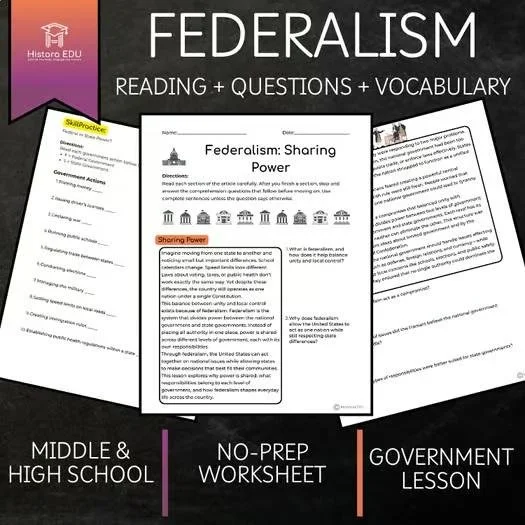
Federalism Explained | Dividing Power | State and National Governments | Civics
Federalism: the levels prerequisite. A non-editable PDF reading with comprehension questions and practice on national and state power.
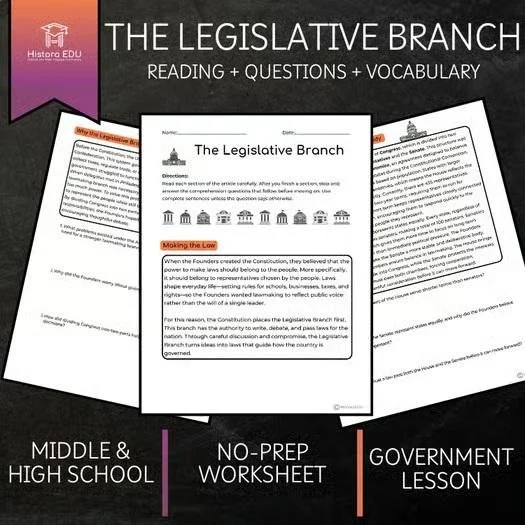
The Legislative Branch Explained | Congress | Government Lesson
Legislative Branch: lawmaking detail. A non-editable PDF covering Congress, House versus Senate and the lawmaking process, with questions and vocabulary.
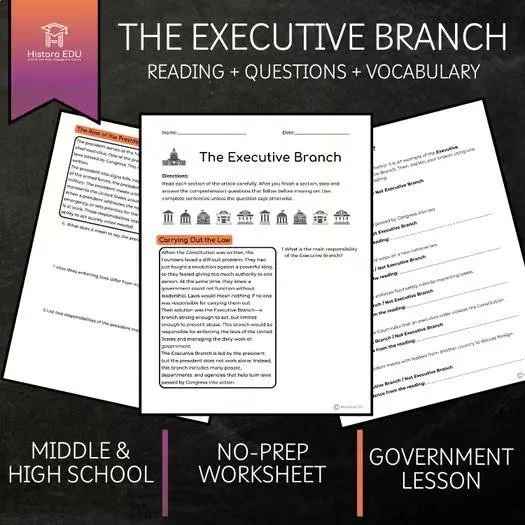
Executive Branch Explained | Presidential Powers & Enforcing Laws | Government
Executive Branch: carrying out laws. A non-editable PDF lesson covering the President and executive responsibilities, with reading questions and vocabulary.
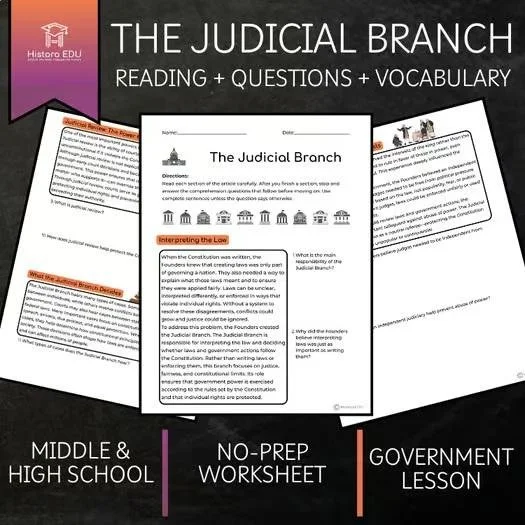
Judicial Branch Explained | Supreme Court, Judicial Review & Interpreting Laws
Judicial Branch: interpretation and review. A non-editable PDF with reading and embedded questions about courts, the Supreme Court and judicial review.
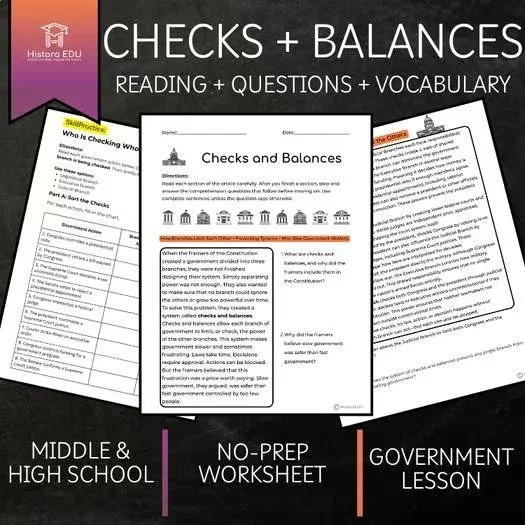
Checks and Balances Explained | How the Branches Limit Power | Government Lesson
Checks and Balances: synthesis. A non-editable PDF with branch-to-branch examples, embedded questions, vocabulary and skill practice.
View this HistoraEDU resource on TPT
Sources and credits
Federal court role and structure
Massachusetts State House photograph and identification
Product covers: HistoraEDU, reproduced from the exact linked TPT listings at the owner’s request. Photographs and archival reproductions are credited beside each image. Source institutions do not endorse HistoraEDU or its products.
