
By HistoraEDU
Your class finishes a Cold War review, moves to civil rights, and then treats recent history as a third unrelated story. The dates may be familiar, but students have not had to consider what was happening at the same time or explain whether two events were actually connected. A thematic timeline can bring the units together while keeping domestic rights struggles, international policy, and technological change distinct enough to analyze.
Use parallel lanes rather than one crowded list
Create three timeline lanes: international relations, rights and citizenship, and economic or technological change. Choose a limited set of events already taught. Students place each event in a lane and add the source that supports its date. An event may touch more than one lane, but students must explain why rather than draw every possible connection.
Start with individual placement before team discussion. Ask students to mark one uncertain event and one possible relationship. This gives you two different kinds of evidence: what they can locate in time and what they think connects. Neither should be hidden by a confident teammate’s quick answer.
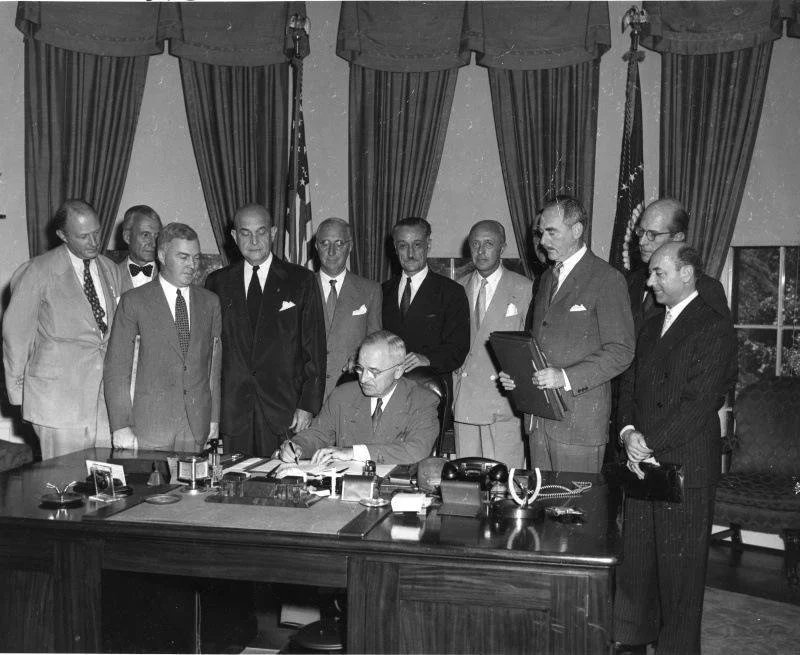
President Harry S. Truman signs the proclamation bringing the North Atlantic Treaty into effect, August 24, 1949. This is not the treaty-signing ceremony of April 4, 1949. Credit: Abbie Rowe, National Park Service. Harry S. Truman Library & Museum, 73-3194. Public domain.
View the archive record | Image reuse terms
Compare what two government sources ask for
Use the Truman Doctrine address of March 12 1947 and Executive Order 9981 of July 26 1948. The address requests aid for Greece and Turkey; the order establishes a policy of equal treatment and opportunity in the armed forces. Students identify the audience, action, and scope of each source.
The proximity of the dates provides context, not automatic proof that one document caused the other. Ask what additional evidence would support a claim about the relationship between international democratic language and domestic civil rights. Keep that question open until students have the relevant evidence. A plausible connection still needs support.
Retrieve a unit and then add a connection
Use selected questions from the Cold War game to locate policies, conflicts, or technological competition. Pause after a short round so each student can add one answer to the appropriate lane. Then use a Civil Rights Movement round to add events and legislation from that unit.
For each proposed connection, students write one sentence explaining the relationship and another naming a limit. “These events occurred in the same decade” is a chronology statement. “This event changed the response to that one” is a causal claim requiring more evidence. Help students hear the difference before they draw an arrow.
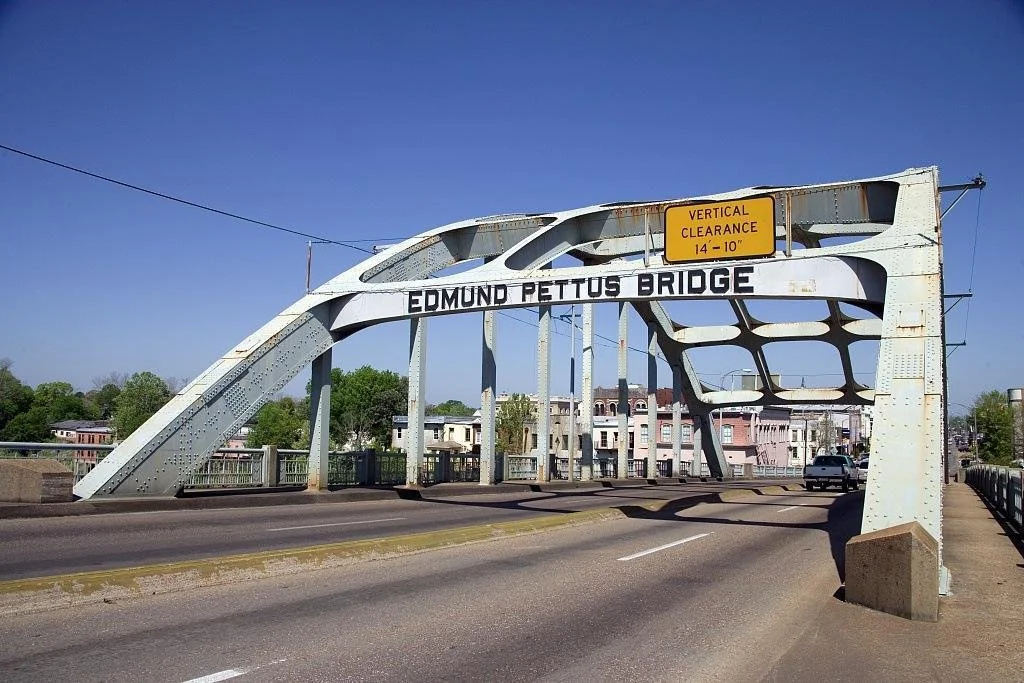
Modern photograph of the Edmund Pettus Bridge in Selma, Alabama, April 11, 2006. The bridge was the site of the March 7, 1965, attack on voting-rights marchers known as Bloody Sunday; this image does not show that event. Credit: Carol M. Highsmith, LC-DIG-highsm-04116. The Library of Congress, Carol M. Highsmith Archive. Public domain.
View the archive record | Image reuse terms
Keep people and enforcement visible
A timeline of presidents and laws can make rights struggles look like a sequence of gifts from government. Use the modern civil-rights-site photograph’s archive record to identify the place and the historical question it raises. Ask what a modern view can establish, then add a dated organizer’s account or local source from your taught materials. The site photograph cannot substitute for evidence of people’s actions.
The Civil Rights Act of 1964 offers a useful text for distinguishing legal provisions from their implementation. Assign a short, identified section and ask what it prohibits or authorizes. Students should not assume that a signing date proves discrimination ended in practice. Keep those as separate historical questions.
Set a clear boundary for modern history
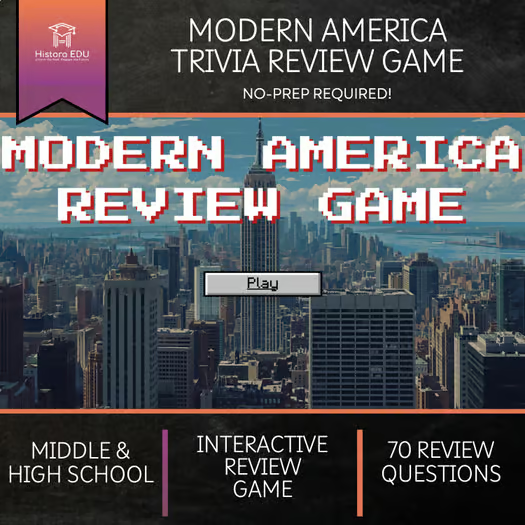
The Modern America game listing describes late-twentieth- and early-twenty-first-century developments, including technology, globalization, domestic policy, and the impact of September 11. It does not establish that every current event or election is covered. Choose a dated endpoint that matches your course and inspect the questions you plan to use.
Use the modern Capitol photograph as a place marker for the legislative lane, not as evidence of a particular congressional vote. Place a law using its dated text rather than a building photograph. If you extend the activity into current affairs, bring separately verified, dated sources; do not present an older review game as a live news resource.
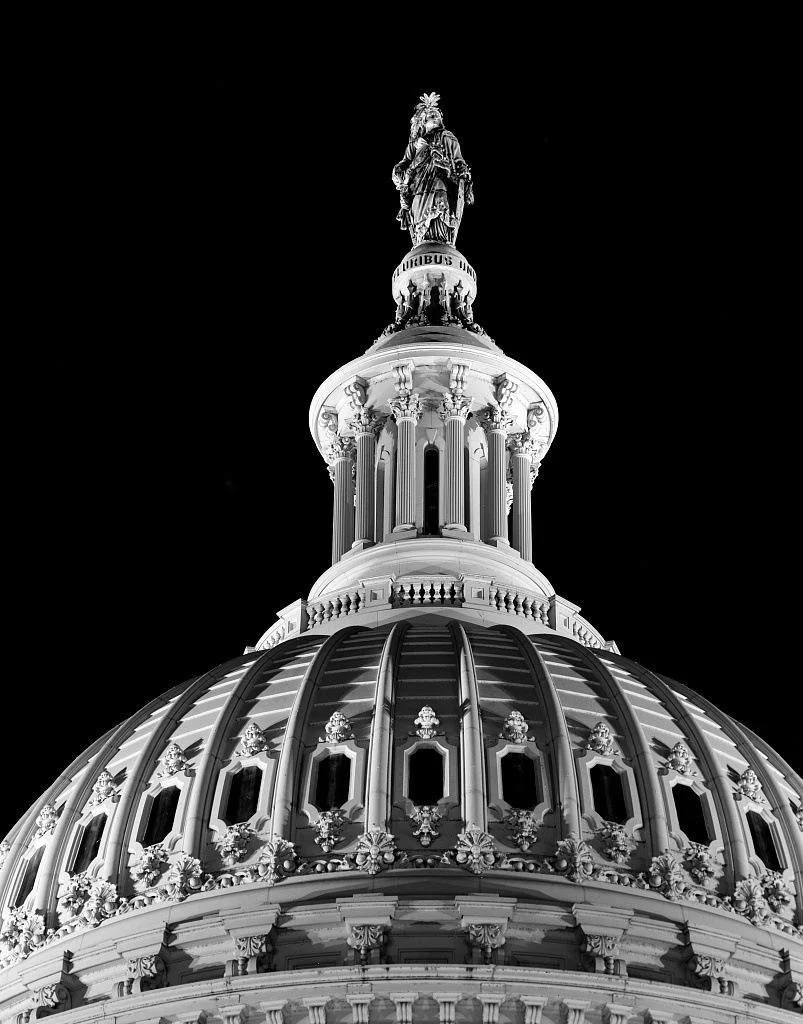
Modern view of the U.S. Capitol dome and its nineteenth-century Statue of Freedom, photographed between 1980 and 2006. It identifies a federal institution, not a particular debate, legislative vote or current event. Credit: Carol M. Highsmith, LC-DIG-highsm-17865. The Library of Congress, Carol M. Highsmith Archive. Public domain.
View the archive record | Image reuse terms
Make the last task an explanation rather than another score
Offer a partially completed timeline, a glossary, or a smaller set of cards for students who need support. For an extension, ask students to investigate a connection between two lanes using a second source. Avoid simulations that assign students the role of someone denied rights or require them to defend discrimination.
Finish with three sentences: place an event, explain a supported relationship, and identify an unanswered question. Collect those responses individually. HistoraEDU’s three separate games can supply retrieval questions; the timeline, source comparison, and correction log are additions you make. Use the responses to decide whether tomorrow’s lesson needs chronology practice, source analysis, or a clearer explanation of a specific relationship.
Find the matching review resource
Cold War Review Game | Social Studies | Interactive Test Prep Trivia
View this HistoraEDU resource on TPT
Use for origins, policies, conflicts, and competition across the Cold War; the listing describes student links, guidance, and editable Canva materials.
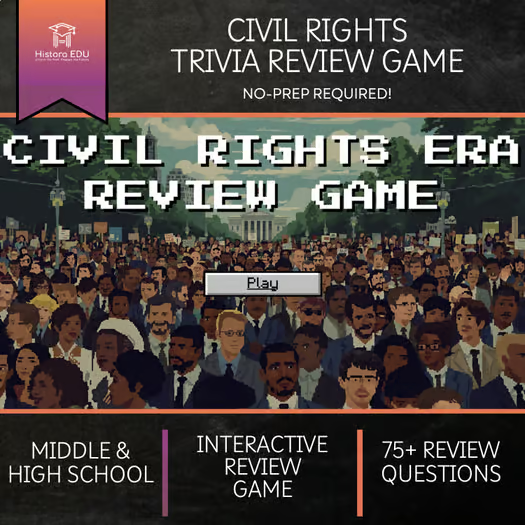
Civil Rights Movement Review Game | Social Studies | Interactive Test Prep
View this HistoraEDU resource on TPT
Use for movement events, strategies, leaders, and legislation, then add evidence about participation and implementation.
Modern America Review Game | Social Studies | Interactive Test Prep Trivia
View this HistoraEDU resource on TPT
Use for selected modern-era topics within a checked course endpoint; do not assume live or exhaustive current-events coverage.
Product covers: HistoraEDU, reproduced from the exact TPT listings with the owner’s authorization. Archival photographs are credited above. No archive, photographer, or person pictured endorses HistoraEDU.
