
By HistoraEDU
“The stock market crashed, so the Great Depression happened.” It is a familiar review answer, and it can hide several different gaps: a student may be confusing a stock price with a wage, treating every family as prosperous in the 1920s, or assuming that every New Deal program solved the same problem. Use a sorting routine to make those distinctions visible before asking students for a longer explanation.
Sort the kind of claim before discussing the cause
Give students short cards from material already studied. Label three spaces: longer-term condition, event or shock, and response. Add a fourth space for evidence about effects. Students place the cards independently, then compare one disagreement with a partner. Allow a card to need more context; the purpose is to explain the category, not win a race to fill it.
Keep economic vocabulary concrete. A stock-price change concerns the value of an investment; unemployment concerns people without work. The 1927 candy-shop photograph does not measure household income. Ask students what evidence would be needed for each claim before connecting all of them with a single arrow.
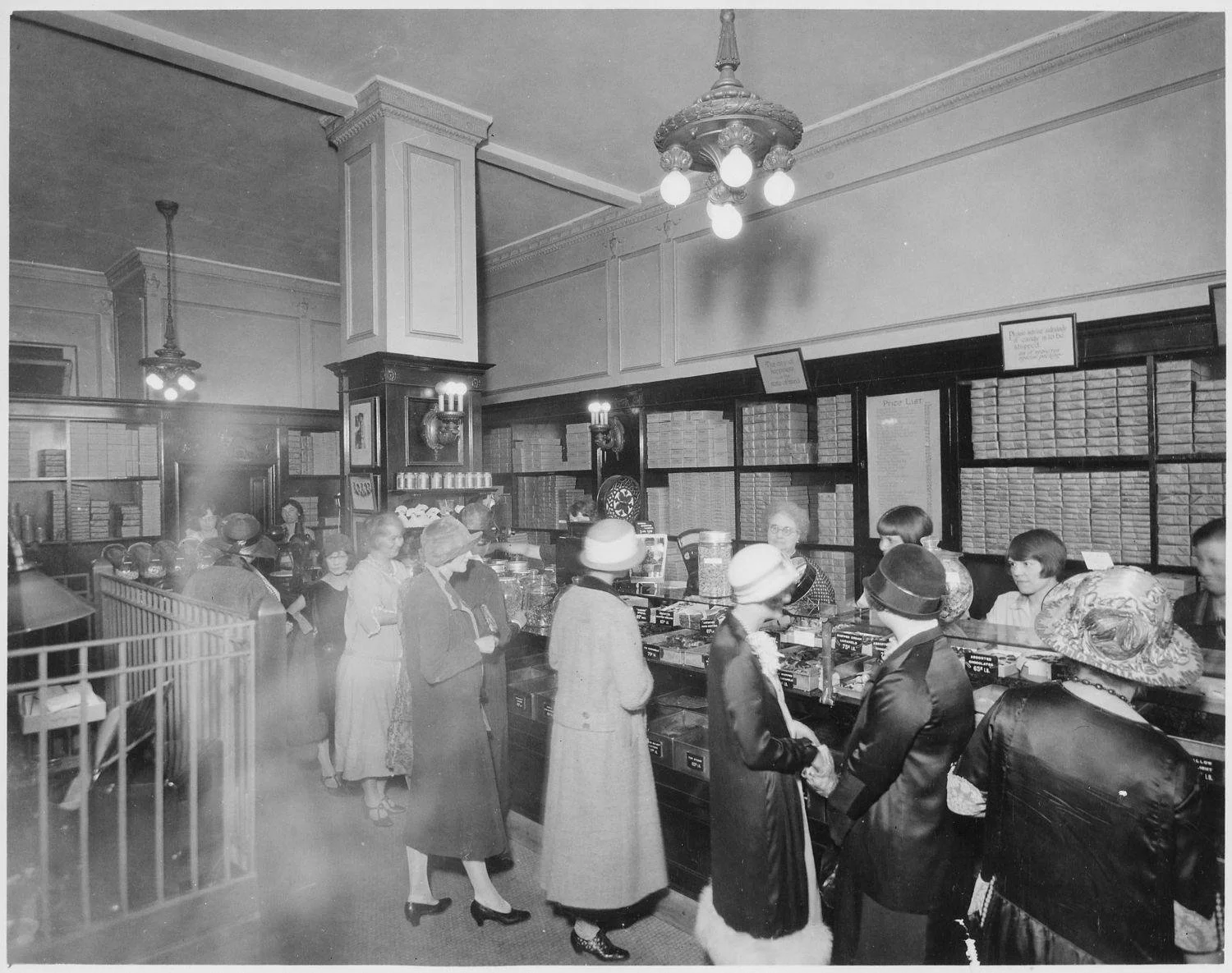
Shoppers inside Mrs. Snyder’s Candy Shop on South Michigan Avenue in Chicago, 1927. A single retail scene provides evidence about one setting, not a measure of nationwide prosperity. Credit: National Archives, NAID 522873. Public domain.
View the archive record | Image reuse terms
Use the 1920s game to uncover uneven assumptions
Choose questions from the Roaring 20s game that connect to your unit’s work on consumer culture, technology, mass media, or social change. After an answer, ask “For whom?” or “What evidence would show how widespread this was?” The listing also includes the Harlem Renaissance, immigration restrictions, Prohibition, and women’s changing roles, so review need not become only a story about buying more goods.
Challenge the sentence “Everyone was rich before 1929.” Students should replace it with a narrower statement supported by an assigned source. They do not need to make an equally sweeping claim in the other direction. An accurate qualification is more useful than another slogan about an entire decade.
Make a chain that explains a mechanism
Use a short set of Great Depression game questions to retrieve bank failures, unemployment, and government responses. Then ask pairs to connect two cards with a written explanation of how one could affect the other. Label the arrow with the mechanism, not just “led to.”
For a primary-source check, use the reading copy of Roosevelt’s March 12 1933 banking address in the FDR Library’s Great Depression collection. Ask what problem the president describes, what action he explains, and what he wants listeners to do. Treat the speech as a government explanation aimed at an audience, not as neutral proof that every policy worked.
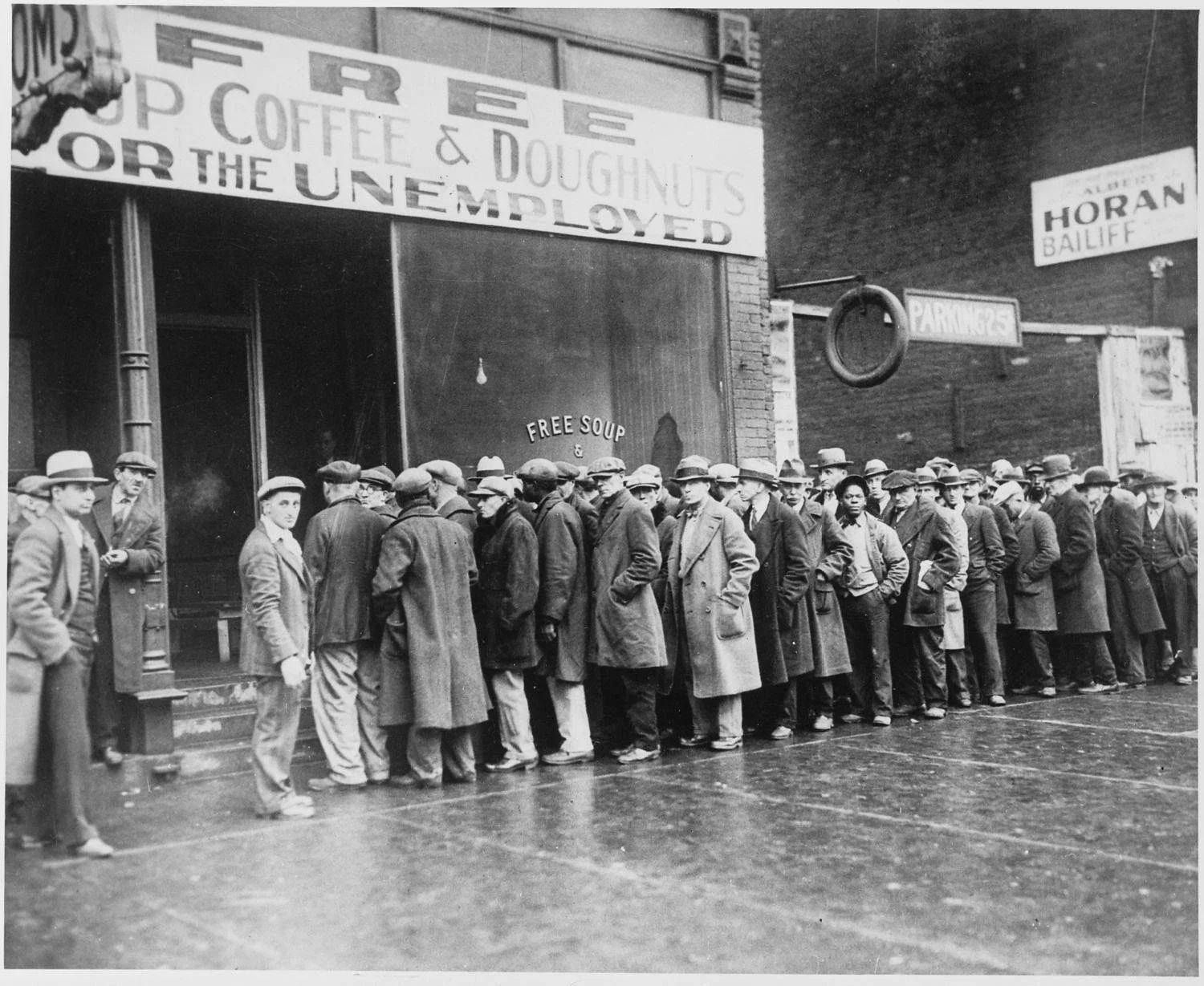
Unemployed men outside a Chicago soup kitchen associated with Al Capone, February 1931. The date precedes the Roosevelt administration; this is not a New Deal relief program. Credit: National Archives, NAID 541927. Public domain.
View the archive record | Image reuse terms
Distinguish hardship from the evidence for a national claim
Study the Depression-era photograph with its place, date, and archive caption. What does it show about this setting? What would a letter, employment record, or statistical series add? Students should not infer a person’s full circumstances or emotions simply from clothing or a facial expression.
Place the relief or work-program photograph beside it. Ask which part of the response is visible and which outcomes would need further investigation. A photograph can document people working on a project without proving that the program reached everyone who needed work or ended the Depression.
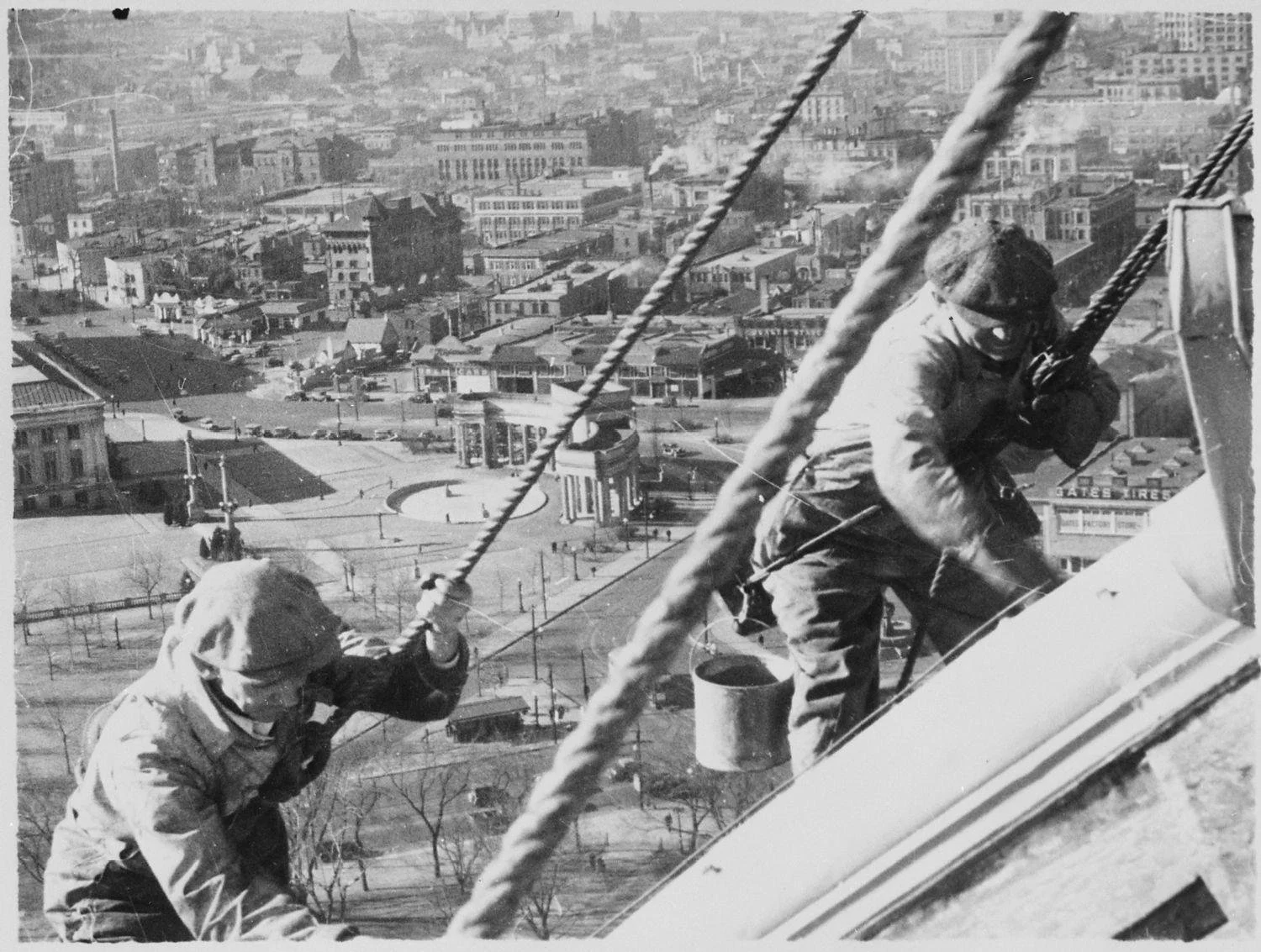
Civil Works Administration workers maintain the dome of the Colorado State Capitol in Denver, 1934. This documents one public-work activity, not proof of the overall economic effects of the New Deal. Credit: National Archives, NAID 541904. Public domain.
View the archive record | Image reuse terms
Use program names as the beginning of an explanation
Once students can identify a New Deal agency, ask them to add its intended task, a specific source, and a question about results. If you use relief, recovery, and reform as organizing labels, allow students to explain overlaps instead of pretending every program had exactly one effect.
For a shorter lesson, give each pair one program from your existing materials rather than a full alphabet-agency list. Students can explain their example to another pair, who must ask a question the source does not answer. This keeps the activity focused on evidence and purpose instead of how many abbreviations students can memorize.
Choose two short rounds rather than a whole period of guessing
HistoraEDU’s Roaring 20s and Great Depression resources are separate interactive digital review games. Their listings describe student-access links, teacher guidance, and editable Canva materials. Use a selected round from each to diagnose what students remember; the sorting cards, source work, and causal arrows are teacher-added structures.
Give students who need support a vocabulary bank and one completed arrow. For an extension, ask students to challenge a causal claim by identifying missing evidence or an alternative explanation. Finish with an individual correction of the opening one-cause answer. Require at least two distinct developments, a supported relationship, and one limitation. That response is a stronger basis for reteaching than the number of trivia answers a team collected.
Find the matching review resource
Roaring 20s Review Game | Social Studies | Interactive Test Prep History Trivia

View this HistoraEDU resource on TPT
Use for selected questions on the decade’s economy, culture, technology, and social change before asking how experiences differed.
Great Depression Review Game | Social Studies | Interactive History Test Prep

View this HistoraEDU resource on TPT
Use for selected questions on economic crisis, hardships, and New Deal responses before students build and test a causal explanation.
Product covers: HistoraEDU, reproduced from the exact TPT listings with the owner’s authorization. Archival photographs are credited above. No archive, photographer, or person pictured endorses HistoraEDU.
