
By HistoraEDU
A student writes, “The UN went to war, so all the countries agreed.” Another describes the Korean War as a fight between only the United States and China. Both answers compress different actors into a single label. You do not need a longer list of countries to fix this. Give students a way to distinguish a decision, an offer of assistance, a military command and the people whose country was being fought over.
Start with three different kinds of actor
On the board, make three headings: institution, national government and people or forces in Korea. Ask students where they would place the Security Council, the United States government and South Korean forces. A label may connect to another without being interchangeable with it. The Security Council is not a country; a national government is not every individual who lives there.
This is a language lesson inside a history lesson. The aim is to replace an oversized noun—“the UN”—with the particular actor whose action the source actually documents. Keep the first task narrow: the international response during the opening months of the war in 1950, not every later decision.
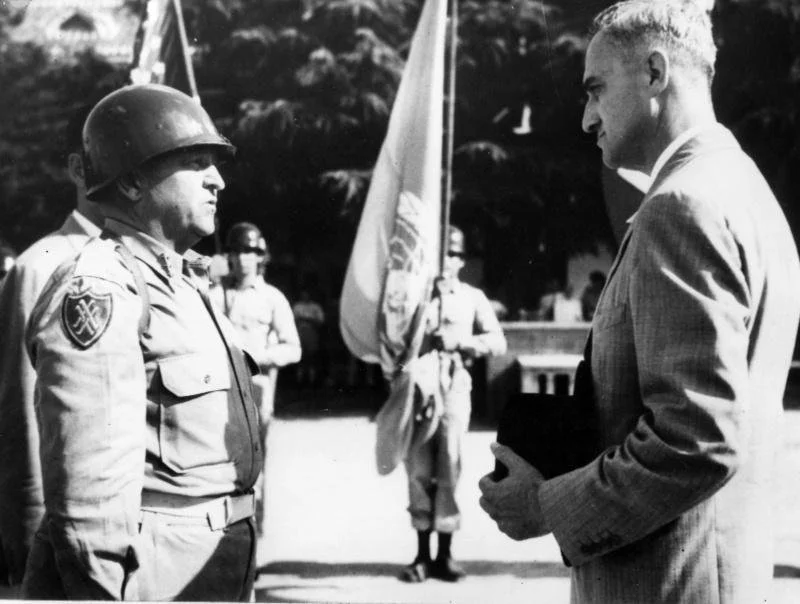
Walton Walker and Alford G. Katzin after the presentation of the UN flag, July 24, 1950. A flag indicates an institutional connection; this photograph cannot show how every government voted. U.S. Army; Harry S. Truman Library & Museum, 67-7295. Public domain.
Read a decision without turning it into unanimity
Use the July 7, 1950 Security Council resolution linked below. Have pairs identify who made the decision, what arrangement it recommended and who was to designate the commander. It recommended a unified command under the United States for members supplying forces or assistance, and requested that the United States name its commander.
Then read the editorial vote note attached to that historical document. Seven Council members voted in favor, none against, three abstained and the Soviet Union was absent. “No votes against” is not the same as “every member voted yes.” Nor was a Security Council vote a vote by every member of the entire United Nations.
Put three teacher-written summaries on the board: “Every UN member voted yes”; “The Council approved a US-led unified command”; “Every participating country supplied the same kind of help.” Ask students which one this document supports and which require correction or additional evidence. Their answer must name the document, not just choose the most plausible sentence.
Keep an offer separate from an arrival
Build a four-column chart: actor, documented action, date and evidence limit. For the Council, enter the July 7 command decision. For a national government, add the July 25 telegram from the US ambassador in Britain reporting a British decision to send a brigade group. The telegram also anticipated time needed to assemble and move it.
The model entry is “British government—decision to send ground forces—July 25 report—not proof that these forces were already in Korea that day.” Students should not turn future tense into a completed event. This small distinction makes the chart more useful than a roster of flags.
A July 12 State Department telegram provides another step in the process: communication with governments about offers and possible contributions. It helps students see why approval, an offer and deployment need separate evidence. Do not use one document to flatten the sequence.
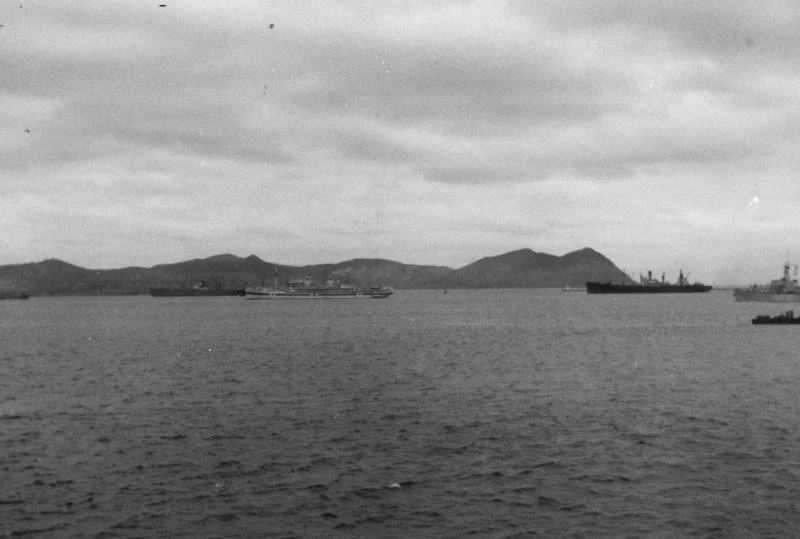
The archive identifies a British hospital ship in Pusan (Busan) harbor, September 12, 1950. The image does not identify individual patients or establish the full British contribution. U.S. Army; Harry S. Truman Library & Museum, 2007-652. Public domain.
Keep Korean participants in the explanation
Return to the June 27 Security Council resolution. It names an armed attack from North Korea and an appeal by the Republic of Korea. These are not merely background locations for an American decision. Ask students to add separate rows for North Korean forces and the Republic of Korea, using only the action the document attributes to each.
Explain that the resolution is an institutional source with its own purpose and language. It does not reveal every Korean person’s experience or opinion. A complete account needs additional Korean perspectives; this short chart is a tool for avoiding erasure, not a complete history.
Now examine the dated photograph of South Korean Marines waiting to board the USS Pickaway. Students can add a documented instance of Korean military participation. They cannot infer where the ship would take them, what every Marine thought, or the goals of all Koreans from the photograph.
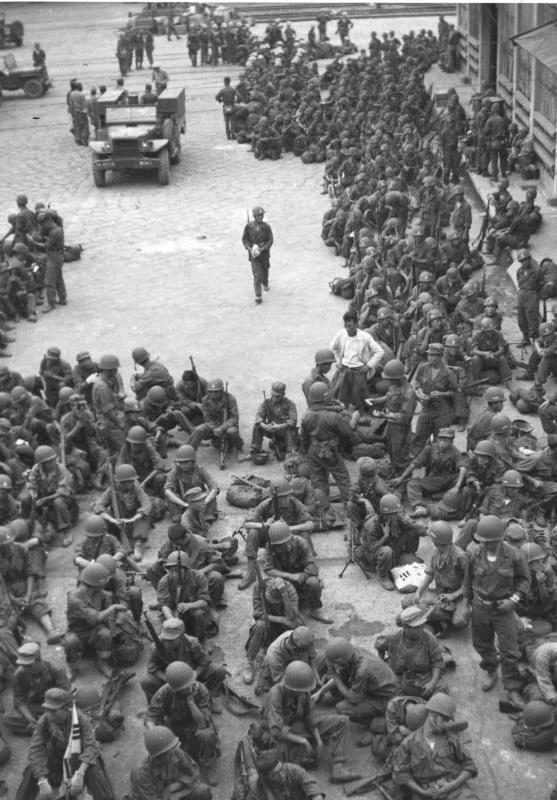
South Korean Marines waiting to board the USS Pickaway near Pusan, September 12, 1950. The archival identification—not a guess from uniforms—supplies the unit’s national identity. U.S. Army; Harry S. Truman Library & Museum, 2007-650. Public domain.
End with a more precise sentence
Give students this exit prompt: “Explain why ‘UN forces’ is useful shorthand but an incomplete description.” Look for a distinction between the Council’s decision, the US-led command and national contributions. Ask for one dated piece of evidence and one limit.
A possible response begins: “The Council approved a command arrangement, but that does not mean every UN member voted for it or contributed in the same way.” Students then supply their own supported example. For support, provide the actor names and ask students to match the verbs; for extension, have them explain which extra record would establish an actual arrival date.
Avoid a simulation in which students impersonate whole nations or victims. The useful work here is precise attribution: who acted, when, and how we know. That gives students a stronger foundation for later discussion of changing war aims and the armistice.
Use the reading as shared background, not as the whole source set
HistoraEDU’s Korean War reading and photo-analysis resource can establish the containment context before this activity. The Council resolutions, telegrams and three archival photographs in this article are a supplementary source set. The actor chart is a teaching routine proposed here; it is not a claim that the product includes these additional documents or a complete UN voting lesson.
Korean War Reading & Photo Analysis | Containment | Grades 7–8
View this HistoraEDU resource on TPT
A focused grades 7–8 reading and photo-analysis resource for the Korean War and containment. Add the linked records above when teaching the distinction between international authorization and individual national contributions.
Sources and image credits
Security Council resolution, July 7, 1950, with voting note
Security Council resolution, June 27, 1950
July 25 telegram reporting British ground-force decision
July 12 telegram about offers of assistance
Product thumbnail reproduced from the exact HistoraEDU listing at the owner’s request. Historical photographs are separate evidence, not product endorsements.
