
By HistoraEDU
A student can name Jamestown, the Declaration of Independence, and the Constitution and still place them in the same vague “colonial” past. A fast review game may reward each correct name without revealing that confusion. Give every answer a place in time. Short era-based rounds followed by one timeline correction can help students connect what they remember instead of collecting another list of disconnected facts.
Build a timeline with room for overlap
Draw a broad timeline before playing. Use labels that match your course, such as exploration and colonization, revolution, constitutional government, expansion, Civil War, and Reconstruction. Explain that these labels organize study; they do not mean one process ended everywhere before the next began. Indigenous histories belong throughout the timeline, not only in a box before Europeans arrive.
Give students six event cards from material already taught. Ask them to place the cards, circle one uncertain choice, and write what evidence would settle it. Keep this first attempt. Later corrections are much more informative when students can see the reasoning they changed.
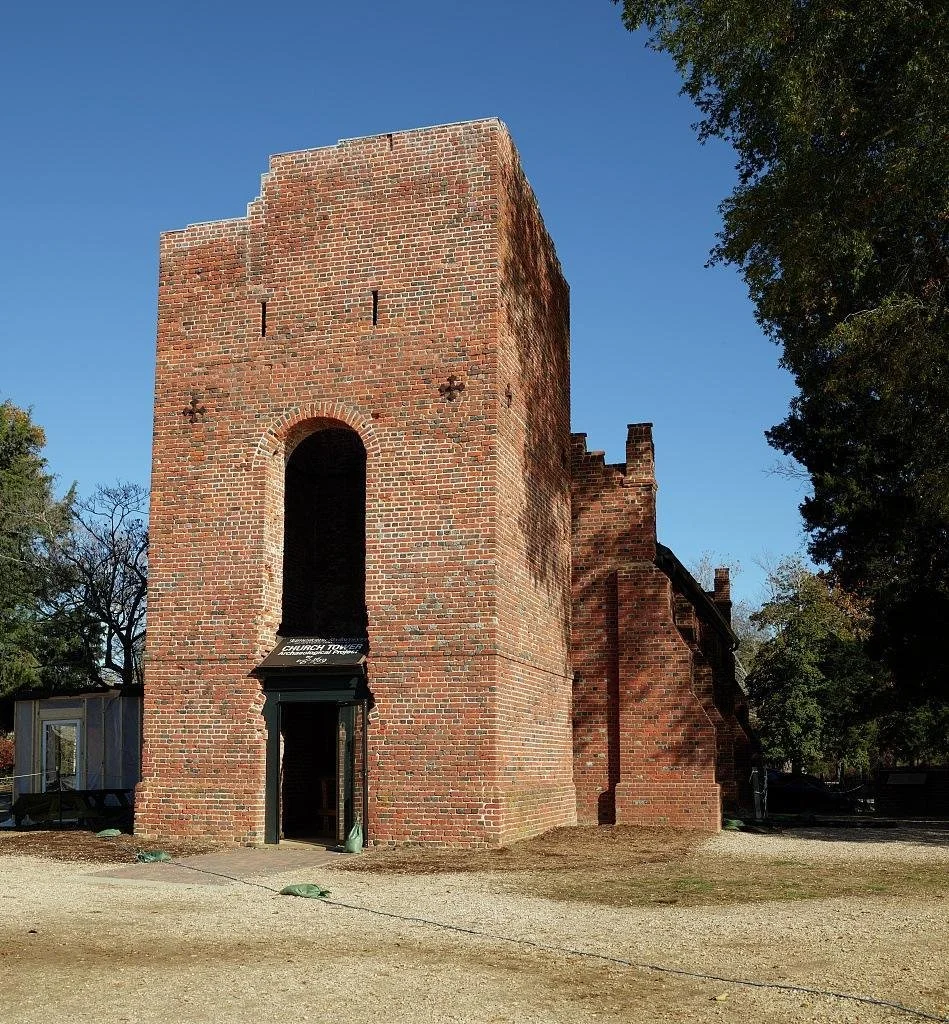
Modern photograph of the surviving church tower at Historic Jamestowne, taken November 24, 2019. This is a present-day view of a colonial site, not a photograph of the 1607 settlement. Credit: Carol M. Highsmith, LC-DIG-highsm-61496. The Library of Congress, Carol M. Highsmith Archive. Public domain.
View the archive record | Image reuse terms
Separate the event from the surviving evidence
Use the modern historic-site photographs as a quick source check. What does a present-day photograph show about a place? What does it not show about the people who lived there centuries earlier? Label the photograph’s date or modern status separately from the historical event. A preserved building or reconstructed feature is not a contemporary photograph of colonial life.
Then compare the opening purposes of the Declaration of Independence and the Constitution. The Declaration announces and argues for political separation; the Constitution establishes a framework of government. Ask students to correct: “The Declaration created the three branches.” They should identify which document supports the correction, not merely swap dates.

Modern photograph of Independence Hall in Philadelphia, dated between 1980 and 2006. The site connects to the Declaration and Constitution, but this photograph does not show either eighteenth-century meeting. Credit: Carol M. Highsmith, LC-DIG-highsm-15403. The Library of Congress, Carol M. Highsmith Archive. Public domain.
View the archive record | Image reuse terms
Play one era before mixing the deck
Start with a small selection from one era game. After each response, students add an event or concept to their timeline and explain its relationship to an existing entry. Prompts such as “What had already happened?” and “What problem remained?” turn a right answer into a connection. Do not make students invent a precise date for a broad process such as colonization.
Once the first round is secure, mix questions from two nearby units. A Revolution answer might belong before a constitutional-government question, while a New Nation question asks what happened when leaders used that system. Keep Constitution and New Nation as related but distinct lenses rather than assuming their names dictate a neat, nonoverlapping sequence.
Use Reconstruction to test the connections
Ask students to distinguish the constitutional changes they often collapse into one answer. The Thirteenth Amendment abolished slavery with its punishment-for-crime exception; the Fourteenth addresses citizenship and equal protection; the Fifteenth prohibits denial of voting rights on specified racial and prior-servitude grounds. Give the relevant clauses, not a speed test of amendment numbers.
Place the dated historical photograph on the timeline using its archive record. Then ask which constitutional question it helps students investigate and which claims it cannot establish alone. A picture can prompt inquiry; it does not prove that a law was fully enforced or that everyone experienced change in the same way.
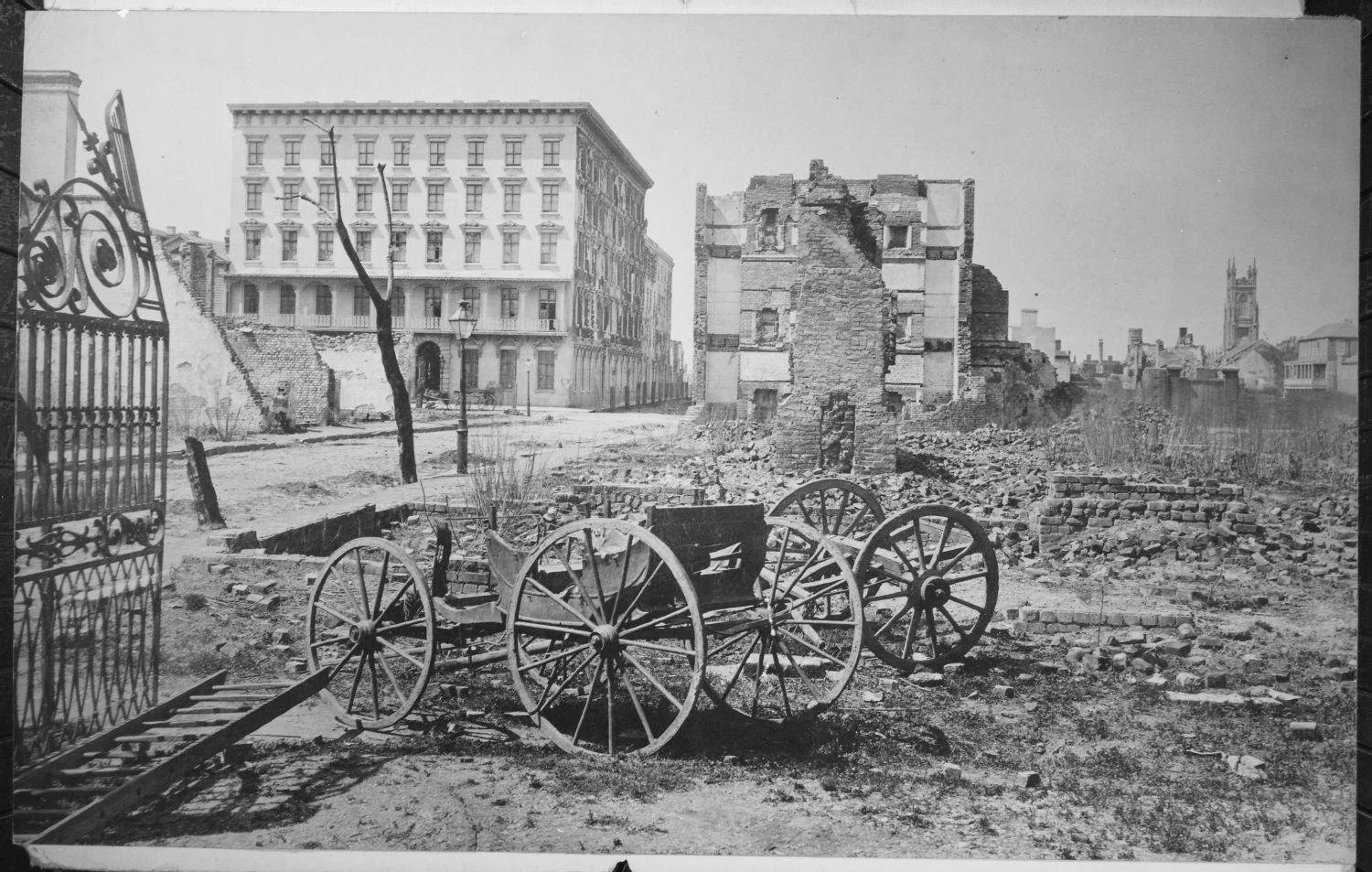
Mills House and nearby damage in Charleston, South Carolina, photographed in 1865. The photograph records a place at the end of the Civil War; it does not document all of Reconstruction. Credit: National Archives, NAID 533131. George N. Barnard. Public domain.
View the archive record | Image reuse terms
Choose only the era tools you need
The resources below are individual interactive digital review games. Their public listings describe student-access links, teacher guidance, and editable Canva materials. Select the one or two that match the confusion you observed; the timeline, source excerpts, and correction routine described here are teacher-added activities. You do not need nine games in a single lesson.
For readers who need support, provide fewer cards, a short glossary, and two dated anchors. For students ready to go further, ask them to explain why two processes overlap or why a later change did not resolve an earlier conflict. End by collecting one revised placement and the evidence that justified moving it.
Find the matching review resource
European Exploration Review Game | Age of Exploration Trivia | Test Prep
View this HistoraEDU resource on TPT
Use for motives, navigation, encounters, and exchange before comparing exploration with colonization.
European Colonization Review Game | Social Studies | Interactive Test Prep
View this HistoraEDU resource on TPT
Use for settlement motives, colonial economies, and interactions; distinguish establishing colonies from exploratory voyages.
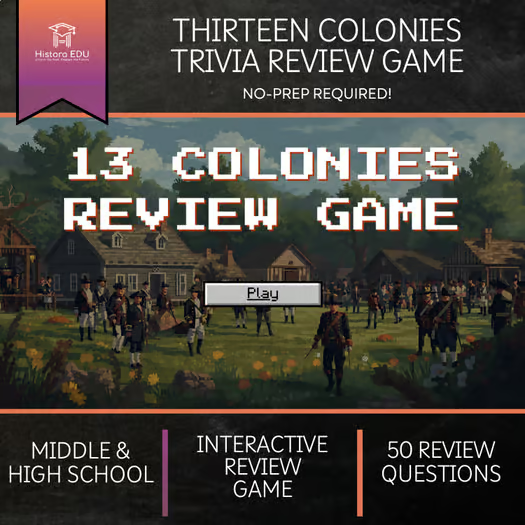
13 Colonies Review Game | Interactive Test Prep | English Colonies
View this HistoraEDU resource on TPT
Use for regional comparisons among the English colonies rather than treating colonial society as uniform.
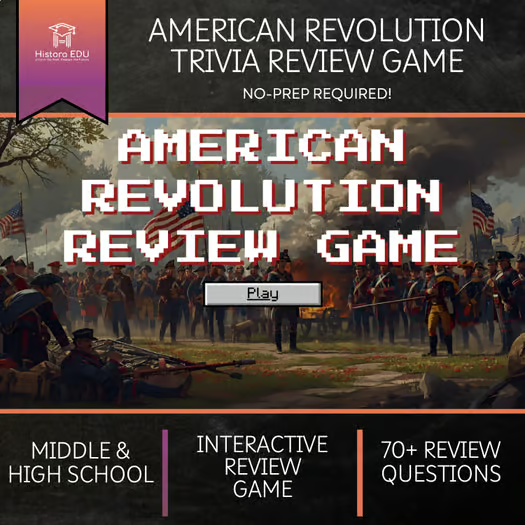
American Revolution Review Game | Social Studies | Interactive Test Prep Trivia
View this HistoraEDU resource on TPT
Use for causes, events, perspectives, and consequences of the Revolution.
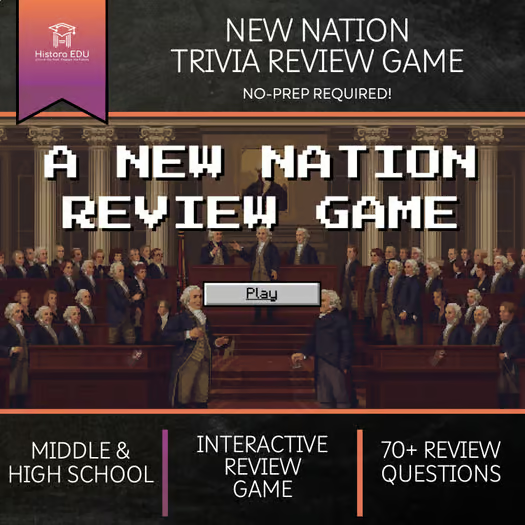
The New Nation Review Game | Founding Fathers | Test Prep Trivia
View this HistoraEDU resource on TPT
Use for early presidential decisions and challenges facing the new government.
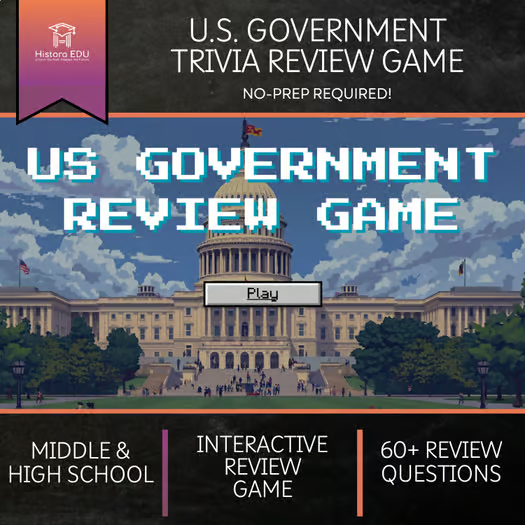
U.S. Government & Constitution Review Game | Interactive Test Prep | Trivia
View this HistoraEDU resource on TPT
Use for constitutional structure, federalism, branches, and rights; pair answers with the actual document.
Manifest Destiny Review Game | Social Studies | Interactive Test Prep Trivia
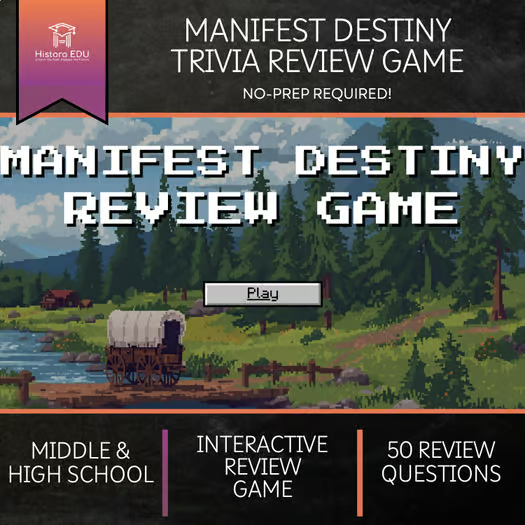
View this HistoraEDU resource on TPT
Use for expansion, migration, conflict, and effects on Indigenous peoples.
Civil War Review Game | Social Studies | Interactive Test Prep Trivia
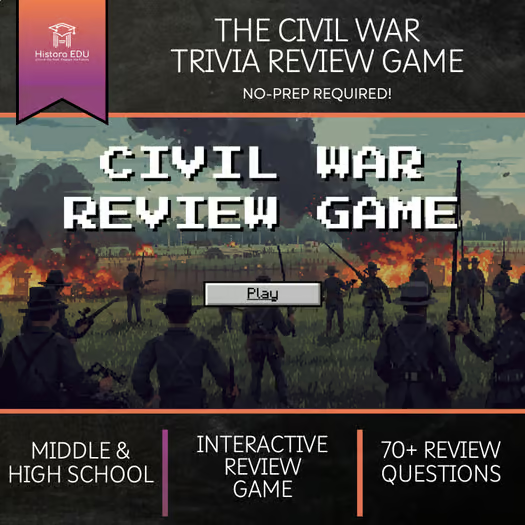
View this HistoraEDU resource on TPT
Use for wartime people, events, emancipation, and outcomes; keep slavery central when explaining secession.
Reconstruction Review Game | Social Studies | Interactive Test Prep Trivia
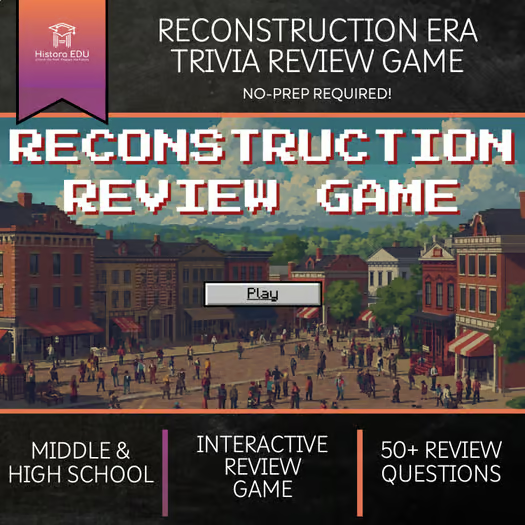
View this HistoraEDU resource on TPT
Use for Reconstruction policies and amendments, followed by a source-based discussion of implementation.
Product covers: HistoraEDU, reproduced from the exact TPT listings with the owner’s authorization. Archival photographs are credited above. No archive, photographer, or person pictured endorses HistoraEDU.
