
By HistoraEDU • A classroom image wall lesson
A photograph can be correctly dated and still be used badly. When one portrait becomes the classroom picture of Lakota people, Cheyenne people or everyone on the Great Plains, students learn a generalization that the image cannot support. This short image-wall revision asks students to replace a broad label with a named person, a documented context and a clear limit. The goal is not to find one better photograph that represents everybody. It is to stop asking any photograph to do that job.
Begin with the label rather than a costume comparison
Show the first portrait with its accurate record beside it. Ask students to repair this deliberately inadequate classroom label: “How Plains Native Americans looked.” Explain that the problem is the claim, not the person in the image. Students should not rank clothing as more or less authentically Native, imitate the pose or speculate about the sitter’s feelings.
Give students three prompts: Who is identified? What can we actually see? What would require another source? For this example, identify Zitkála-Šá as a Yankton Dakota writer, musician and activist. She is not a stand-in for Lakota people or for Cheyenne people. A broad archival term such as “Sioux” needs context rather than being copied as if all these names were interchangeable.
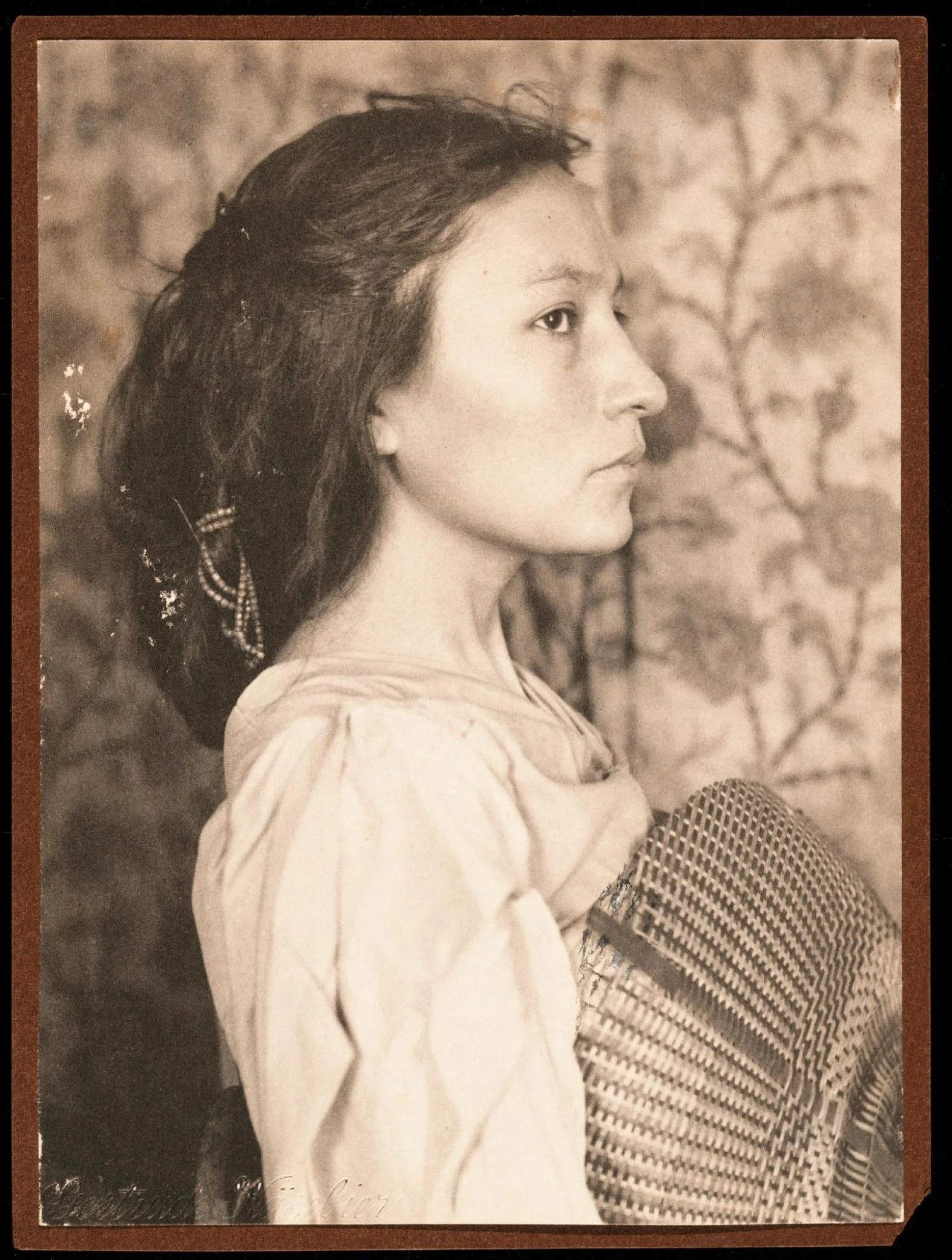
Zitkála-Šá, photographed by Gertrude Käsebier, about 1898. National Museum of American History, Smithsonian Institution; credit line Mina Turner, PG.69.236.104. CC0. This is an individual portrait, not a sample of what all Plains people wore.
Build a label that does not outrun the record
A useful model is: “Zitkála-Šá, a Yankton Dakota writer and musician, in a portrait by Gertrude Käsebier, about 1898. The photograph records one posed appearance. It does not show how all Yankton Dakota people dressed or how Lakota and Cheyenne communities lived.” The person’s work and affiliation come from the accompanying historical account, not from guessing at her face or clothes.
Have students underline the record-based information and circle the limit. A label that only adds a date to the original broad claim is still too broad. An uncertain detail should remain uncertain: “about 1898” is not an exact day, and a studio portrait should not become an unobserved account of everyday home life.
Let a second image complicate the first
Now show the second photograph of Zitkála-Šá with a violin. Ask which observations change: the instrument, the bow, the framing and the pose. The record still identifies the same person. Students can see that one selected photograph leaves things out even before they compare different communities.
Do not turn the pair into a before-and-after story of becoming less Native. Both museum records date the photographs to about 1898; neither establishes a sequence of cultural transformation. The National Park Service’s account of her music, writing and activism supplies context that a visual comparison alone cannot produce. Keep the activity focused on selection and evidence rather than an invented story about identity.
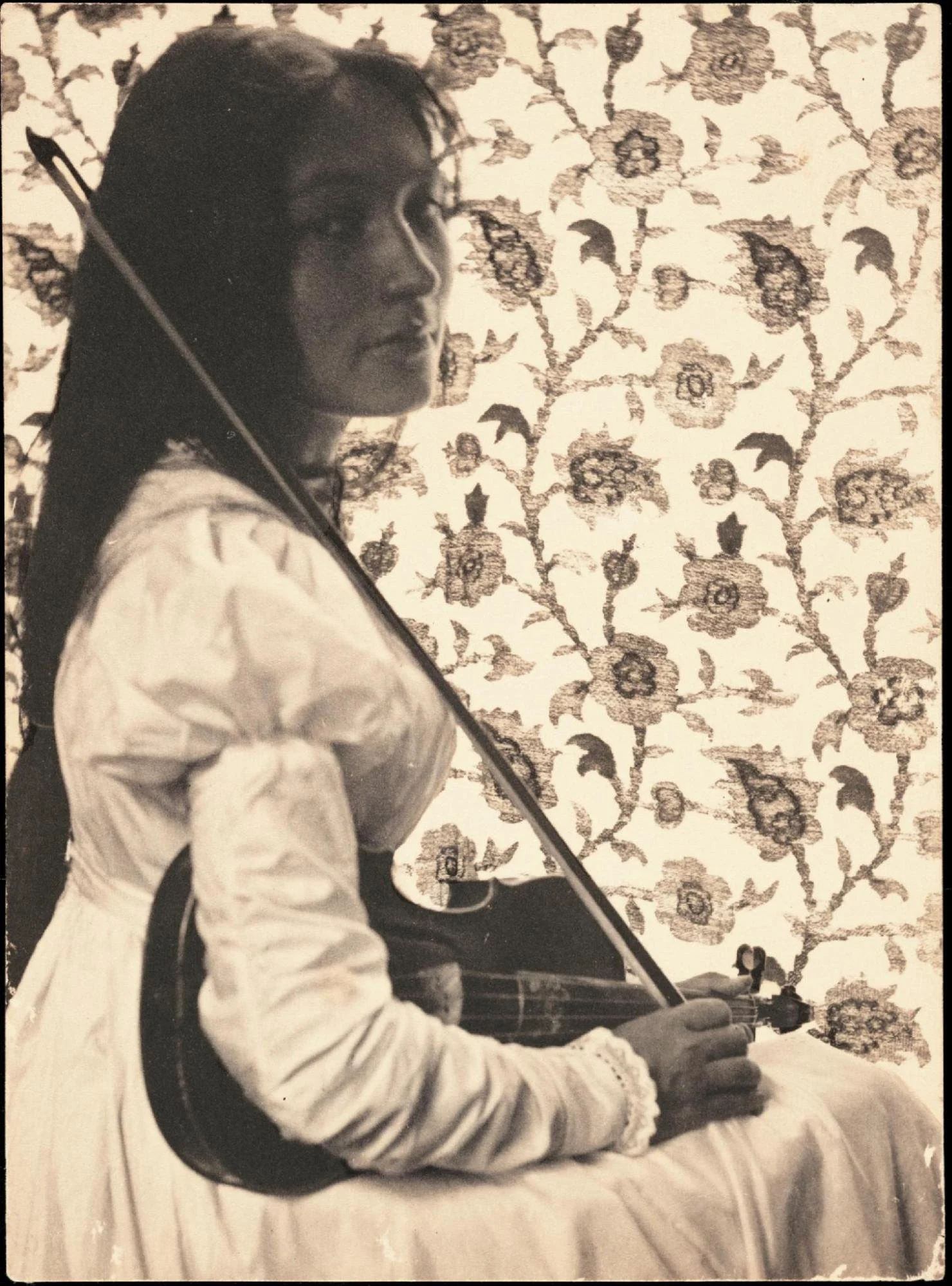
Zitkála-Šá with a violin, Gertrude Käsebier, about 1898. National Museum of American History, Smithsonian Institution; credit line Mina Turner, PG.69.236.108. CC0. The portrait is posed; it is not a photograph of a concert.
Add a present day institutional context without mixing nations
A display made entirely of nineteenth-century portraits creates another problem: it can leave students with no visual evidence of Native institutions in later periods. The third photograph documents Chief Dull Knife College President Eva Flying speaking at a USDA and American Indian Higher Education Consortium leadership meeting in Washington, D.C., on September 8, 2025. It is a professional meeting, not a ceremonial scene.
Read the college’s own mission with the photograph. Chief Dull Knife College describes itself as a tribally controlled community college serving the Northern Cheyenne Reservation and surrounding communities. That account establishes an institutional connection; the photograph alone does not establish every participant’s national identity. This is a deliberately different, clearly labeled Northern Cheyenne institutional context, not a later picture of Zitkála-Šá’s community.
Ask students to name one question the meeting photograph can help answer and one it cannot. “Was this college represented at the documented meeting?” is supported by the agency caption. “What do all Northern Cheyenne students want from education?” is not. Neither an archival portrait nor a modern meeting should be used to make somebody endorse a classroom product.
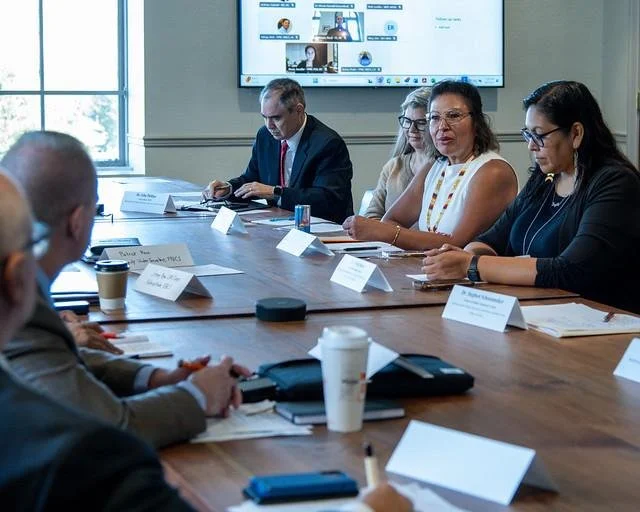
Chief Dull Knife College President Eva Flying speaking at a USDA and AIHEC leadership meeting, Washington, D.C., September 8, 2025. Credit: U.S. Department of Agriculture, photograph 20250908-USDA-FPAC-BD-0015; public-domain work. No endorsement by the people or institutions pictured is implied.
Make the image wall revision assessable
In pairs, students choose one existing classroom image and propose a revised label of about 40–60 words. Require the named subject or place, the recorded date or date range, the creator or holding institution, one supported observation and one limit. If an image cannot be identified or its permitted use cannot be established, students can recommend removing it rather than inventing a caption.
For a quick exit check, give students this claim: “We added a modern photograph, so our display now represents every Plains nation.” Ask for a two-sentence correction. Look for recognition that adding a date or more variety does not make a small selection representative of everyone. Invite students to propose a specific missing perspective and a suitable source, not an identity they should perform.
Keep links to nation-specific accounts available beyond the image wall. The Smithsonian’s Oceti Sakowin lesson distinguishes related peoples and continuing governments. For Lakota background, distinguish the seven Lakota bands from the broader Seven Council Fires alliance. These are not two interchangeable lists.
Use the readings for background and keep the image task separate
The following HistoraEDU resources are listed as editable Google Docs with reading and question materials. They can provide background for a carefully selected comparison; this article’s image-label routine is a separate teacher-created activity, not a feature claimed for those products. Check the excerpt and question you plan to use rather than assigning every section because an image looks relevant.
Great Plains Native Americans Reading Comprehension Worksheet
View this HistoraEDU resource on TPT
The current listing describes a regional reading on the environment, changing economies and diversity of Great Plains societies. Use a selected passage to identify the scale of a regional claim, then show why a regional overview cannot supply an individual portrait’s caption. The photograph activity above is not included in this resource.
Lakota Sioux Reading Comprehension | Great Plains Native Americans
View this HistoraEDU resource on TPT
The current listing describes a Lakota-focused reading and questions. Before using its political-grouping passages, correct the distinction between the seven Lakota bands and the broader Oceti Sakowin alliance; the source version reviewed conflates them. Use the Smithsonian account to establish that distinction, and do not use a Yankton Dakota portrait as a Lakota illustration. This is qualified background use, not an endorsement of the uncorrected passage.
Cheyenne People Reading Comprehension | Great Plains Native Americans
View this HistoraEDU resource on TPT
The current listing describes a Cheyenne-focused reading and questions on historical change and political organization. Pair a carefully chosen passage with the college’s own Northern Cheyenne mission to distinguish an institutional account from a generalized image. The resource is not described here as a biography of Eva Flying or a lesson about the 2025 meeting.
Sources and image credits
Zitkála-Šá biography and Yankton Dakota identification
Smithsonian Oceti Sakowin nation-specific teaching material
Chief Dull Knife College mission and institutional history
Product thumbnail reproduced from the exact HistoraEDU listing at the owner’s request. Historical photographs are separate evidence, not product endorsements. No claim to original U.S. Government works. The meeting photograph is used only in this editorial teaching example, not as advertising or an endorsement.
