
By HistoraEDU
A lively four-corners activity can tell you who is comfortable speaking, but not necessarily what everyone is thinking. Keep the energy of a history game while adding a quieter first step: private thinking, an accessible way to choose and a short explanation after the movement. The aim is to learn how students approach a question, not to sort them permanently into types.
Give thinking a head start
Display one prompt and ask students to jot a reason before anyone moves. A few words or a sketch can be enough. This gives students something to draw on when a louder classmate speaks first and helps you distinguish an initial idea from an answer adopted after hearing the group.
Offer an equivalent seated choice, such as pointing to a labeled option or holding up a response card. Movement can be inviting without being mandatory. A pass option also lets a student observe the routine before joining; it should not become a public explanation of why they are passing.
For an evidence-based opening prompt, show the museum photograph of Wooton’s desk patent model. Ask students what they can observe before showing the label. Then reveal that it is a small model, not a full-size desk: which first impressions need revision? This optional object discussion is separate from the purchased games.
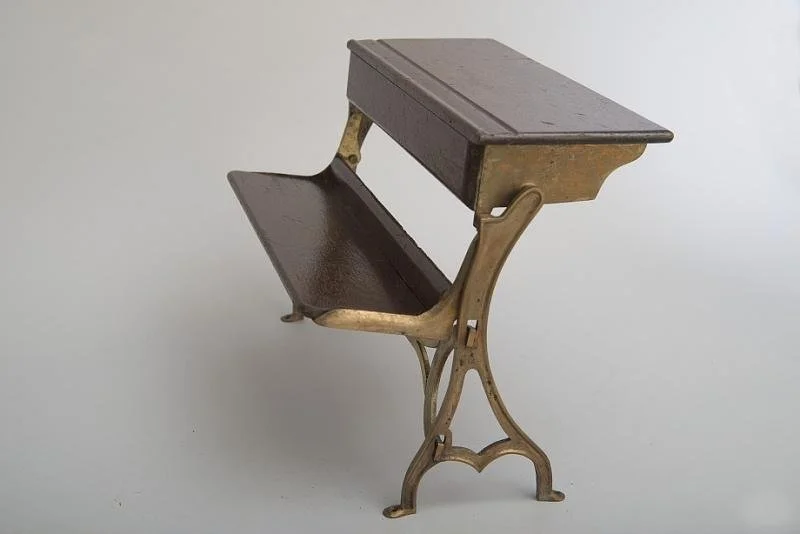
William Wooton’s 1869 school desk and seat patent model. This museum photograph shows a small model, not full-size furniture in a classroom. Credit: Smithsonian National Museum of American History, CL.249602.581. CC0. No institutional endorsement implied.
Distinguish preferences from historical claims
Some questions invite personal preference; others make claims about the past. Name the difference. “I would rather investigate a map” is a preference. “People in this period had no choices” is a historical claim that needs evidence. A game can open a conversation without serving as the final authority on history.
After a survival-themed prompt, ask what information the group would need before judging a historical choice. Keep it hypothetical and light. Do not turn enslavement, persecution, displacement or other trauma into a test of whether today’s students would have been clever enough to escape harm.
The ornate mechanical pencil offers another distinction. Students may describe its decoration, but the photograph alone cannot establish who could afford it or how commonly students used it. Keep those as research questions, not confident guesses.
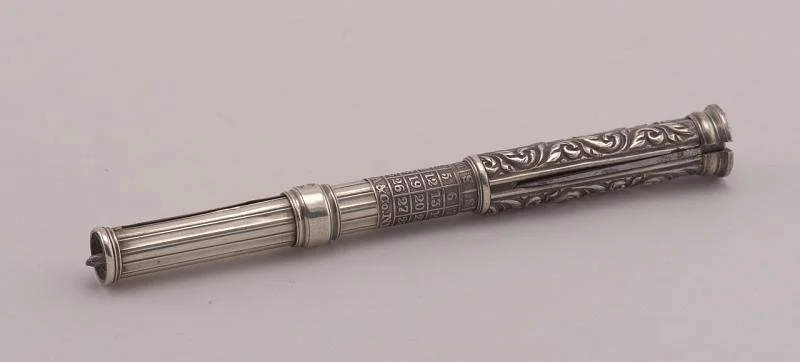
Silver mechanical pencil made by Thomas Addison, dated 1835–1850 in the museum catalog. Use as an object-observation prompt, not as evidence of a typical student’s school supplies. Credit: Cooper Hewitt, Smithsonian Design Museum, Gift of Anonymous Donor, 1931-24-17. CC0. No institutional endorsement implied.
Make changing your mind ordinary
Invite students to move or revise their response after hearing a reason, without requiring them to perform a debate. Ask what changed: new information, a clearer interpretation of the question, or recognition of another perspective. A changed answer can show thought rather than indecision.
Do not reward only speed or confident delivery. Listen for a reason that matches the prompt, a question that clarifies it or a revision that reflects evidence. Those are useful observations for planning later lessons, even when students speak only briefly.
With the pencil box, invite one observation, one inference and one question. Students can revise an inference after reading the museum label. These object photographs provide a concrete practice round without requiring students to reveal personal information.
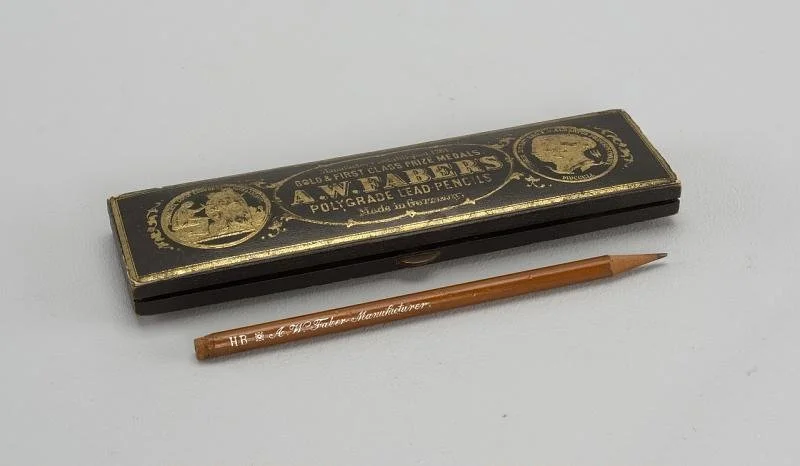
Pencil box, Germany, dated 1860–1880 in the museum catalog. The photograph can prompt a distinction between visible details and claims that need additional evidence. Credit: Cooper Hewitt, Smithsonian Design Museum, Gift of Mrs. Walter Miller, 1960-94-2. CC0. No institutional endorsement implied.
Treat a personality result as a conversation starter
The history-student game can prompt students to discuss interests and preferences. Do not present its categories as a diagnostic assessment, a fixed learning style or a basis for limiting a student to one kind of task. Students can enjoy a playful result and still encounter varied ways of learning history.
A private exit response can ask: Which question made you curious? What helped you join the discussion? What would you like more time to think about? Use the answers to adjust the next lesson rather than to assign permanent labels.
Choose one activity with a clear purpose
Start with a short selection rather than trying to use every prompt in one sitting. Plan time for the debrief; the explanation after a choice is often more informative than the choice itself. The routine described here is a teacher-created facilitation approach, not a claim that these exact supports are built into every slide.
The bundle below contains the three listed games. It is an alternative purchase route, not a fourth set of distinct activities. Choose an individual game for a specific purpose or the bundle if the three formats fit your plans; do not count the same included games twice.
Back to School History Games Bundle | 3 Social Studies Get to Know Activities
View this HistoraEDU resource on TPT
Bundle alternative containing the three games listed below. It does not add three new topics beyond those same individual resources.
Would You Survive the Past? History Game | Back to School Social Studies
View this HistoraEDU resource on TPT
Use for light historical decision prompts with a debrief about missing information; avoid treating imagined survival choices as evidence about real people.
History Hot Takes Four Corners Game | Back to School Social Studies Activity
View this HistoraEDU resource on TPT
Use for an opening discussion with private thinking, an accessible response option and a reason-giving debrief.
What Kind of History Student Are You? | Back to School Four Corners Game
View this HistoraEDU resource on TPT
Use as a playful discussion of interests, not a validated personality test or fixed learning-style diagnosis.
Sources and image credits
Exact HistoraEDU bundle listing
Image record wooton-school-desk
Image record historic-pencil-box
Product thumbnails: HistoraEDU, reproduced from the exact current TPT listings at the owner’s request. Archival sources do not endorse HistoraEDU or its products. No claim to original U.S. Government works.
