
By HistoraEDU
When students label every antislavery source “abolitionist,” they may stop reading just as the interesting work begins. A warning aimed at people in danger and an autobiography explaining why its author withholds information do not ask readers to do the same thing. Compare a short Boston broadside with a passage from Frederick Douglass’s 1845 Narrative. Students will identify an audience, a purpose and a deliberate choice about what to reveal, rather than treating a movement as one interchangeable message.
Give students a question more specific than the topic
Start with three prompts: Who is addressed? What does the writer want that audience to understand or do? Which words support your answer? Keep the source’s topic in a separate margin note. Two texts can oppose slavery while selecting different readers, genres and ways of acting.
Explain that an intended audience is not the same as everyone who actually encountered a text. A public warning could be read by people it opposed; a published autobiography could reach curious, sympathetic and hostile readers. Students should identify evidence for an intended audience without inventing a complete readership survey.
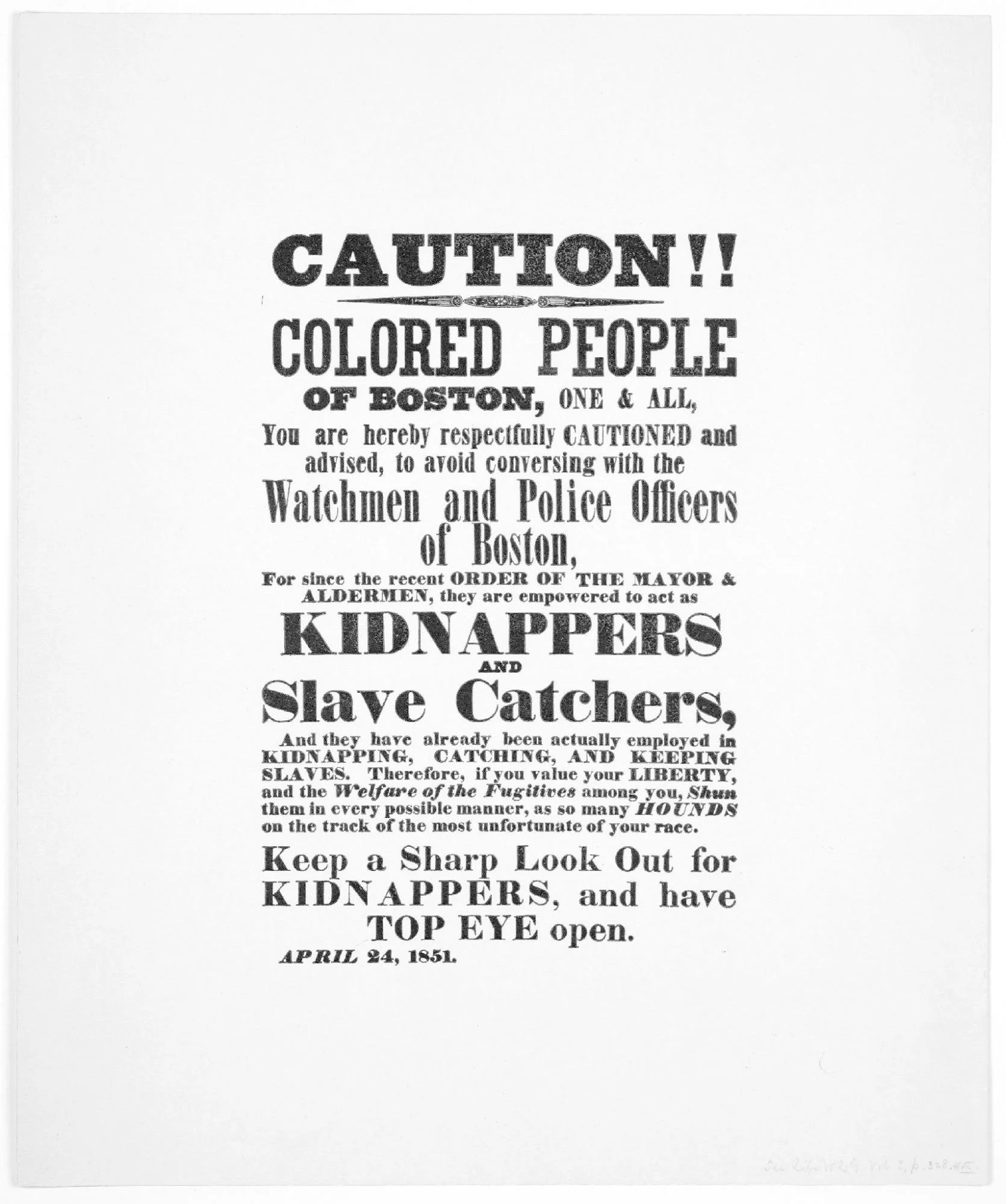
Boston warning broadside, April 24, 1851. Its historical heading addresses Black Bostonians using period terminology. Read the original wording as evidence of audience, not as a model for present-day labels. Library of Congress, Rare Book and Special Collections Division, Printed Ephemera Collection, Portfolio 60, Folder 22. Public domain historical print.
Read the warning as an instruction to an audience
Ask students to locate the audience in the heading and the requested action in the body. The broadside advises its readers to avoid conversation with Boston watchmen and police officers, whom it accuses of acting as slave catchers. Its large type and repeated warnings make the immediate practical purpose visible.
A model response is: “The heading addresses Black people in Boston, and the text urges caution around particular authorities.” Students should support that interpretation with the document, not assume that every abolitionist publication addressed legislators or asked readers to buy a newspaper.
Place the warning after the Fugitive Slave Act of 1850 on a simple chronology. The statute provides context for the danger the warning describes; the broadside is not itself the law. It also does not establish how every officer behaved or how every reader responded. Those are separate research questions.
Read an autobiography that refuses complete disclosure
Turn to chapter XI, printed pages 100–101, of Douglass’s 1845 Narrative. At the opening, he explains “my intention not to state all the facts connected with the transaction.” The transaction is his escape from enslavement. Read the surrounding passage so the short quotation does not become a general claim that his autobiography contains no useful facts.
Douglass gives reasons for withholding details: disclosure could implicate others and alert enslavers to means of escape. Ask students how those reasons complicate the assumption that a helpful historical source must reveal every detail. Here the author explains a deliberate choice to protect people and possibilities of escape.
Have pairs record two audiences: readers whose curiosity he acknowledges, and people who could use disclosed information to obstruct escape. The second is an audience he wants to prevent from learning too much. Students should not reconstruct the withheld route or invent dialogue to fill the gap. The omission is part of the argument they are studying.
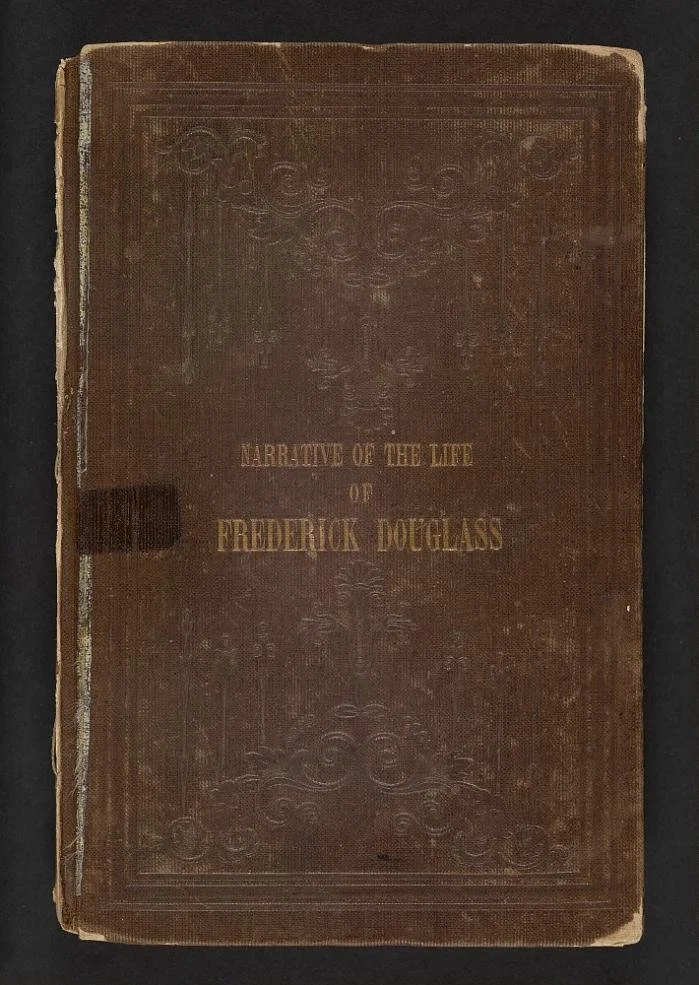
Photograph of a first edition of Douglass’s Narrative, 1845. The cover identifies the book; use the linked Library of Congress copy for the chapter XI passage on printed pages 100–101. Collection of the Smithsonian National Museum of African American History and Culture, Gift of Elizabeth Cassell, 2011.43.1. Public domain / CC0. No endorsement implied.
Write a comparison that names the difference
Offer this teacher-created sentence frame: “The broadside asks ___ to ___, whereas Douglass explains to ___ why he will not ___.” A defensible completion names the warning’s local Black audience and the memoir’s readers, then contrasts caution with withholding dangerous details. It should not claim that one source represents every abolitionist.
Ask students to add one sentence about genre. The broadside is a brief public warning. The Narrative is a retrospective autobiographical work, not a fictional diary and not a full operational record of escape. A difference in genre helps explain the form of each message, but students still need evidence from the actual texts.
For a stronger extension, compare the publisher, date and framing material of an additional abolitionist newspaper. The National Park Service account of The Liberator identifies Garrison’s editorial role and the participation and support of Black communities. Do not let one named editor erase the people who wrote, funded, distributed or read a publication.
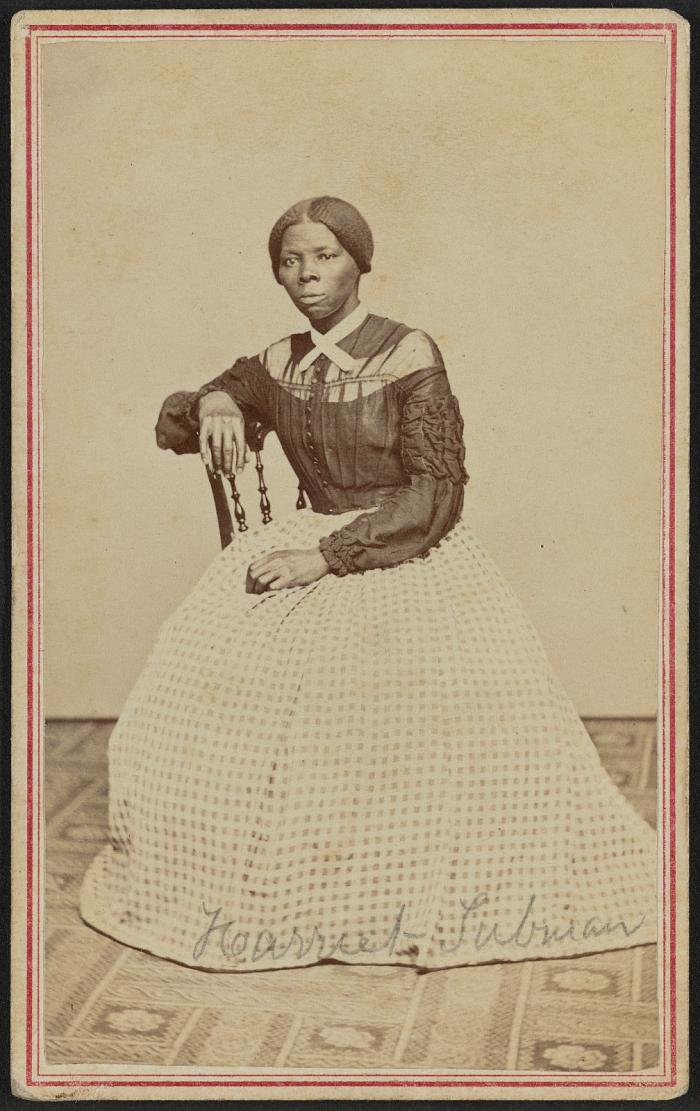
Harriet Tubman photographed by Benjamin F. Powelson in Auburn, New York, 1868–1869. This postwar studio portrait is not a photograph of an escape journey. Credit: Benjamin F. Powelson, 1868–1869; Collection of the National Museum of African American History and Culture shared with the Library of Congress, 2017.30.47; Public Domain CC0. No endorsement implied.
Keep biography and fiction in their proper places
Tubman’s biography can supply context for organized assistance to freedom seekers, but her portrait cannot reveal the intended audience of an unsigned broadside. The dated photograph above is a postwar studio image, not a scene from an escape. Ask students to keep source captions and claims matched when they assemble a short response.
If Uncle Tom’s Cabin enters the discussion, identify it as fiction and distinguish its author’s narrative choices from Douglass’s autobiographical account. Neither source can stand for every enslaved person’s experience. A lesson about message and audience does not need to rank a novel, newspaper or direct action as the single most powerful method.
For the exit task, have students compare two sources in four sentences: identify the audience of each, explain the requested action or deliberate omission, support the comparison with one detail from each text, and state one limit on what the sources establish. Students needing support can work with the broadside heading and the opening paragraph of chapter XI before expanding the comparison.
Add a focused reading when background is needed
The comparison above uses public primary sources and is a separate teacher-created routine. These HistoraEDU PDF readings can supply selected background; the linked source excerpts should remain visible rather than being replaced by a general movement summary.
Abolitionist Movement Reading Comprehension Worksheet Causes of the Civil War
View this HistoraEDU resource on TPT
Use selected movement background before the source comparison. Ask students to distinguish a summary of abolitionism from evidence about the audience of a particular text.
Uncle Toms Cabin Reading Comprehension Worksheet Abolitionism
View this HistoraEDU resource on TPT
For this lesson, select only the first paragraph on PDF page 4 and questions 8–9, introducing Frederick Douglass, William Lloyd Garrison and The Liberator. Pair that selection with the linked NPS account of the newspaper and the primary sources above. Use this audience comparison rather than the full reading or a ranking of one most powerful method. The novel itself is fiction, not testimony for every enslaved person.
Underground Railroad Reading Comprehension Worksheet Slavery and Resistance
View this HistoraEDU resource on TPT
Use selected network background to explain why public disclosure could have consequences. The NPS account distinguishes self-emancipation from organized assistance; students should not infer a universal escape route from either reading.
Harriet Tubman Reading Comprehension Worksheet Underground Railroad Civil War
View this HistoraEDU resource on TPT
Use a focused biographical selection as context for assistance to freedom seekers. Keep the actual portrait dated 1868–1869 and separate from the 1851 warning and 1845 memoir; it is not an illustration of either text’s production.
Fugitive Slave Act Reading Comprehension Worksheet Civil War Causes Activity
View this HistoraEDU resource on TPT
Use this reading to introduce the 1850 law before students examine the warning’s 1851 date. For any precise claim about the law’s provisions, return to the enacted statute rather than treating a public warning as its wording.
Sources and image credits
Douglass Narrative 1845 Library of Congress copy chapter XI printed pages 100 and 101
Enacted Fugitive Slave Act among the 1850 statutes
NPS The Liberator and its community
NPS Underground Railroad history and context
Product thumbnail reproduced from the exact HistoraEDU listing at the owner’s request. Historical photographs are separate evidence, not product endorsements.
