
By HistoraEDU
A historical sentence can name a real place and still mislead through one verb. “Discovered” may erase people who already knew it. “Traded” may assert an exchange that the source does not document. “Learned from” may invent a teacher and learner. Give students a short editing task in which every replacement verb needs evidence, not simply a more respectful sound.
Make four claims into an editing workshop
The sentences below are teacher-created examples for revision, not quotations from historical sources or the linked worksheets. Ask students to underline each action, identify its subject and name the evidence needed to support it. They then write a replacement and a one-sentence explanation of what changed.
A useful edit may change the subject, date or scope as well as the verb. Do not turn the task into a banned-word list. “Discovered” can describe a particular researcher locating an object in a particular excavation, provided the statement does not imply that nobody knew the place or people before that moment.

Modern photograph of Mound City Group in Ohio, NPS / Tom Engberg. The site was built by Native people long before later archaeological investigation. The photograph does not show a first encounter with the earthworks. No endorsement implied.
Replace a discovery story with the action the record documents
Practice sentence: “Archaeologists discovered the people who made the Ohio earthworks.” The NPS explains that Native people built the earthworks and that the later label Hopewell came from a landowner’s name associated with an excavation. It also notes the exclusion of Indigenous people from the early investigations after forced removal.
Possible revision: “Archaeologists applied the name Hopewell to an archaeological culture associated with particular earthworks and artifacts.” This names an act of classification, not the discovery of a people. Add that Hopewell is not the builders’ known self-name. Ask students which evidence would be needed before naming a particular community at a particular site.
Distinguish documented trade from an invented route
Practice sentence: “Knife River villagers traded every object directly with its distant maker.” The NPS park brochure describes villages connected to a large trading network and exchanging their abundance for hides and furs. It does not establish the direct journey of every object or identify every intermediary.
Possible revision: “Knife River villagers participated in a trading network and exchanged goods, including agricultural produce.” Then ask students to select one item from a source and record what is known about its movement. If the source does not identify a direct buyer, seller or route, leave that part unspecified. Replacing “traded” with “shared” would not solve the evidentiary gap; sharing is also a claim about an action.
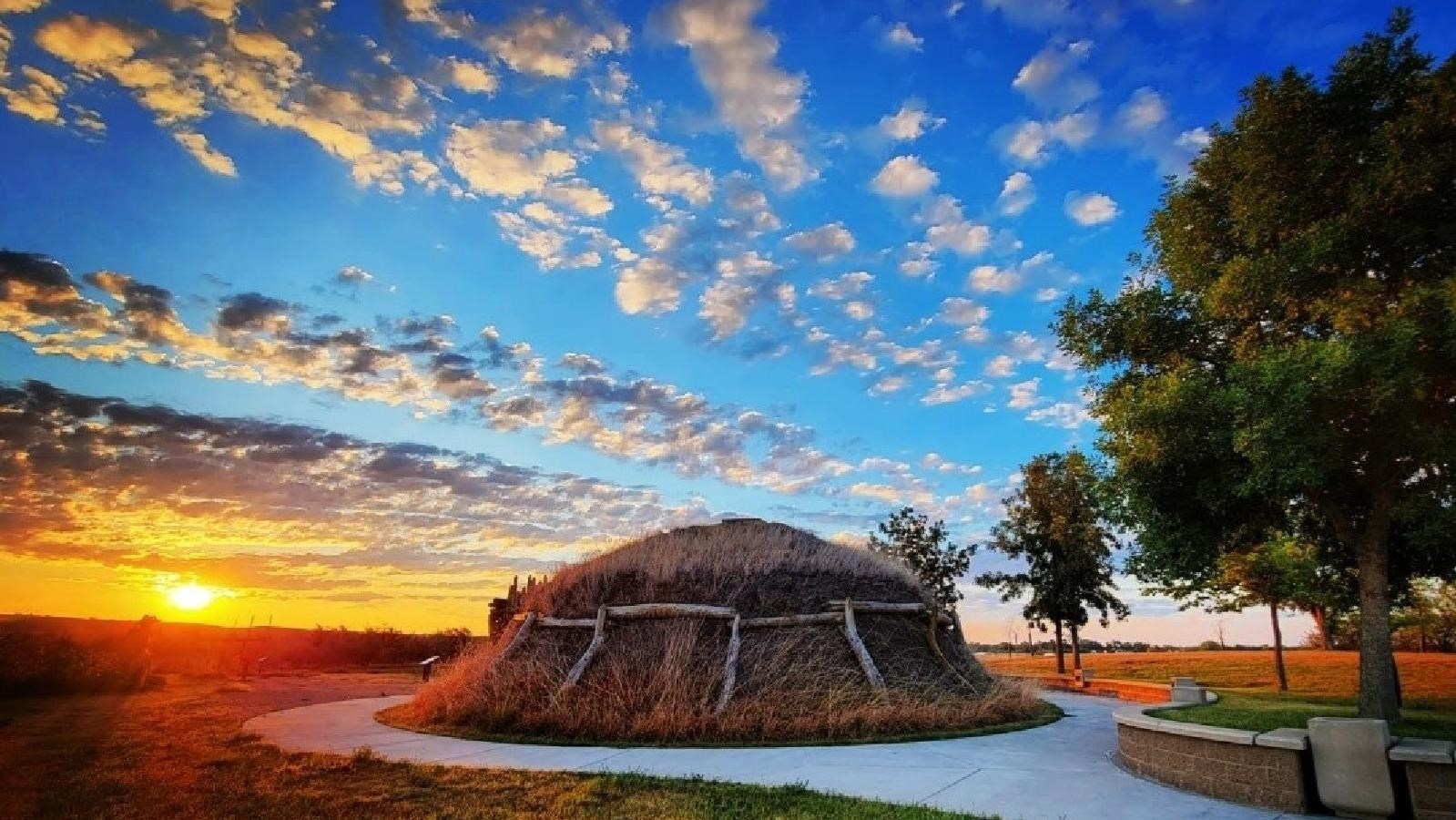
Modern reconstructed Hidatsa earthlodge at Knife River Indian Villages, NPS / Ashley Bargmann. Read the accompanying construction account to identify builders and knowledge; do not infer a historical lesson or transaction from the photograph. No endorsement implied.
Credit construction knowledge without inventing its first inventor
Practice sentence: “The Hidatsa learned how to build earthlodges from the first European visitors.” The NPS construction account instead describes a tradition of innovation and adaptation and explains the role of knowledgeable Hidatsa women in directing construction. It does not support the proposed first lesson from Europeans.
Possible revision: “In the Hidatsa construction practice described by the NPS, an experienced woman supervised the building process.” Students can add a supported detail about posts or roof materials if it serves their purpose. They should not convert a documented building practice into a claim that one named person invented every earthlodge. “Built,” “adapted” and “learned from” answer different historical questions.
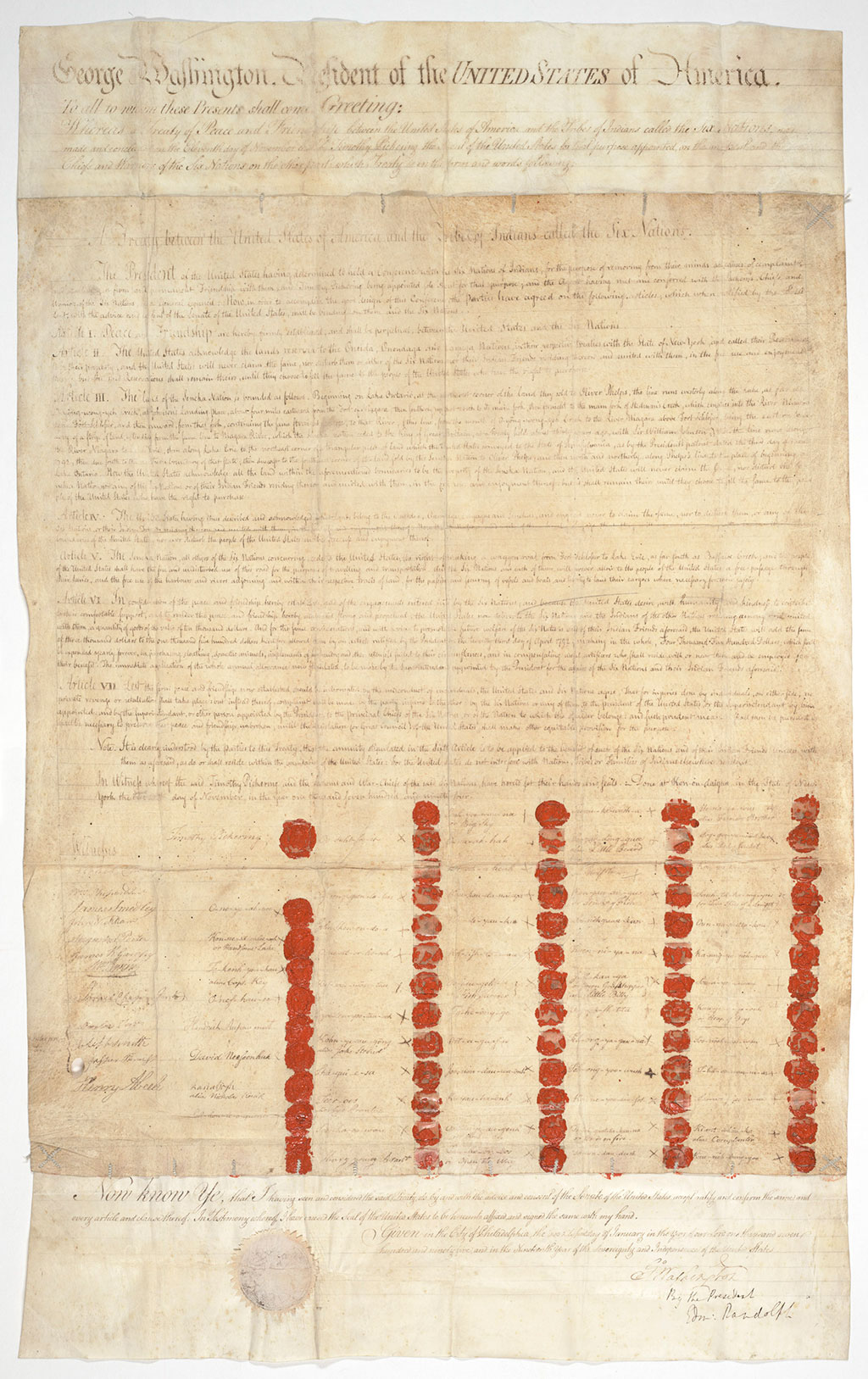
A page of the 1794 Treaty of Canandaigua preserved by the National Archives, General Records of the U.S. Government. This is a reproduction of a written agreement, not a photograph of negotiations or proof of later compliance. No endorsement implied.
Separate a treaty commitment from its implementation
Practice sentence: “The Canandaigua Treaty guaranteed that no later disputes would occur.” Read Article VII in the treaty text reproduced by the Onondaga Nation. It provides a complaint process for injuries caused by individuals and rejects private retaliation. The existence of this procedure is not evidence that no dispute ever happened.
Possible revision: “Article VII of the 1794 Canandaigua Treaty set out a process for complaints about injuries by individuals on either side.” Ask students to distinguish “agreed,” “promised,” “implemented” and “fulfilled.” A treaty clause can support a statement about a commitment; evaluating subsequent conduct requires additional evidence from the relevant period. Do not replace an unsupported universal success claim with an unsupported universal failure claim.
End with a short editorial explanation
Have students submit one revised sentence, its source and a two-sentence note: what the earlier verb implied, and why the evidence supports the new wording. A partner should be able to follow the source trail without guessing. Reward a narrower accurate claim over a confident sentence with an invented origin story.
For extra support, offer a small verb bank with questions: built what, exchanged with whom, named by whom, recorded when, agreed to what, learned from which evidence? Students need not use every verb. The goal is to make historical agency and uncertainty visible, not to decorate prose with stronger action words.
Pick the background reading that serves the edit
The two trade readings overlap; one well-chosen passage may be enough. Diplomacy and technology passages offer different tests of agency and evidence. The original sentence examples and revision routine above are additional teacher-created instruction, not a representation that these tasks appear inside every resource.
Native American Trade Networks Reading Passage and Questions
View this HistoraEDU resource on TPT
Choose this reading as one background option for exchange vocabulary and geographic connections. Use the verb audit here as a separate task, not a claim that the product contains these four examples. Check the evidence and date range for any Celilo Falls chronology you select; different minimum ages in a reading and glossary are not automatically contradictory.
Indigenous Trade Networks Reading Comprehension | North America
View this HistoraEDU resource on TPT
This overlapping trade reading lists Mandan and Hidatsa trade centers among its topics. Choose a relevant passage rather than automatically assigning both trade products. For this lesson, use the NPS evidence below for the sentence about Knife River. Do not generalize the reading’s Southwestern turquoise claim into a settled origin for all Mesoamerican turquoise without separate supporting evidence.
Indigenous Diplomacy and Alliances Reading Comprehension Worksheet
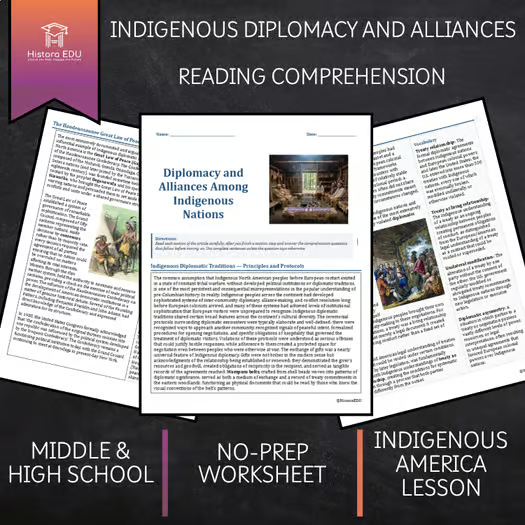
View this HistoraEDU resource on TPT
The current listing describes a PDF access guide linking an editable Google Docs lesson and a separate PDF answer key, with 11 comprehension questions and two extended questions. Question 13 depends on a previous unit reading. Select diplomatic-agreement material and compare it with the specific Canandaigua text; do not repeat categorical counts or universal claims about every treaty as a substitute for that inquiry. The treaty example in this article is historical reading, not advice about present-day legal rights.
Indigenous Innovations Reading Comprehension | Native American History
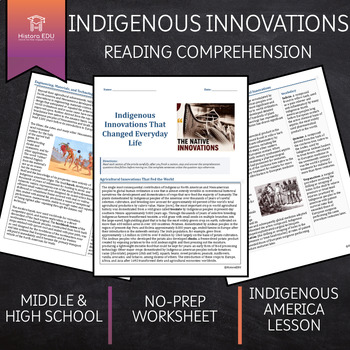
View this HistoraEDU resource on TPT
Use a selected technology passage as a prompt to identify the people, materials and evidence behind a claim. The Hidatsa construction example here comes from the NPS, not a claim about the product’s exact contents. Provide a complete definition if assigning the unfinished raised-field agriculture vocabulary entry. This recommendation does not endorse broad invention rankings, global calorie estimates or medicinal-use claims, and students should not try plant remedies.
Sources and image credits
NPS Hopewell label and early investigations
NPS Knife River park brochure and trading network
NPS Hidatsa earthlodge construction
Onondaga Nation Canandaigua Treaty text especially Article VII
Image record hidatsa-earthlodge
Image record canandaigua-treaty
Product thumbnail reproduced from the exact HistoraEDU listing at the owner’s request. Historical photographs are separate evidence, not product endorsements. The Mound City and earthlodge photographs retain their individual NPS credits. The treaty reproduction is an eighteenth-century public-domain document; its image does not certify compliance or a present-day legal conclusion.
