
By HistoraEDU
A diary assignment can produce fluent writing while quietly rewarding invented history. A student may supply a childhood memory, a ceremony or a private feeling simply because the prompt demands a first-person voice. Replace that task with a short, third-person biography whose claims can be traced to sources. Students still make choices about language and emphasis, but an unanswered question remains unanswered rather than becoming a supposedly authentic experience.
Make the evidence rule visible
Give students three labels before they write: documented, interpreted and not established. A documented claim has a specific source. An interpretation explains evidence and needs language that makes the reasoning visible. A detail that the available sources do not establish cannot enter the paragraph as a fact. These labels describe the evidence available for this assignment, not the limits of everything a community knows.
Use this teacher-created counterexample, clearly marked as invented: “Today I felt proud because every child in my community learns exactly as I do.” It is not a quotation or a reconstruction of a named person’s words. Ask students to underline the unsupported feeling and circle the claim about every child. Changing “I” to “she” would leave both problems intact.
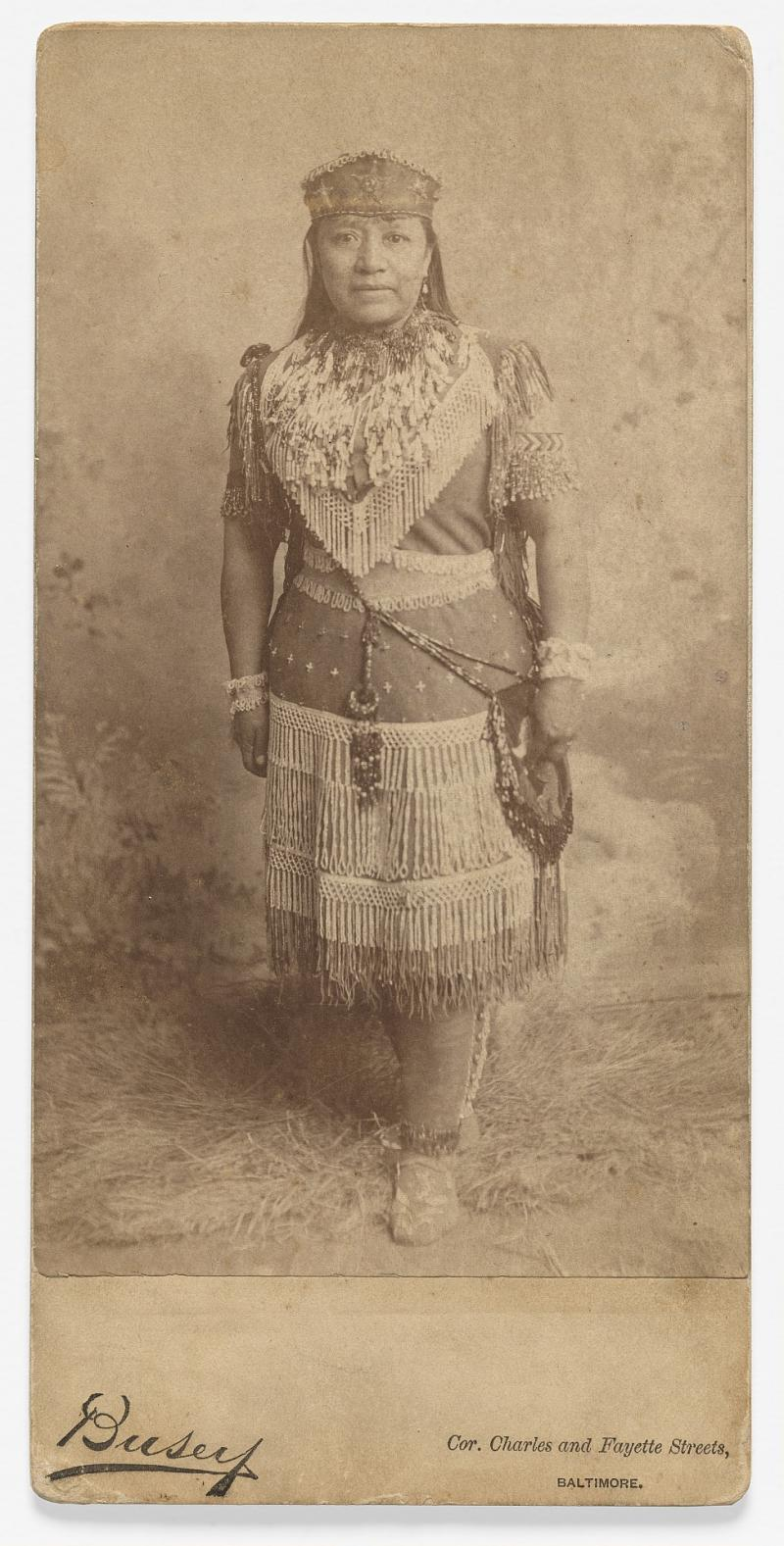
Sarah Winnemucca in an 1883 studio portrait by Norval Hamilton Busey. The NPS identifies the beaded outfit as a nontraditional performance costume; it is not evidence of everyday Paiute clothing or her childhood feelings. National Portrait Gallery, Smithsonian Institution, NPG.82.137. CC0. No endorsement implied.
Write a small biography with a visible source trail
Use Sarah Winnemucca as one named example, not as a stand-in for all Indigenous women or children. The NPS account identifies her as Paiute and describes her work as a writer, advocate and educator. It reports that her independent school taught Paiute children in their language and English without requiring separation from their families. The same account explains that the school closed after three years because financial and outside support were insufficient.
A defensible model sentence is: “According to the National Park Service biography, Sarah Winnemucca established a school for Paiute children that taught in their language and English.” A second sentence can explain the school’s family arrangement or its closure, with the same source attribution. Neither sentence tells us what every child felt on arriving.
Give pairs a short source excerpt and a blank claim log. For each proposed sentence, they record the source title, the relevant passage and whether they are paraphrasing or interpreting. A student who wants to write “her pupils loved every lesson” must locate evidence for that claim or remove it. Do not reward emotional detail merely because it makes the paragraph sound vivid.
Use the portrait as a source with limits
The photograph can anchor a factual caption naming the sitter, photographer and date. It cannot supply her thoughts at the moment of the exposure. Ask students to write one sentence about what the photograph visibly shows and one about what its catalog record establishes. Then have them cross out a claim that neither supports.
If students read an actual autobiographical passage later, identify it as Winnemucca’s retrospective account, with its date and audience. Her own recorded words deserve attribution; they do not authorize students to compose additional first-person testimony in her name. Keep quotations exact and distinguish them from student paraphrase.
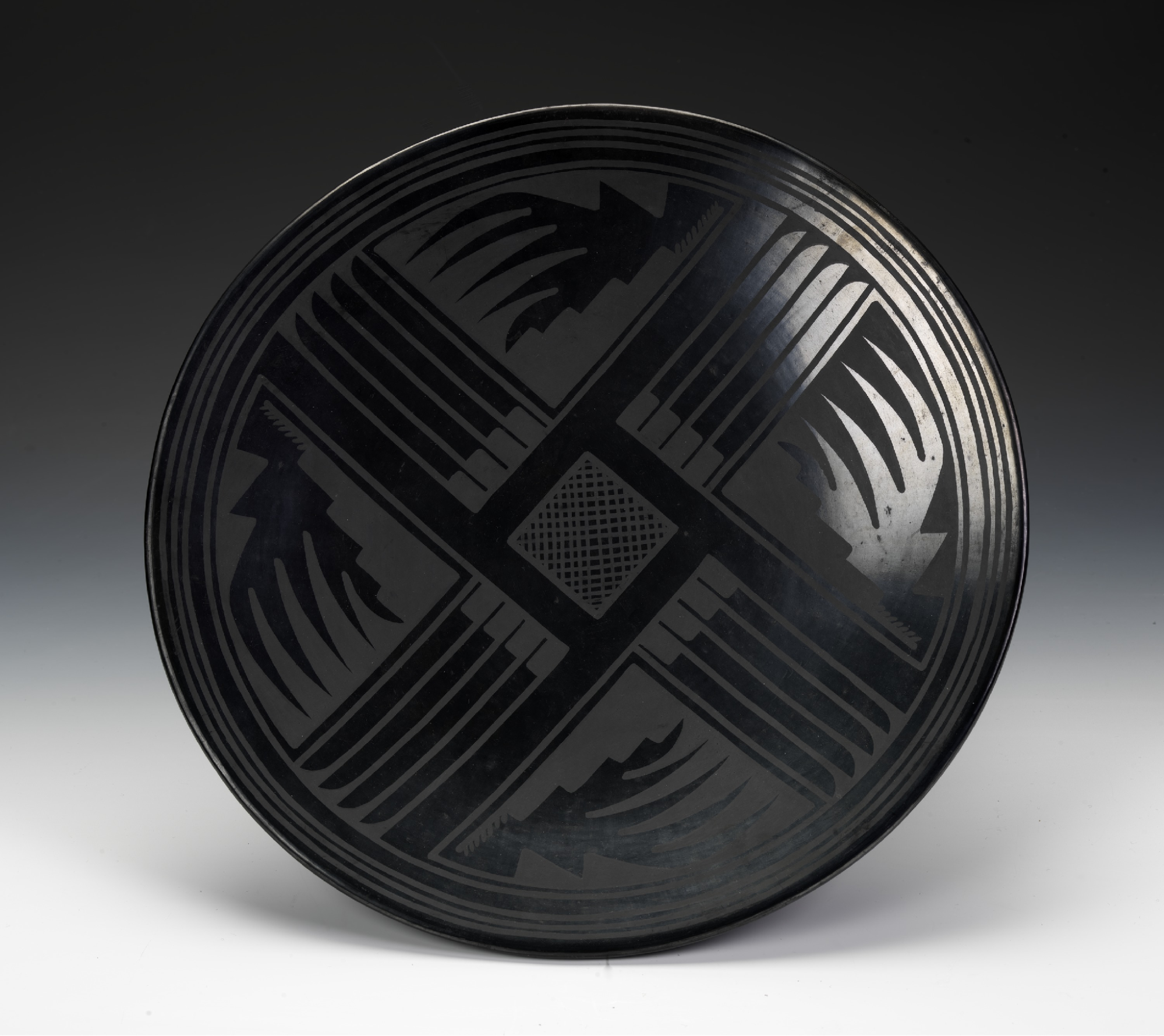
Photograph of a blackware plate by Maria and Julian Martinez, approximately the 1930s. Its museum record supplies named makers and an approximate date, not their private conversation while working. Smithsonian American Art Museum, Gift of International Business Machines Corporation, 1966.27.15. CC0. No endorsement implied.
Practice the same rule with a different kind of record
The Smithsonian identifies Maria and Julian Martinez as the makers of this plate and connects them with San Ildefonso Pueblo. Ask students to draft a two-sentence biographical note limited to that object record. A supported sentence credits both makers; an unsupported one assigns a particular thought, spoken instruction or daily routine to either person.
This is also a check against an easy omission. If a student writes only “Maria made pottery,” ask what that wording leaves out about this particular object’s credited collaboration. Precision does not require a long biography. It requires matching the scope of the sentence to the evidence.
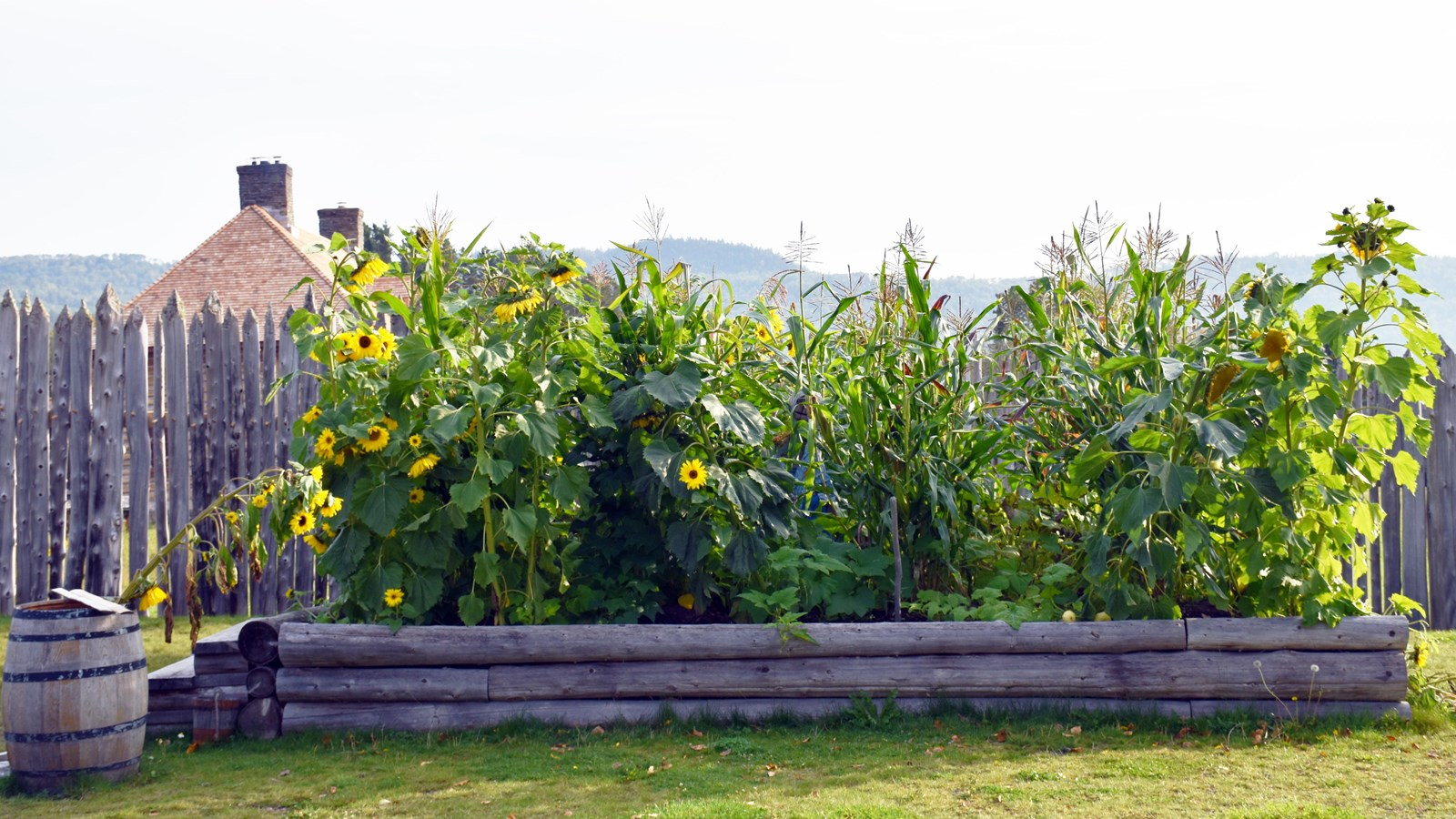
Modern Three Sisters teaching garden at Grand Portage National Monument, photographed by NPS / GM Spoto. This is not Sarah Winnemucca’s school, a portrait of a pupil or a historical photograph of childhood instruction. No endorsement implied.
Do not borrow an unrelated image to fill a gap
The Grand Portage garden supplies a useful editing test. The NPS identifies it as a teaching tool at that site. It does not document a lesson at Winnemucca’s school. Give students the accurate caption, then ask why placing the photograph under “Sarah’s pupils at school” would be misleading even if the paragraph itself contained no invented fact.
Images need the same evidence discipline as prose. Keep a modern site photograph’s date or present-day status visible. Do not use a picture of an unrelated child as if it portrayed the biography’s subject. When the right image is unavailable, a source quotation or a transparent gap is better than a false identification.
Assess the paragraph rather than the performance
For a short lesson, spend five minutes labeling the invented counterexample, ten minutes building the claim log, ten minutes drafting and five minutes checking a partner’s paragraph. Students submit four to six sentences, two source references and one question the available record does not answer. These are suggested timings, not classroom-tested results.
Assess whether the writer identifies a particular person, supports each factual claim, distinguishes interpretation and avoids unsupported private thoughts. A concise accurate paragraph can meet the goal better than an elaborate imagined diary. For additional support, offer sentence starters such as “The catalog identifies” and “This source does not establish.” Never ask an Indigenous student to validate a classmate’s invented experience or speak for a whole community.
Choose a reading for the part of the lesson you need
The resources below can provide selected background reading. The evidence log, model sentences and image-caption check in this article are a separate teacher-designed routine. Read the relevant passage and questions before assigning them, retain the qualifications below and add the specific sources used in the biography.
Indigenous Childhood and Education Reading Comprehension Worksheet
View this HistoraEDU resource on TPT
The current listing offers an editable Google Doc reading with comprehension questions and an answer key about education and cultural continuity. Use a selected passage as background, then add the named evidence sources in this article; it is not a diary or a biography of one child. If using its Carlisle reference, identify Carlisle specifically as the first federal off-reservation Indian boarding school, not the first federal Indian boarding school of any kind. Do not turn descriptions of ceremonies into performance prompts.
Women in Indigenous Societies Reading Comprehension Worksheet
View this HistoraEDU resource on TPT
The listed reading examines women’s roles across several societies. Choose one named example and attach a source for that person instead of turning a general description into an invented life story. The Martinez object record above is an additional source, not a claim that this worksheet contains her biography. Supply a complete ecological-knowledge definition if using that vocabulary, and treat the Dawes Act as a specific policy requiring its own text and context rather than a universal explanation for every woman’s experience.
Indigenous Leaders and Changemakers Biography Reading Comprehension
View this HistoraEDU resource on TPT
The listing identifies Sarah Winnemucca among its featured leaders, making her section a focused starting point for the paragraph-writing task. Check that section against the linked NPS account and keep unsupported feelings out of the student biography. This recommendation is for selected Winnemucca material, not every claim in the reading; do not repeat an assertion that the entire Seventh Cavalry was annihilated at Little Bighorn. The proposed writing exercise here is teacher-created, not an advertised component of the product.
Sources and image credits
NPS Sarah Winnemucca biography and portrait context
Smithsonian Sarah Winnemucca portrait record
Smithsonian Maria and Julian Martinez plate record
NPS Grand Portage teaching garden
Carlisle founding proclamation and off reservation distinction
National Archives Dawes Act text
NPS Reno Benteen Defense Site and surviving Seventh Cavalry forces
Image record three-sisters-garden
Product thumbnail reproduced from the exact HistoraEDU listing at the owner’s request. Historical photographs are separate evidence, not product endorsements. The two Smithsonian images are marked CC0 in their object records. The Grand Portage photograph is credited to NPS / GM Spoto. Keep all identifying captions; these images do not establish a universal Indigenous experience.
