A student can remember that planes carried supplies into Berlin and still struggle to explain why the flights mattered. The missing connection is often between geography, a political decision, and the everyday work needed to carry it out.
Build your Berlin Airlift lesson around a practical question: How could the Western Allies keep their sectors of Berlin supplied without forcing their way through a blockade? Students can follow that problem through a short reading, examine what two photographs establish, and write a conclusion that recognizes both an achievement and an unresolved conflict.
Start with the city before introducing the planes
After World War II, Germany was divided into occupation zones. Berlin lay within the Soviet zone, but the city itself had separate American, British, French, and Soviet sectors. That distinction explains the supply problem. Western control of part of Berlin did not give the Western Allies control of all the territory surrounding it.
On June 24, 1948, Soviet authorities blocked the main road, rail, and water connections to the Western sectors. The crisis developed amid disagreements about Germany’s future and currency reform. Agreed air corridors remained available, and U.S. supply flights began on June 26. Britain also took part in the airlift. These details establish the lesson’s geographical and political setting. Office of the Historian background.
Before reading further, have students sketch a large rectangle labeled “Soviet occupation zone” and a smaller divided city inside it. Label the sketch “schematic, not to scale.” Ask: “Why might a city’s political boundaries create a transport problem?” A rough diagram is sufficient if students can explain the relationship.
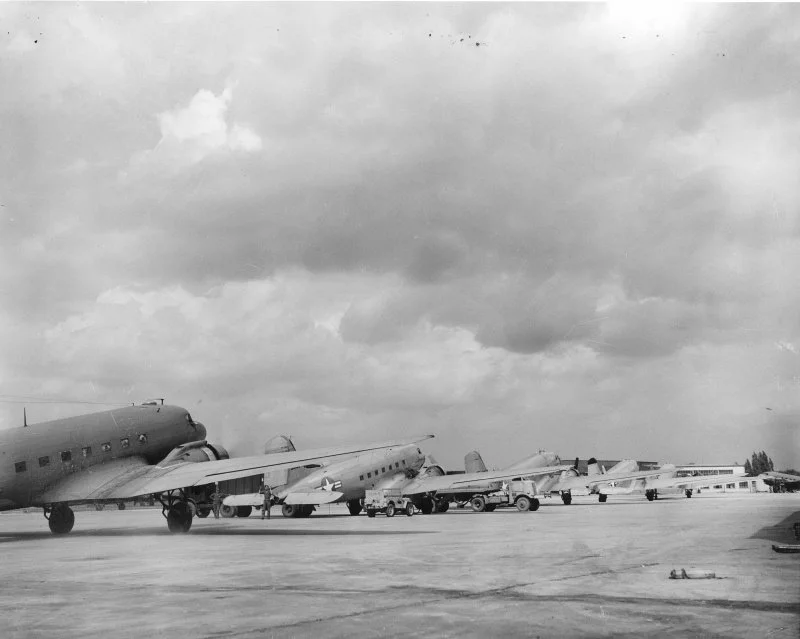
C-47 aircraft waiting for takeoff at Wiesbaden, August 18, 1948. Photograph: Byers, Joint Export Import Agency; Harry S. Truman Library & Museum, 71-3987. Public domain. Archive record.
Turn the reading into a chain of explanations
Give students three prompts rather than asking them to retell everything at once:
What problem did the blockade create?
How did the airlift respond to that problem?
What would have to keep working for the response to last?
For each answer, ask students to identify a supporting passage before writing. Then require a connecting word such as “because,” “therefore,” or “while.” The aim is to move from a list of events to a relationship between them.
Pause over the third question. A plane’s arrival depends on work before and after the flight. Invite students to identify loaders, mechanics, pilots, and scheduling teams in the reading. Have pairs explain how one role supports another. This keeps the operation from shrinking into a story about a single heroic flight.
Let photographs answer a limited question well
The two photographs in the HistoraEDU lesson were made at Wiesbaden on August 18, 1948, rather than in Berlin. One records loading work; the other shows aircraft prepared for the airlift. Both are credited to Byers and the same agency. Their different subjects do not make them independent viewpoints. Loading photograph record; aircraft photograph record.
Begin with the question, “What work can we investigate here?” Give students a quiet minute to note visible details, then reveal or read the captions. Keep three categories on the board: what the image shows, what the archive supplies, and what the student infers.
For example, students can describe cargo being handled at an aircraft doorway. Wiesbaden and the date come from the record. Connecting the scene to a supply operation requires that context. If a student names the contents of a container without evidence, ask which part of the source supports that identification.
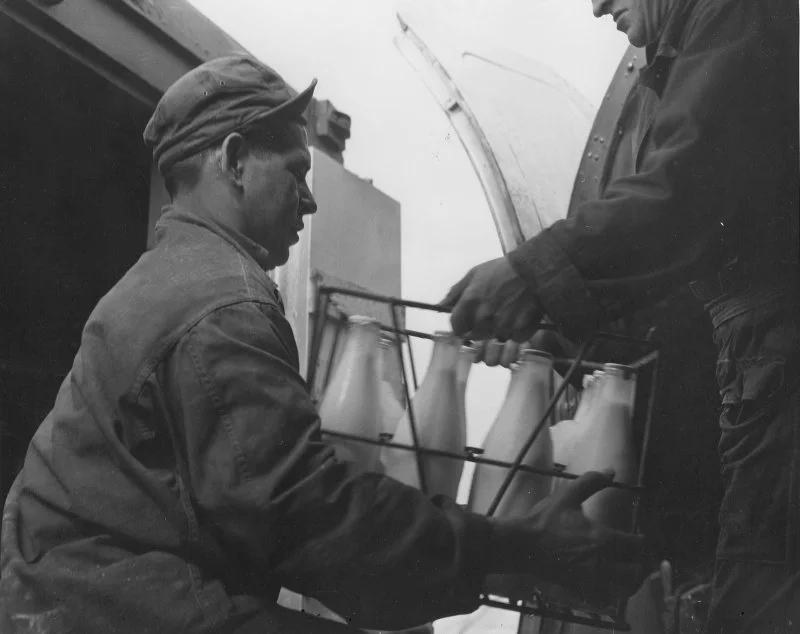
Supplies being loaded into an aircraft at Wiesbaden, August 18, 1948. Photograph: Byers, Joint Export Import Agency; Harry S. Truman Library & Museum, 71-3984. Public domain. Archive record.
Ask what would count as success
Now offer a claim for students to test: “These photographs prove that the entire airlift succeeded.” Ask them to underline the part that goes beyond the available evidence.
A thoughtful answer should identify the mismatch in scale. Two scenes cannot establish the total supplies delivered over many months or whether those deliveries met civilian needs. Invite students to propose another record and explain its purpose. Delivery totals would help investigate quantities; records of need would provide something to compare them with. A civilian account could add an experience that an aircraft photograph leaves out.
For an optional primary-source extension, introduce the May 5, 1949 four-power communiqué. It set May 12 for removing specified restrictions and proposed a further meeting about Germany and Berlin. Ask: “Which immediate problem did the agreement address? What questions still required discussion?”
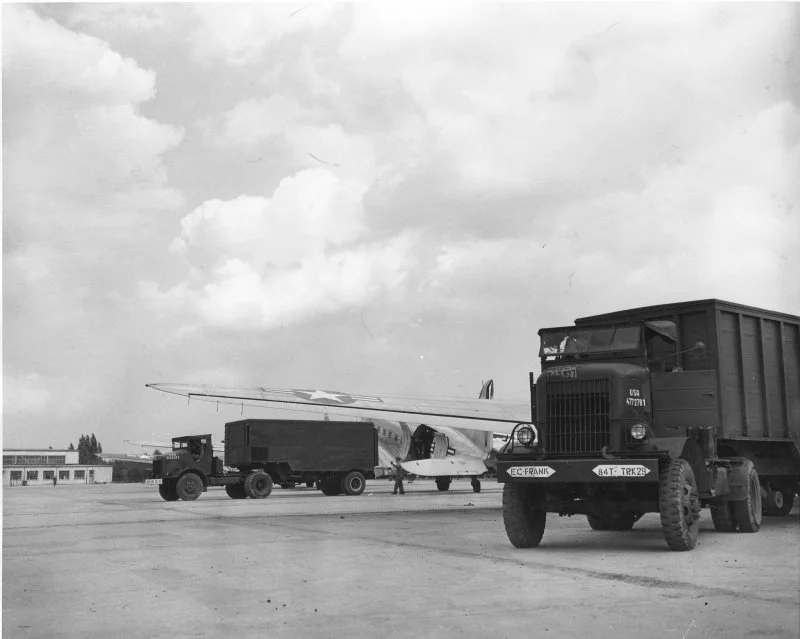
Trucks bringing supplies to aircraft at Wiesbaden, August 18, 1948. Photograph: Byers, Joint Export Import Agency; Harry S. Truman Library & Museum, 71-3986. Public domain. Archive record.
Support the explanation without giving away the judgment
Read the passage in short sections, offer partner rehearsal, and keep “blockade,” “airlift,” and “reserves” attached to concrete examples. Students who need support can use: “The section ___ explains ___. This matters because ___.”
For a stretch, ask students to compare two proposed sources. Which would better answer their question, and what limitation would remain? More sophisticated work can come from better source selection rather than more pages of reading.
Finish with an achievement and a limit
Use an exit ticket that asks students to explain how the airlift supported the Western position in Berlin while wider rivalry continued. Require a reading detail, a visible photographic detail, and one sentence explaining what the photograph cannot establish. Look for the connection between evidence and claim, rather than a particular model sentence.
If you want the reading and student questions together, HistoraEDU’s Berlin Airlift reading and primary-source evidence lesson includes a sectioned background reading, two archival photographs, vocabulary and cause-and-effect practice, and a separate teacher guide and answer key. The reading is a modern secondary account; the photographs are the historical primary sources. Use the full sequence or select the core reading and evidence questions for your class.