
By HistoraEDU
The class remembers the name, earns the point and moves on. Then an essay asks why the event mattered, and the answer becomes “because it was important.” Keep the retrieval practice, but add one short significance question after a selected answer. Students should explain a change, identify its reach and support a lasting consequence—not merely repeat that an event is famous.
Give significance three handles
Write change, reach and lasting consequence where students can see them. Change asks what became different. Reach asks which people, places or institutions were affected, and how their experiences differed. Lasting consequence asks what continued to matter later and what evidence connects it to the event. These are prompts for explanation, not three numbers to add into a universal importance score.
Choose one already-taught event for the first attempt. Give students a short source excerpt and ask for two sentences: one explains the change; the second identifies a consequence or a limit. A reasonable claim needs a named subject and a specific effect. “It changed everything for everyone” does neither.

Modern photograph of Independence Hall in Philadelphia, dated between 1980 and 2006. The site connects to the Declaration and Constitution, but this photograph does not show either eighteenth-century meeting. Credit: Carol M. Highsmith, LC-DIG-highsm-15403. The Library of Congress, Carol M. Highsmith Archive. Public domain.
Model the step beyond naming an amendment
Start with the retrieval answer “the Thirteenth Amendment.” Then supply its two sections and the ratification date, December 6, 1865, from the National Archives. Ask what changed constitutionally, whom that change concerned and what the text does not establish about daily life.
A model response: “Ratification made abolition a constitutional rule across the United States and places subject to its jurisdiction, rather than a measure limited to the rebelling areas addressed by the Emancipation Proclamation. The amendment prohibits slavery and involuntary servitude while retaining its exception for punishment for crime after due conviction.”
Follow with a reach-and-limit sentence: “This was a fundamental change for people held in slavery, but the text alone does not demonstrate that discrimination ended or that every person could exercise equal political rights.” Section 2 gives Congress enforcement power; that is a constitutional provision, not evidence that enforcement was automatic or complete.
Have students underline the phrase in the source supporting each clause of their answer. If a sentence claims an economic or social consequence not established by the amendment, ask for another source. Explaining significance does not mean making the largest possible claim.
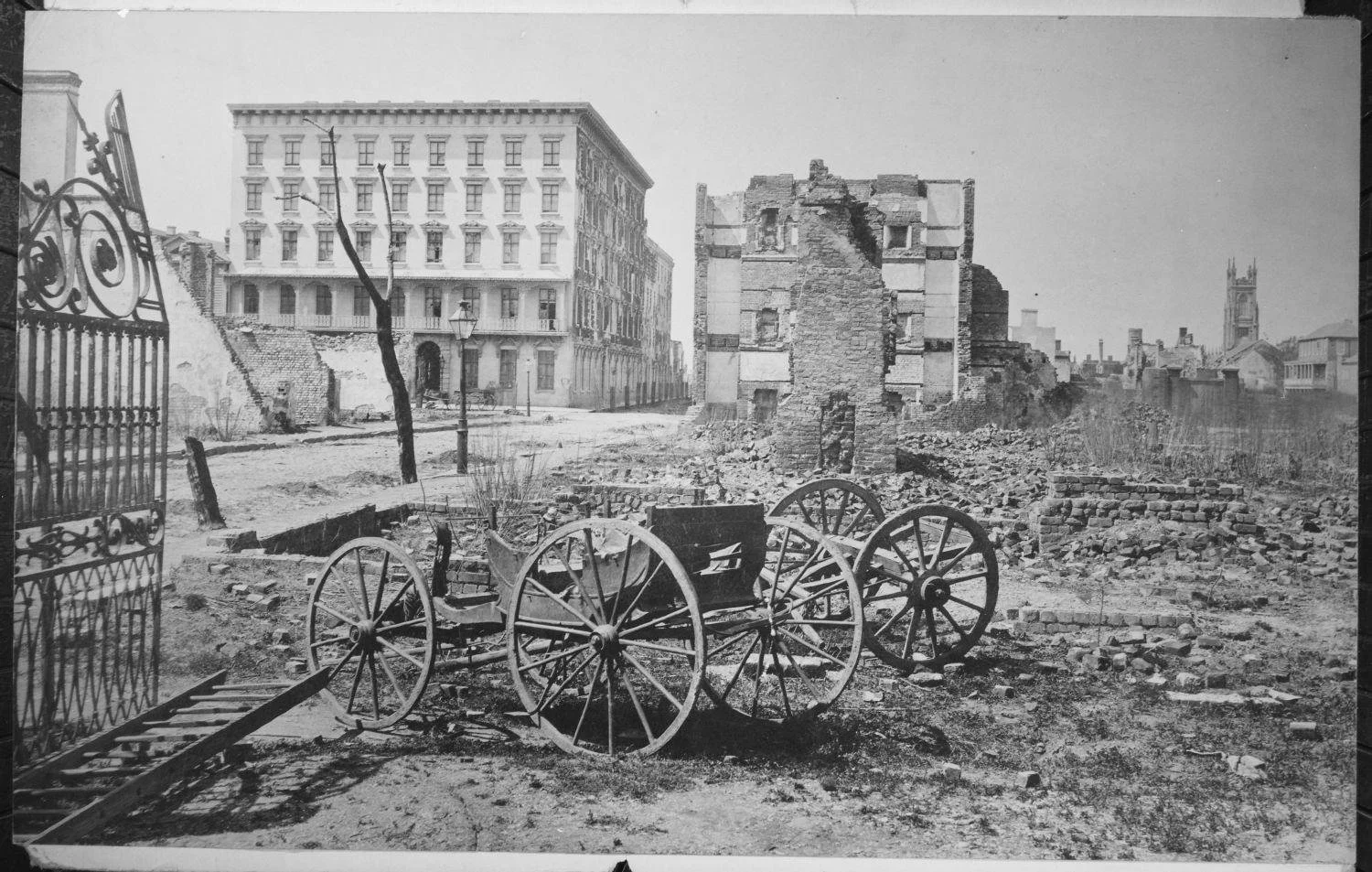
Mills House and nearby damage in Charleston, South Carolina, photographed in 1865. The photograph records a place at the end of the Civil War; it does not document all of Reconstruction. Credit: National Archives, NAID 533131. George N. Barnard. Public domain.
Compare kinds of change rather than rank suffering
Use the 1865 Charleston photograph to ask a different question: What physical rebuilding might this place require? Students can point to visible damage. Then ask whether the photograph, by itself, establishes the scope of the amendment or the rights people actually exercised. It does not. Physical rebuilding and constitutional transformation are connected historical inquiries, but they require different evidence.
Now contrast the purpose of the Declaration of Independence with that of the Thirteenth Amendment. The Declaration argues for political separation; the amendment changes the Constitution’s rule on slavery and involuntary servitude. Students should not say that both documents accomplished the same kind of freedom for everyone. Use the actual texts to specify the difference.
A modern historic-site photograph has another role. It can show a surviving place people interpret today, but a striking building or familiar landmark is not sufficient evidence of historical significance. Ask which past action or process makes the place relevant to the question, then identify the source that supports that connection.
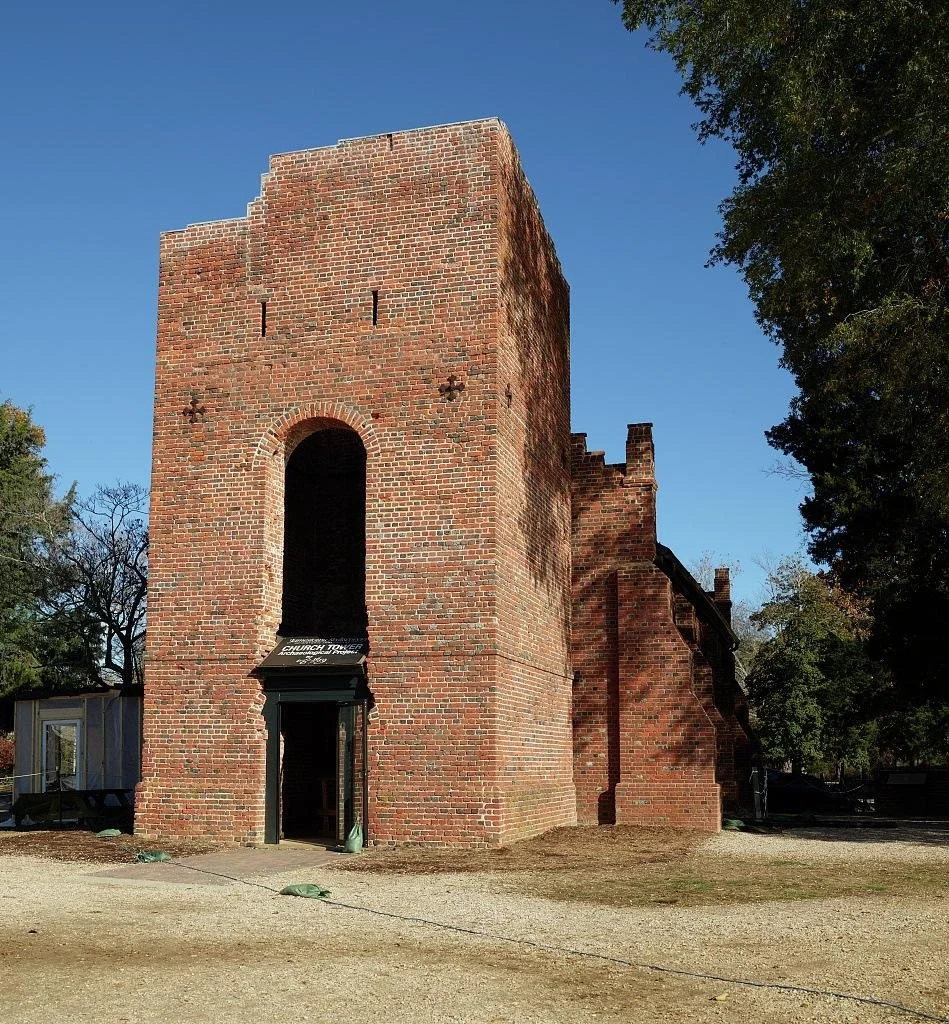
Modern photograph of the surviving church tower at Historic Jamestowne, taken November 24, 2019. This is a present-day view of a colonial site, not a photograph of the 1607 settlement. Credit: Carol M. Highsmith, LC-DIG-highsm-61496. The Library of Congress, Carol M. Highsmith Archive. Public domain.
Add one era-specific question to the game you are using
These are original teacher-added follow-ups, not a claim that the nine games contain these exact questions. Select a prompt that matches content already taught and provide a source when the answer requires more than recall.
Exploration: After identifying a voyage or navigational development, what changed in a particular route or connection, and whose perspective would be missing from an explorer-only account?
Colonization: After naming a colonial settlement, what changed in control of land or labor, and what evidence shows an effect on a named Indigenous community rather than treating all communities alike?
Thirteen Colonies: After identifying a regional economic activity, how did it shape work or trade in one colony, and why would the same explanation not fit every colony?
American Revolution: After identifying the Declaration, what political relationship did it claim to change, and what evidence would be needed to assess how different groups experienced the Revolution?
New Nation: After naming an early presidential decision, what problem did it address and what precedent or unresolved dispute followed? Specify the decision instead of praising a leader in general.
Government and Constitution: After identifying a branch or constitutional power, how does a particular clause distribute authority, and what would a different allocation change? Keep the answer tied to the document.
Manifest Destiny: After identifying an expansion policy or territorial acquisition, whose access to land or political power changed? Compare the claimed benefit with a documented consequence for a named affected community.
Civil War: After identifying an emancipation measure, what was its stated scope, and why does that scope matter when explaining its consequences? Do not collapse every measure into immediate universal freedom.
Reconstruction: After naming an amendment, distinguish its constitutional provision from evidence about implementation. What later source would show whether a particular protection was exercised or obstructed?
Listen for an explanation that earns its claim
For the debrief, use three checks: a specific change, a named affected group or institution, and a source-supported consequence or limit. A student can give a strong answer without addressing all of American history. For support, offer a sentence frame: “This mattered for ___ because ___; the evidence does not yet show ___.”
If you add an explanation point, record it yourself rather than assuming the digital game scores historical significance. Keep ordinary game points separate from the quality of the written explanation. Finish by collecting one revised answer; that tells you more about this goal than which team finished first.
Choose the individual era game that fits your lesson. The nine resources below are different topical options, not nine rounds to complete at once. Check existing bundle ownership before buying an individual game you may already have.
European Exploration Review Game | Age of Exploration Trivia | Test Prep

View this HistoraEDU resource on TPT
Use its exploration topic as the retrieval round, then add the route-and-perspective significance prompt above with your chosen source.
European Colonization Review Game | Social Studies | Interactive Test Prep
View this HistoraEDU resource on TPT
Use for colonization recall, then investigate a specific land or labor consequence with evidence for the named place and community.
13 Colonies Review Game | Interactive Test Prep | English Colonies
View this HistoraEDU resource on TPT
Use for colonial-region content, followed by an explanation of one economic relationship rather than a claim about every colony.
American Revolution Review Game | Social Studies | Interactive Test Prep Trivia

View this HistoraEDU resource on TPT
Use for Revolution recall, then ask how a particular document or event changed a political relationship. Supply the primary text for the follow-up.
The New Nation Review Game | Founding Fathers | Test Prep Trivia

View this HistoraEDU resource on TPT
Use for early-republic topics; attach the decision-and-precedent question to one event your class has studied.
U.S. Government & Constitution Review Game | Interactive Test Prep | Trivia

View this HistoraEDU resource on TPT
Use for government structure and constitutional concepts. Ask students to explain the significance of an actual clause rather than merely name a branch.
Manifest Destiny Review Game | Social Studies | Interactive Test Prep Trivia

View this HistoraEDU resource on TPT
Use for expansion topics, then compare a policy’s stated purpose with a sourced consequence for an affected community.
Civil War Review Game | Social Studies | Interactive Test Prep Trivia

View this HistoraEDU resource on TPT
Use for Civil War content, followed by a precise scope-and-consequence question about an emancipation measure already taught.
Reconstruction Review Game | Social Studies | Interactive Test Prep Trivia
View this HistoraEDU resource on TPT
Use for Reconstruction recall, then apply the provision-versus-implementation significance question. The worked Thirteenth Amendment routine above is a teacher addition.
Sources and image credits
National Archives Thirteenth Amendment text and ratification
National Archives Declaration of Independence transcript
National Archives Constitution transcript
Image record independence-hall
Product thumbnail reproduced from the exact HistoraEDU listing at the owner’s request. Historical photographs are separate evidence, not product endorsements.
