
By HistoraEDU
A history-themed choice can sound simple to a teacher and feel like a secret knowledge test to a new student. “Would you rather…” is not equally accessible if one option contains three unfamiliar names. Before the first choice, build a little common ground: a date, a place, three useful facts and a few plain-language definitions. Then listen for how students use the information, not how much background they brought through the door.
Audit the knowledge hidden inside a prompt
Choose one prompt from the game you intend to use and read every option aloud to yourself. Underline names, period labels, technologies and assumptions that a student must understand to give a reason. Mark each as essential now, explainable in one sentence, or unnecessary for this opening activity.
For example, “locomotive,” “telegraph” and “Promontory Summit” are not interchangeable with “train,” “message” and “somewhere out west.” A tiny glossary can make those differences available without turning an icebreaker into a lecture. Do not infer that a student who asks about a word lacks historical ability.
The worked prompt below is an original teacher-created example, not a quotation from any purchased game. Use it as a model for preparing a context card for a prompt you have checked in your own copy.
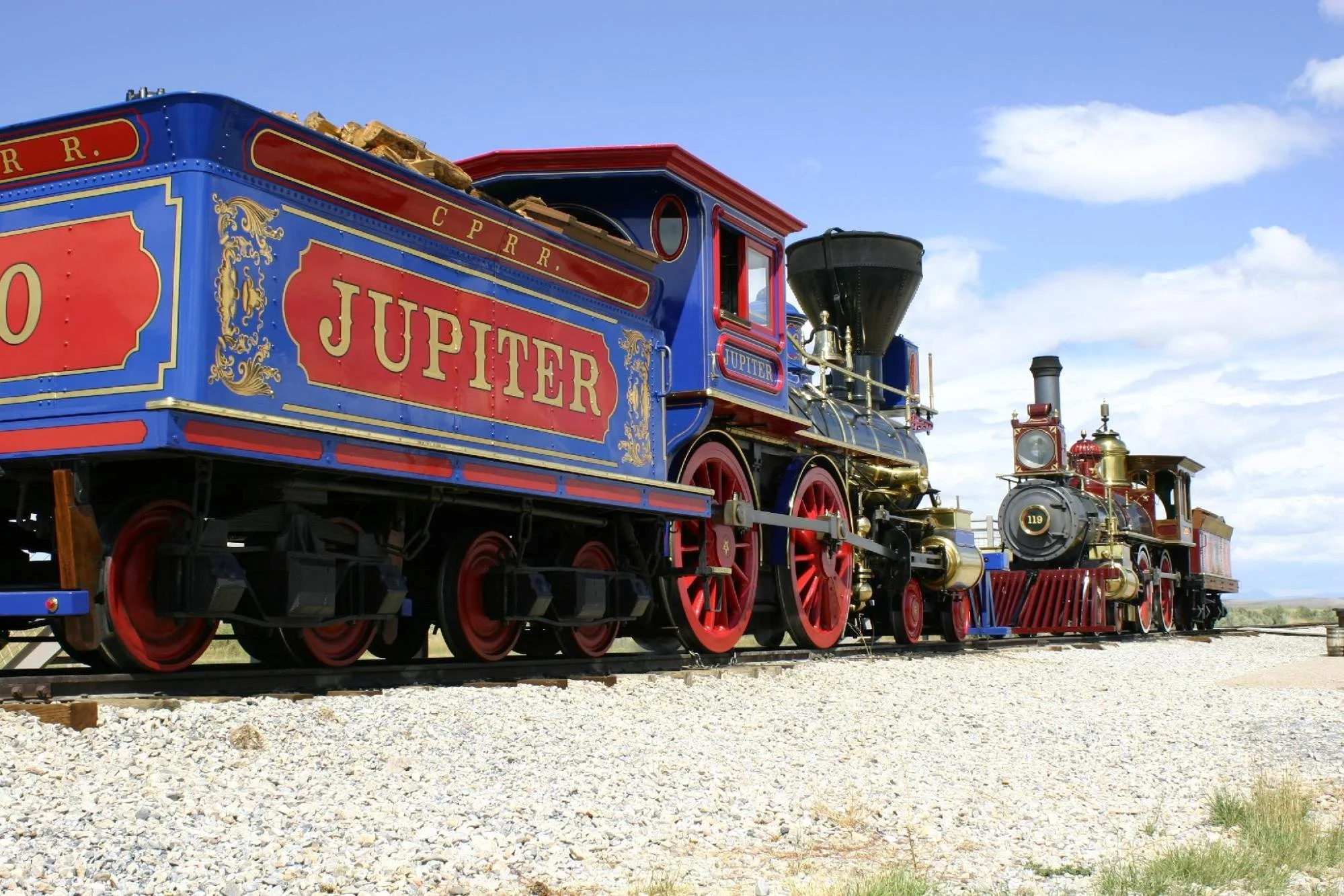
Modern photograph of replica locomotives at Golden Spike National Historical Park, not an image of the 1869 ceremony. Credit: NPS Photo. No claim to original U.S. Government works; no institutional endorsement.
Offer one low-stakes historical travel question
Original prompt: “If you could observe one part of the railroad gathering at Promontory Summit on May 10, 1869, what would you investigate first: the locomotives, the message announcing completion, the constructed route, or the people gathered there? What would you want to find out?”
This is a choice of inquiry, not a test of whether a student would survive the past. Do not assign students identities or imply that everyone in 1869 had equal freedom, resources or access to travel. The imagined visit is a framing device; the facts on the card must still be historical.
Ask for an initial one-sentence reason, then offer the same context card to everyone. The aim is not to catch an uninformed answer. It is to show what a modest amount of shared information makes possible.
Build a small context card with an honest gap
Setting: Promontory Summit, in present-day Utah, May 10, 1869. Fact 1: The Central Pacific and Union Pacific railroad lines met there in the completion ceremony. Fact 2: A telegraph message announced completion. Fact 3: The locomotives associated with the ceremony were Jupiter and No. 119. These facts are supported by the National Park Service accounts linked below.
Tiny glossary: A locomotive is the engine that pulls a train. A telegraph sends messages by electrical signals. A railroad grade is the prepared route on which track is laid. Invite a student to restate one definition rather than requiring them to copy all three.
Unresolved detail: This short card does not establish what every person present thought about the railroad. An individual’s response would require evidence connected to that person, not a guess based on a crowd photograph. Keep that gap on the card rather than supplying an invented diary quotation.
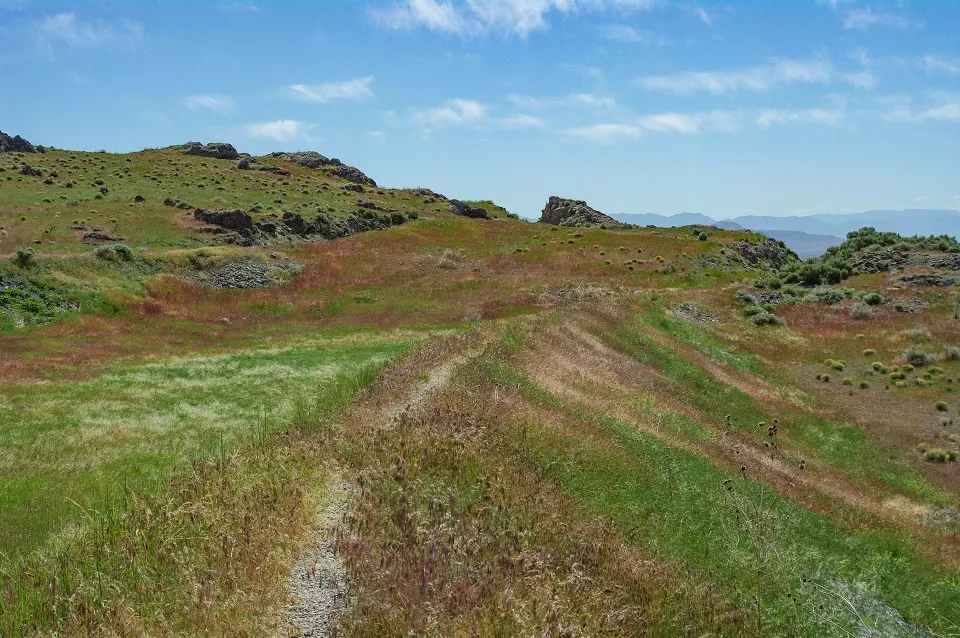
Modern view of the Big Fill Trail at Golden Spike. The NPS describes the trail as following original railroad grades. This is not a photograph of workers constructing the line in 1869. Credit: NPS Photo. No claim to original U.S. Government works; no institutional endorsement.
Compare the explanations rather than score the choices
After the card, ask students to keep or change their inquiry choice and underline one detail that now helps explain it. A useful change might be from “I like trains” to “I would investigate how the two named locomotives were used in the ceremony.” Keeping the same choice with a clearer question is equally useful.
Use a simple record: initial reason, information used, revised question. Do not award a point for switching answers or interpret staying with an option as resistance to learning. You are noticing whether the shared information entered the explanation.
The modern trail photograph gives the “constructed route” option something concrete to refer to. Ask what the landscape makes students curious about, while keeping unanswered construction questions as questions. The image does not provide a timetable or tell us what any particular traveler saw.
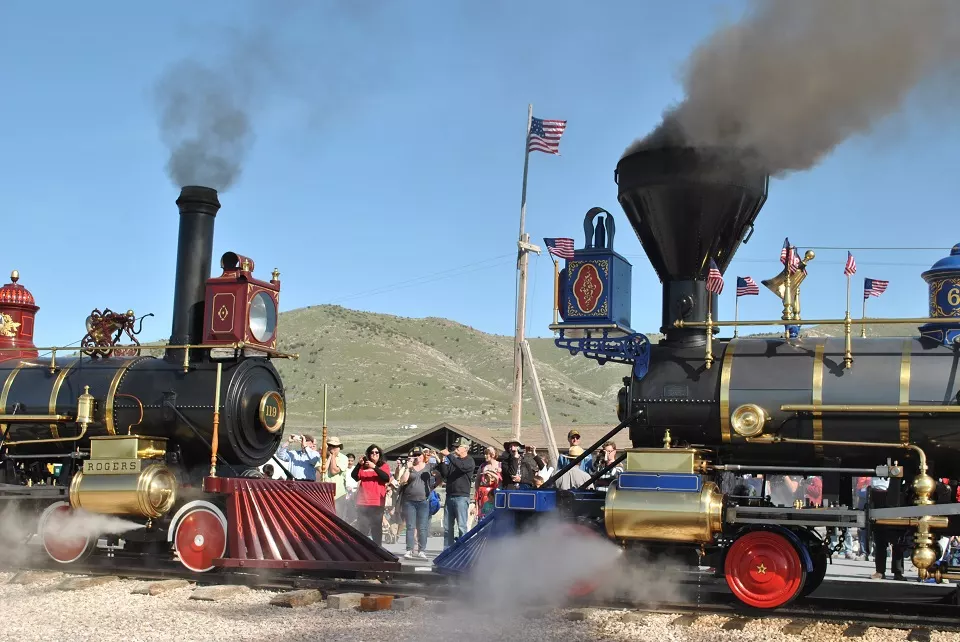
The 150th-anniversary gathering at Golden Spike on May 10, 2019. This is a modern commemoration, not the 1869 crowd. Credit: NPS Photo. Editorial historical comparison only; no participant endorsement of HistoraEDU or its resources.
Check the image date as carefully as the words
Show the 2019 caption before using the commemoration photograph. Ask: “Would this image tell us who attended in 1869?” The answer is no, even though both gatherings concern the same event. A context card must not quietly turn a modern photograph into historical evidence for a different crowd.
When adapting this approach to your selected game, include only the background needed for the actual choice. If a prompt depends on traumatic circumstances, choose a different low-stakes opening rather than asking students to perform suffering or prove their survival instincts.
A preference game can start a conversation about interests. It should not diagnose a fixed learning style or establish a student’s historical ability. The before-and-after explanation is a planning clue for the teacher, not a validated assessment. Choose one game or its containing bundle; the bundle is not an additional set of three different activities.
Back to School History Games Bundle | 3 Social Studies Get to Know Activities
View this HistoraEDU resource on TPT
Contains the three individual games below. Choose this route if you want those formats together; do not count the bundle and its included games as separate activities.
Would You Survive the Past? History Game | Back to School Social Studies

View this HistoraEDU resource on TPT
The listing describes historical decision scenarios and display slides. Preview a selected prompt and add only the factual context it needs. The Golden Spike example above is a separate teacher-created model, not an included game scenario.
History Hot Takes Four Corners Game | Back to School Social Studies Activity
View this HistoraEDU resource on TPT
The listing describes history-themed opinion and would-you-rather prompts. Audit unfamiliar terms in your chosen prompt before discussion so that making a choice does not depend on unstated background knowledge.
What Kind of History Student Are You? | Back to School Four Corners Game
View this HistoraEDU resource on TPT
Use its interest-based questions for conversation after clarifying unfamiliar references. Treat any result playfully, not as a validated learning-style label or a score of historical knowledge.
Sources and image credits
NPS Golden Spike history and modern site interpretation
NPS Andrew J Russell and the May 10 1869 gathering
Product thumbnail reproduced from the exact HistoraEDU listing at the owner’s request. Historical photographs are separate evidence, not product endorsements.
