
The moment a class sees the most popular answer, the task changes. Learners now have information about other people’s choices as well as the question itself. That information may be useful for a conversation. It also makes a later vote harder to interpret as evidence of what discussion alone accomplished. Decide what you want the display to do before you reveal it.

What the display adds
Perez and colleagues studied an introductory biology course using a crossover arrangement: class-response graphs were displayed before discussion for some questions and withheld for others, with the arrangement reversed across sections. Seeing the distribution was associated with more switching from a less common response to the most common response. The measured outcome was answer movement after discussion, not a transcript-based diagnosis of each student’s motive or a test of lasting understanding. [1]
That distinction prevents two mistakes. A popular answer need not be justified by good reasoning, and a learner who changes an answer need not be mindlessly conforming. The researchers also discuss circumstances in which a divided distribution could start a useful conversation. Their study is a reason to use the display deliberately, not a universal ban on showing results.
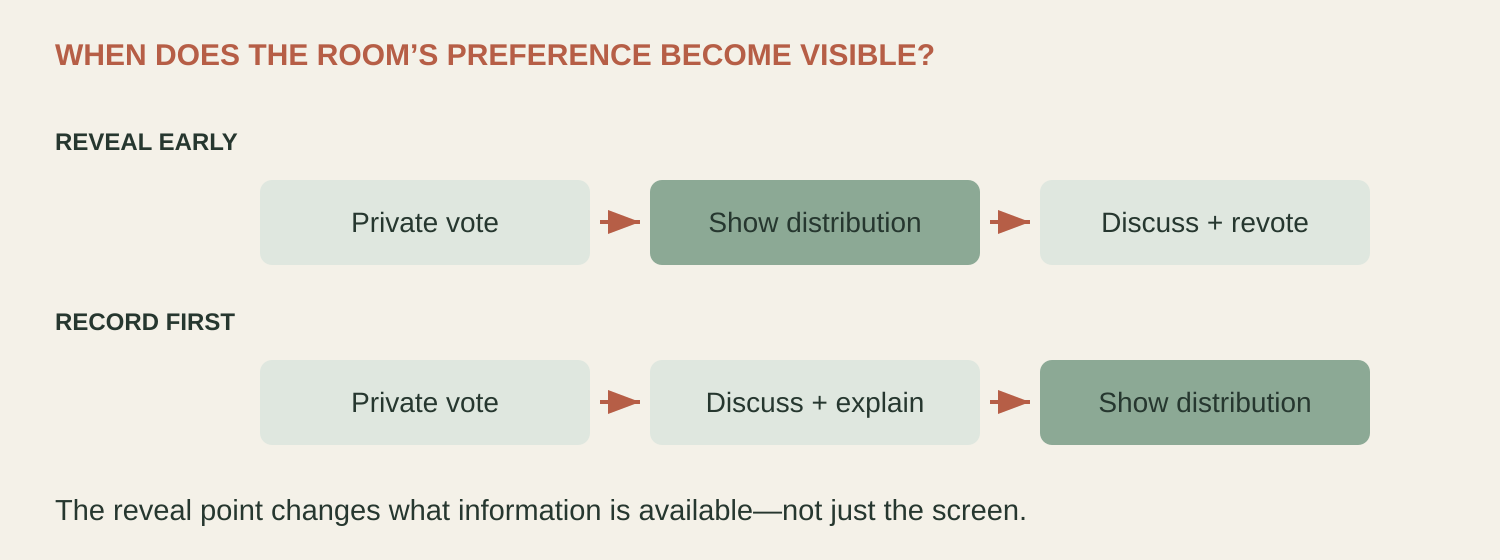
Figure 1. The two sequences introduce the same public information at different moments. They are design options, not a claim that one procedure always wins.
Separate a discussion aid from a learning measure
A display can make disagreement visible. It can also signal that one option has social support. If your immediate purpose is to invite explanations, you may decide that seeing the disagreement is worth that added information. Say what the graph represents: choices, not a worked justification. Ask for evidence supporting competing options before announcing which answer is correct.
If your purpose is to examine each learner’s reasoning before the room’s preference is known, collect that reasoning first. Keep the screen on the question rather than the results. A private response is not a guarantee of unaffected thinking—nearby speech and teacher cues still matter—but it preserves one useful record before the aggregate cue appears.
Do not turn this into a polling-platform shopping decision. A paper response card, an online poll and a clicker can all reveal or conceal a distribution. The relevant design question is when learners receive that information.
A fictional timing decision
Imagine a teacher discussing a plant-growth investigation. Learners must decide whether the observations justify a causal conclusion. The class has already studied the importance of a fair comparison. This is an original fictional planning scenario, not a reproduction of the study’s items or a report of classroom results.
In the first version, the teacher shows the class distribution immediately after the private vote. Learners see which answer is most popular, discuss the investigation and vote again. If more learners choose that answer, the teacher now has evidence of convergence. The record alone does not separate an improved explanation from a decision to follow the visible favorite.
In the second version, the teacher keeps the distribution hidden while partners identify what was compared and what else could explain the observations. Each learner then submits a choice and a one-sentence reason. Only afterward does the teacher reveal the distribution and explain the causal issue. The teacher has preserved a reasoned response before adding the whole-class cue, but has not eliminated every source of influence.
Neither version licenses a claim about learning from a vote count alone. The second is a practical option when independent reasoning is the priority; the first can be useful when the distribution itself is an object for discussion. Choose on purpose, and name the tradeoff.

Record a reason before revealing the room
Use a short prompt that asks for a connection: “Which feature of the comparison supports your conclusion?” That is more informative than “Are you sure?” Collect the response before displaying the aggregate if you want to preserve a record from that point in the sequence. Do not tell learners the vote is private if names or choices are visible to classmates.
After revealing the distribution, invite revision without treating revision as failure. Ask learners to mark what changed in their explanation: a piece of evidence, a relationship between facts, or recognition of an unanswered question. Leave room for “my choice stayed the same, but my reason changed.” This revision note is an original teaching suggestion, not an outcome measure validated by the study.
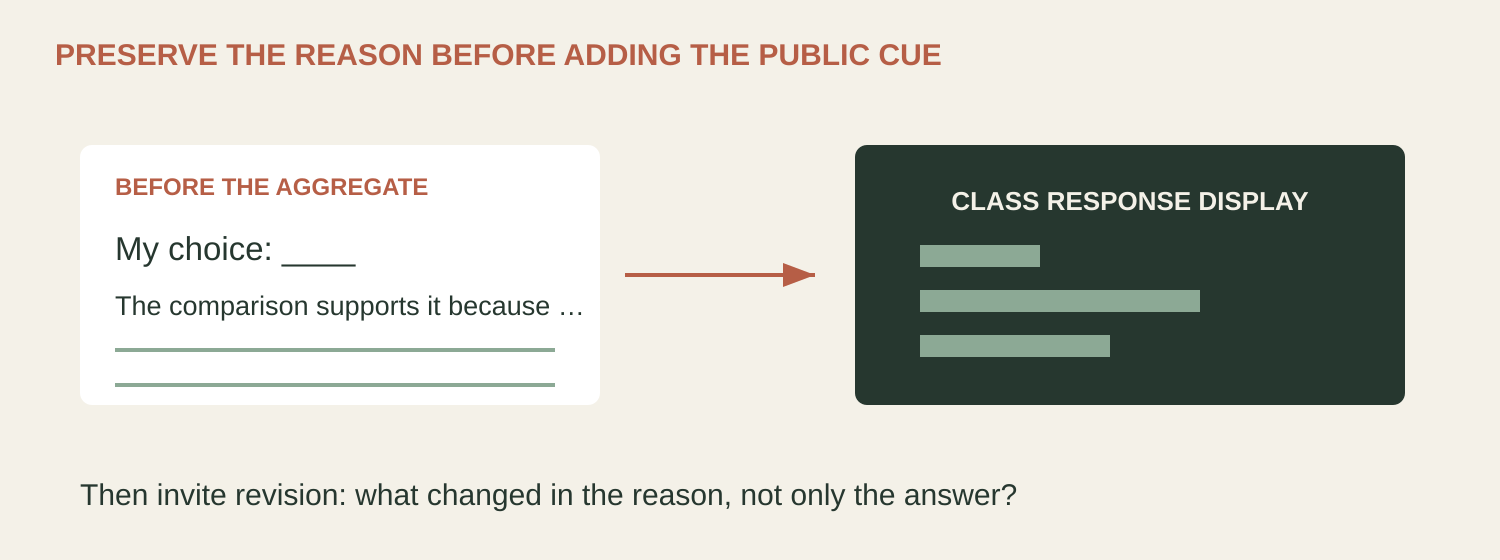
Figure 3. Capture a private explanation, then reveal the shared display. A recorded response does not by itself guarantee technical anonymity.
Audit the reveal point
Take one existing poll and mark the exact moment when learners see the results. Then mark when you collect their first explanation, when discussion occurs and when you supply the answer. If your planned conclusion is about individual understanding, check whether you have actually collected independent reasoning rather than only another vote.
Audit one polling routine: when does the majority answer become visible, and what evidence remains independent of it? Keep the answer modest enough that your record can support it.
